Economics · Book club
The Tyranny of Experts book club questions
Here are 12 book club questions for The Tyranny of Experts by William Easterly, ordered to open easily and end somewhere worth arguing about. Copy them, print them, or bring them up one at a time.
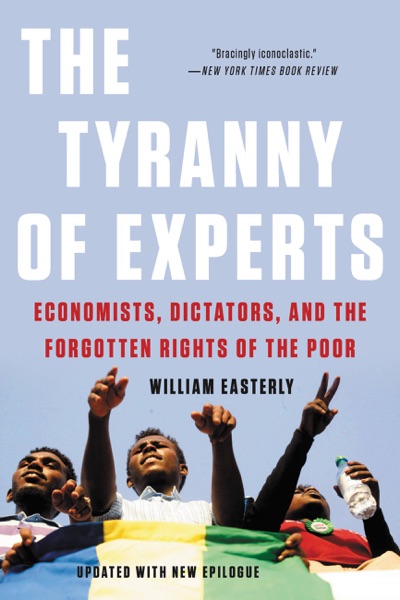
William Easterly spent years at the World Bank before concluding that international development as practiced by the major institutions is not only ineffective but actively harmful — harmful not primarily because it fails to deliver growth, though it frequently does, but because it suppresses the rights and agency of the people it claims to help.
William Easterly · 2014 · 7h 15m
Full summary and key takeaways →The 12 questions
- 1.
Easterly argues that development institutions prioritize working with governments over protecting individuals. Have you seen similar institutional dynamics — where the institution's relationship with a powerful party comes before the welfare of the people it serves?
- 2.
His central claim is that individual rights are preconditions for development, not luxuries to be added after prosperity arrives. Is that argument persuasive to you, and what evidence would change your mind?
- 3.
The Blank Slate Vision assumes experts can identify correct development policies. What other domains do you see this assumption operating in, and what does the track record look like?
- 4.
Easterly's framework is broadly Hayekian — he trusts local knowledge and markets over central planning. What are the cases where that framework seems least adequate to the problem?
- 5.
He documents how Cold War geopolitics distorted development policy in damaging ways. What geopolitical interests shape development and foreign aid policy today?
- 6.
The Uganda case study shows an institution defending a government's eviction of farmers. Where do the organizations you work with or rely on similarly defend institutional relationships over the people those institutions nominally serve?
- 7.
Easterly has critics who argue that he's too hostile to any form of technical assistance and too credulous about markets solving poverty. Where do you find his argument most overstated?
- 8.
He distinguishes between aid that supports voluntary exchange and rights versus aid that props up autocrats who promise stability. Is that distinction always operationally clear?
- 9.
If development is best done by free people with rights using local knowledge, what role — if any — remains for international institutions like the World Bank?
- 10.
The book argues that the biggest obstacle to development is not poverty traps or missing capital but the suppression of human agency by authoritarian governments. Do you find that argument more or less compelling than technocratic diagnoses?
- 11.
Easterly left the World Bank partly over disagreements about aid effectiveness. What does that kind of institutional departure tell you about the capacity of large institutions to hear internal criticism?
- 12.
He ends the book arguing for accountability of aid institutions to the poor, not just to donor governments. What mechanisms could actually produce that accountability?
How to run the discussion
- Pick six to eight, not all of them. An hour of real discussion covers fewer questions than anyone expects, and racing the list is what makes a book club feel like homework.
- Open with what people noticed, not what they concluded. Asking for a verdict first hardens opinions before anyone has heard each other.
- Let the disagreement run. The questions below that split a room are the ones worth the time; the ones everyone answers the same way can be skipped.
- Ask the quiet person a specific question. A direct, narrow question is far easier to answer than an open invitation to contribute.
Themes worth steering toward
If the conversation stalls, these are the threads that usually restart it.
Common questions
What are good book club questions for The Tyranny of Experts?
Here are 12 book club questions for The Tyranny of Experts by William Easterly, ordered to open easily and end somewhere worth arguing about. The strongest openers ask what each reader noticed rather than what they concluded, and the discussion usually turns on development economics, poverty, freedom.
How long should a book club discussion of The Tyranny of Experts last?
Most groups run 60 to 90 minutes of actual discussion. That is roughly six to eight questions, not all of them, so pick the ones that suit your group rather than working down the list in order.
What are the main themes in The Tyranny of Experts?
Development economics, Poverty, Freedom, Technocracy, Human rights. Those are the threads most likely to divide a room, which makes them the useful places to steer a discussion that has gone quiet.
Picking the next one? See books like The Tyranny of Experts or questions for other book club picks.
