Psychology · Book club
The Undoing Project book club questions
Here are 11 book club questions for The Undoing Project by Michael Lewis, ordered to open easily and end somewhere worth arguing about. Copy them, print them, or bring them up one at a time.
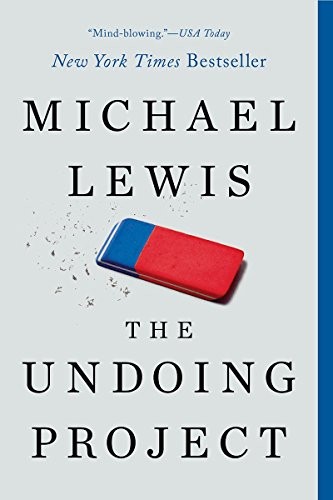
Michael Lewis came to this subject sideways.
Michael Lewis · 2016 · 5h 40m
Full summary and key takeaways →The 11 questions
- 1.
Lewis focuses on the friendship as much as the ideas. What does the relationship between Kahneman and Tversky suggest about how important collaborations actually work?
- 2.
The availability heuristic means vivid, recent events seem more probable. Where in your own thinking do you notice this most?
- 3.
Loss aversion shapes how people evaluate risks. Can you think of a recent decision in your own life where you were more motivated by avoiding a loss than gaining an equivalent good?
- 4.
Kahneman was more anxious than Tversky and doubted his contributions more. The credit allocation reflected Tversky's charisma rather than the actual division of work. How do you think about this kind of imbalance in collaborations you have been part of?
- 5.
Lewis came to this subject through Moneyball and the challenge to expert judgment in baseball. In what other domains do you think statistical models are outperforming expert intuition, and where is expert intuition genuinely better?
- 6.
The conjunction fallacy — the Linda the bank teller example — shows that people judge 'Linda is a bank teller and a feminist activist' as more probable than 'Linda is a bank teller.' Have you made this error or observed others making it?
- 7.
Counterfactual thinking — imagining how things could have gone differently — shapes regret. How do you experience the simulation of alternative outcomes after disappointments?
- 8.
Lewis argues that Moneyball revealed the depth of systematic bias in expert sports judgment. How did it feel to read that the biases Kahneman and Tversky described show up in professional domains with high stakes and lots of data?
- 9.
Tversky died before Kahneman received the Nobel Prize, which is not awarded posthumously. How do you think about credit and recognition in collaborations that span decades?
- 10.
The book ends with the suggestion that many of our most confident intuitions about people, probabilities, and outcomes are systematically wrong. Does that generate humility in you or resistance?
- 11.
Which of the biases described in the book do you think has the most practical cost in everyday decisions?
How to run the discussion
- Pick six to eight, not all of them. An hour of real discussion covers fewer questions than anyone expects, and racing the list is what makes a book club feel like homework.
- Open with what people noticed, not what they concluded. Asking for a verdict first hardens opinions before anyone has heard each other.
- Let the disagreement run. The questions below that split a room are the ones worth the time; the ones everyone answers the same way can be skipped.
- Ask the quiet person a specific question. A direct, narrow question is far easier to answer than an open invitation to contribute.
Themes worth steering toward
If the conversation stalls, these are the threads that usually restart it.
Common questions
What are good book club questions for The Undoing Project?
Here are 11 book club questions for The Undoing Project by Michael Lewis, ordered to open easily and end somewhere worth arguing about. The strongest openers ask what each reader noticed rather than what they concluded, and the discussion usually turns on cognitive bias, decision-making, friendship.
How long should a book club discussion of The Undoing Project last?
Most groups run 60 to 90 minutes of actual discussion. That is roughly six to eight questions, not all of them, so pick the ones that suit your group rather than working down the list in order.
What are the main themes in The Undoing Project?
Cognitive bias, Decision-making, Friendship, Behavioral economics, Judgment. Those are the threads most likely to divide a room, which makes them the useful places to steer a discussion that has gone quiet.
Picking the next one? See books like The Undoing Project or questions for other book club picks.
