Religion & Spirituality · Book club
The Varieties of Religious Experience book club questions
Here are 11 book club questions for The Varieties of Religious Experience by William James, ordered to open easily and end somewhere worth arguing about. Copy them, print them, or bring them up one at a time.
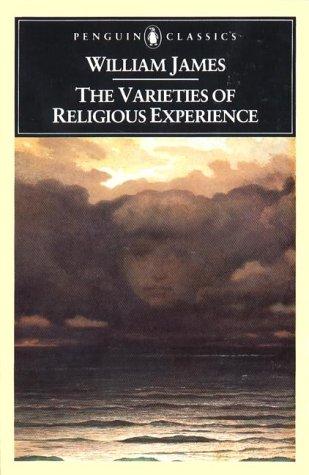
The Varieties of Religious Experience originated as the Gifford Lectures delivered at Edinburgh in 1901–1902 and immediately became one of the most celebrated works in the study of religion.
William James · 1902 · 8h 0m
Full summary and key takeaways →The 11 questions
- 1.
James distinguishes between the healthy-minded religion of optimism and the sick soul who cannot avoid awareness of evil and suffering. Which type describes your own religious or spiritual temperament?
- 2.
He argues that the institutional forms of religion are secondary to personal experience. Is that a defensible claim, or does it assume too much about where religion originates?
- 3.
James collected hundreds of personal testimonies as evidence. Is first-person testimony valid evidence for claims about religious reality, or is it only evidence for psychological states?
- 4.
The pragmatic test — by their fruits — evaluates religious belief by its effects on life. Is that an adequate standard for assessing the truth of religious claims?
- 5.
The description of mystical states as ineffable, noetic, transient, and passive is one of the most cited analyses of religious experience. Does it fit the experiences you know from testimony or literature?
- 6.
James takes seriously the possibility that something real — a 'More' beyond ordinary consciousness — is contacted in religious experience. How do you evaluate that possibility?
- 7.
The sick soul perceives suffering, death, and evil as fundamental features of reality. Is that a form of realism or a form of pathology — or does the distinction matter?
- 8.
Conversion is described as a psychological reorganization. Have you undergone anything that felt like that kind of shift — not necessarily religious, but a fundamental reordering of priorities and perception?
- 9.
James wrote as a psychologist, not a theologian. Does that framing help or hinder the study of religious experience?
- 10.
The book was published in 1902. How has the study of religious experience changed in the century since? What would James have made of the neuroscience of meditation?
- 11.
James' approach brackets metaphysical questions about God's existence while taking religious experience seriously. Is that methodological bracketing honest, or is it evasion?
How to run the discussion
- Pick six to eight, not all of them. An hour of real discussion covers fewer questions than anyone expects, and racing the list is what makes a book club feel like homework.
- Open with what people noticed, not what they concluded. Asking for a verdict first hardens opinions before anyone has heard each other.
- Let the disagreement run. The questions below that split a room are the ones worth the time; the ones everyone answers the same way can be skipped.
- Ask the quiet person a specific question. A direct, narrow question is far easier to answer than an open invitation to contribute.
Themes worth steering toward
If the conversation stalls, these are the threads that usually restart it.
Common questions
What are good book club questions for The Varieties of Religious Experience?
Here are 11 book club questions for The Varieties of Religious Experience by William James, ordered to open easily and end somewhere worth arguing about. The strongest openers ask what each reader noticed rather than what they concluded, and the discussion usually turns on religious experience, consciousness, mysticism.
How long should a book club discussion of The Varieties of Religious Experience last?
Most groups run 60 to 90 minutes of actual discussion. That is roughly six to eight questions, not all of them, so pick the ones that suit your group rather than working down the list in order.
What are the main themes in The Varieties of Religious Experience?
Religious experience, Consciousness, Mysticism, Conversion, Pragmatism. Those are the threads most likely to divide a room, which makes them the useful places to steer a discussion that has gone quiet.
Picking the next one? See books like The Varieties of Religious Experience or questions for other book club picks.
