Religion & Spirituality · Book club
The Way of Zen book club questions
Here are 12 book club questions for The Way of Zen by Alan Watts, ordered to open easily and end somewhere worth arguing about. Copy them, print them, or bring them up one at a time.
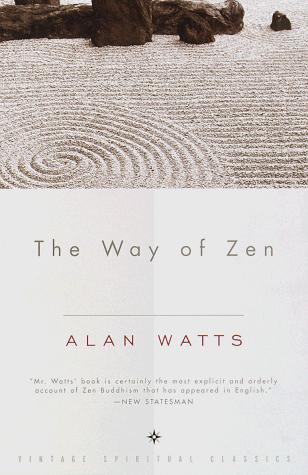
The Way of Zen was Alan Watts' most widely read and carefully argued work, published in 1957 at a time when Zen was largely unknown to English-speaking audiences.
Alan Watts · 1957 · 5h 20m
Full summary and key takeaways →The 12 questions
- 1.
Watts argues that the Western mind, trained in subject-object dualism, needs to undergo a specific kind of reorientation to understand Zen. What would that reorientation actually require of you?
- 2.
The koan system uses questions like 'What is the sound of one hand clapping?' to defeat rational resolution. Have you encountered something in your own experience that had that quality — that could not be resolved by thinking harder?
- 3.
Watts says satori is not gaining something new but recognizing what was always already the case. What would it mean for something to be 'always already the case' that you hadn't noticed?
- 4.
The relationship between Zen and Taoism is one of the book's central themes. From what you've read, what do they share, and where do they differ?
- 5.
Zen arts treat ordinary activities — making tea, arranging flowers — as complete practices of awakened action. What would it mean to bring that quality to one activity in your own life?
- 6.
Watts had no formal Zen training and has been criticized for domesticating the tradition. Does knowing that change how you read the book?
- 7.
Wu wei and mushin describe action arising spontaneously without deliberate effort. Can you think of an activity where you naturally achieve that quality? What conditions produce it?
- 8.
The book was published in 1957 and helped introduce Zen to the West. What has been gained and what lost in the Western adoption of Zen over the following decades?
- 9.
Watts says understanding Zen conceptually is the beginning of missing it. Is that warning self-defeating — aren't we reading a conceptual exposition of Zen?
- 10.
The Zen master in a mondo often responds with what seems like a non sequitur or a gesture rather than an answer. What is the master communicating?
- 11.
If Zen cannot be transmitted through language, what is the purpose of this book? What is the purpose of any book about Zen?
- 12.
How does Watts' presentation of Zen differ from what you've encountered in popular mindfulness culture?
How to run the discussion
- Pick six to eight, not all of them. An hour of real discussion covers fewer questions than anyone expects, and racing the list is what makes a book club feel like homework.
- Open with what people noticed, not what they concluded. Asking for a verdict first hardens opinions before anyone has heard each other.
- Let the disagreement run. The questions below that split a room are the ones worth the time; the ones everyone answers the same way can be skipped.
- Ask the quiet person a specific question. A direct, narrow question is far easier to answer than an open invitation to contribute.
Themes worth steering toward
If the conversation stalls, these are the threads that usually restart it.
Common questions
What are good book club questions for The Way of Zen?
Here are 12 book club questions for The Way of Zen by Alan Watts, ordered to open easily and end somewhere worth arguing about. The strongest openers ask what each reader noticed rather than what they concluded, and the discussion usually turns on zen, buddhism, taoism.
How long should a book club discussion of The Way of Zen last?
Most groups run 60 to 90 minutes of actual discussion. That is roughly six to eight questions, not all of them, so pick the ones that suit your group rather than working down the list in order.
What are the main themes in The Way of Zen?
Zen, Buddhism, Taoism, Eastern philosophy, Consciousness. Those are the threads most likely to divide a room, which makes them the useful places to steer a discussion that has gone quiet.
Picking the next one? See books like The Way of Zen or questions for other book club picks.
