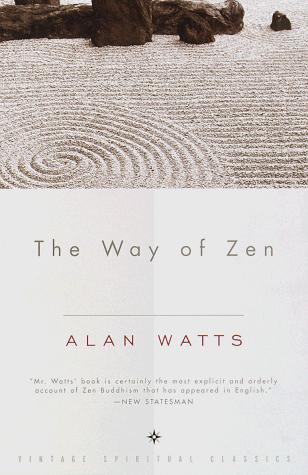
The Way of Zen by Alan Watts is a 1957 religion & spirituality book about zen, buddhism, taoism. Zen grows from the meeting of Indian Buddhism and Chinese Taoism, inheriting from both a fundamental suspicion of language, concept, and deliberate striving.
Summary
The Way of Zen was Alan Watts' most widely read and carefully argued work, published in 1957 at a time when Zen was largely unknown to English-speaking audiences. It was one of the primary texts that introduced Zen and related Asian thought to the West, read avidly by the Beat generation writers, the early counterculture, and generations of students since. Watts had an unusual background — trained in Anglican theology, deeply immersed in Asian thought, without formal Zen training — and The Way of Zen reflects both his genuine learning and his capacity to communicate ideas that resist easy explanation.
The book is in two parts. The first provides the background of Zen: the Indian origins of Buddhism, the transmission to China and its encounter with Taoism, and the development of the distinctively Chinese and Japanese forms that Zen embodies. Watts is particularly good on the relationship between Zen and Taoism — the two traditions share a fundamental suspicion of language, concept, and deliberate striving, and together they form the deep context for what looks strange or paradoxical in Zen from a Western perspective.
The second part examines the principles and practice of Zen: the koan system, the mondo (question-and-answer between master and student), the relationship between Zen and the arts (archery, painting, the tea ceremony), and the phenomenology of satori — sudden enlightenment. Watts argues that what Zen masters are pointing at cannot be transmitted through language or instruction; the words and practices are fingers pointing at the moon. The key is to look at the moon, not the finger.
Watts' interpretations have been challenged by scholars and practitioners who argue he domesticated Zen for a Western audience, smoothing out its more demanding aspects. That criticism has merit. But The Way of Zen remains unsurpassed as an intellectual orientation to the tradition for readers who have no prior exposure to it, and its prose is among the finest Watts ever wrote.
Talk to The Way of Zen like its author wrote you back.
Get the ideas that fit your life — not generic summaries.
- Chat with the book
- Audiobook-style main ideas
- Adapts to your life and goals
- Helps you take action
Key takeaways
- 1.
Zen grows from the meeting of Indian Buddhism and Chinese Taoism, inheriting from both a fundamental suspicion of language, concept, and deliberate striving.
- 2.
The koan — a question or situation that defies rational resolution — is a device for breaking the habitual pattern of conceptual thinking and opening direct awareness.
- 3.
Satori (sudden enlightenment) is not a gain but a recognition: seeing what was always already the case, without the overlay of conceptual interpretation.
- 4.
Zen arts — archery, calligraphy, the tea ceremony — are practices of non-striving in which full engagement arises without the interference of deliberate effort.
- 5.
The 'backward step' in Zen practice means turning awareness back on itself, attending to the witness rather than the witnessed, which cannot be found as an object.
- 6.
The Tao that can be named is not the eternal Tao: both Zen and Taoism insist that reality exceeds any description of it, including descriptions of reality exceeding description.
- 7.
Wu wei in Taoism and mushin in Zen describe the same quality: action without the interference of deliberate self-conscious effort, arising spontaneously from the whole.
- 8.
Understanding Zen intellectually is the beginning of missing it: the tradition is consistently suspicious of those who 'understand' Zen without practicing it.
Discussion questions
Use these on your own, with a book club, or as chat starters in Superbook. Book club version, ready to copy or print →
- 1.
Watts argues that the Western mind, trained in subject-object dualism, needs to undergo a specific kind of reorientation to understand Zen. What would that reorientation actually require of you?
- 2.
The koan system uses questions like 'What is the sound of one hand clapping?' to defeat rational resolution. Have you encountered something in your own experience that had that quality — that could not be resolved by thinking harder?
- 3.
Watts says satori is not gaining something new but recognizing what was always already the case. What would it mean for something to be 'always already the case' that you hadn't noticed?
- 4.
The relationship between Zen and Taoism is one of the book's central themes. From what you've read, what do they share, and where do they differ?
- 5.
Zen arts treat ordinary activities — making tea, arranging flowers — as complete practices of awakened action. What would it mean to bring that quality to one activity in your own life?
- 6.
Watts had no formal Zen training and has been criticized for domesticating the tradition. Does knowing that change how you read the book?
- 7.
Wu wei and mushin describe action arising spontaneously without deliberate effort. Can you think of an activity where you naturally achieve that quality? What conditions produce it?
- 8.
The book was published in 1957 and helped introduce Zen to the West. What has been gained and what lost in the Western adoption of Zen over the following decades?
- 9.
Watts says understanding Zen conceptually is the beginning of missing it. Is that warning self-defeating — aren't we reading a conceptual exposition of Zen?
- 10.
The Zen master in a mondo often responds with what seems like a non sequitur or a gesture rather than an answer. What is the master communicating?
- 11.
If Zen cannot be transmitted through language, what is the purpose of this book? What is the purpose of any book about Zen?
- 12.
How does Watts' presentation of Zen differ from what you've encountered in popular mindfulness culture?
Themes
Frequently asked questions
-
Is The Way of Zen a good introduction to Zen?
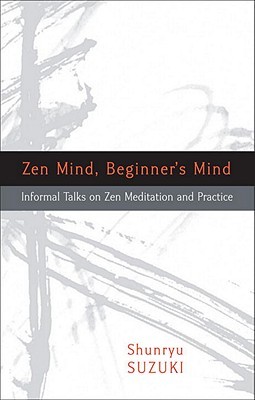
For intellectual orientation, yes — it is one of the best in English. For practice, less so: it describes Zen from the outside without guiding the reader into practice. Suzuki Roshi's Zen Mind, Beginner's Mind is a better companion for someone who wants to sit zazen.
-
How accurate is Watts' account of Zen?
Scholarly opinion is divided. Watts clearly understood the tradition intellectually and conveyed it brilliantly. Critics argue he underemphasized the formal structure of Zen training and presented a more individualistic, countercultural version than the tradition supports. Read it as an interpretation, not a final account.
-
What is a koan?
A question or situation presented to a Zen student that cannot be resolved through rational analysis — 'What was your face before your parents were born?' The student sits with it in zazen until a direct response arises beyond conceptual thinking. It is a device for disrupting ordinary cognitive habit.
-
How does this book connect to Alan Watts' other works?
The Way of Zen is more scholarly and carefully argued than most of his other books. The Wisdom of Insecurity covers similar themes more accessibly. The Book: On the Taboo Against Knowing Who You Are applies the same insights to Western psychology. All three are part of the same sustained project.
-
Do I need to read The Way of Zen if I've already read other Zen books?
The historical and philosophical background in Part One — especially the account of Taoism's influence on Chinese Buddhism — is still among the clearest available in English and worth reading even if you know the practice side well.