Thriller · Book club
The Woman in the Window book club questions
Here are 12 book club questions for The Woman in the Window by A.J. Finn, ordered to open easily and end somewhere worth arguing about. Copy them, print them, or bring them up one at a time.
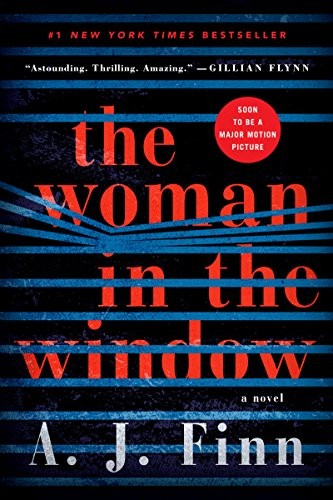
Anna Fox is a child psychologist who hasn't left her Manhattan brownstone in ten months.
A.J. Finn · 2018 · 6h 0m
Full summary and key takeaways →The 12 questions
- 1.
Anna is a trained psychologist who can't accurately perceive her own situation. Does the novel suggest her professional expertise is undermined by trauma, or was it always overconfident?
- 2.
How much of your trust in Anna's narration did you consciously calibrate as you read? At what point did you stop trusting her, and why?
- 3.
The book draws heavily on Hitchcock's Rear Window. What does having a female protagonist change about the voyeurism dynamic — is the reader implicated differently?
- 4.
Anna self-medicates with wine in ways she knows are dangerous. Is the novel sympathetic to that, or is it framing her as complicit in her own unreliability?
- 5.
The neighbors Anna watches are idealized before she really knows them. What does the book say about how we construct narratives around the people we observe from a distance?
- 6.
When Anna is finally believed, it comes late and partially. What does the novel suggest about how society receives testimony from women who are visibly mentally unwell?
- 7.
The twist recontextualizes several earlier scenes. Did you feel it was earned, or did it depend on information being withheld unfairly?
- 8.
Anna's relationship with her therapist is complicated throughout. How does the therapeutic relationship function in the novel — as genuine care, as plot mechanism, or as something murkier?
- 9.
The film Anna watches most obsessively is Gaslight. Is the novel commenting on that plot, reenacting it, or subverting it?
- 10.
How does the physical space of the house shape your reading of Anna's psychology? Would the novel work as well set somewhere more open?
- 11.
Finn builds most of the tension through dramatic irony — we suspect things before Anna does. At what point did that tension tip into frustration for you, if at all?
- 12.
The novel ends on a recovery note. Does that feel earned given what Anna has been through, or does it resolve too neatly?
How to run the discussion
- Pick six to eight, not all of them. An hour of real discussion covers fewer questions than anyone expects, and racing the list is what makes a book club feel like homework.
- Open with what people noticed, not what they concluded. Asking for a verdict first hardens opinions before anyone has heard each other.
- Let the disagreement run. The questions below that split a room are the ones worth the time; the ones everyone answers the same way can be skipped.
- Ask the quiet person a specific question. A direct, narrow question is far easier to answer than an open invitation to contribute.
Themes worth steering toward
If the conversation stalls, these are the threads that usually restart it.
Common questions
What are good book club questions for The Woman in the Window?
Here are 12 book club questions for The Woman in the Window by A.J. Finn, ordered to open easily and end somewhere worth arguing about. The strongest openers ask what each reader noticed rather than what they concluded, and the discussion usually turns on agoraphobia and confinement, unreliable perception, voyeurism.
How long should a book club discussion of The Woman in the Window last?
Most groups run 60 to 90 minutes of actual discussion. That is roughly six to eight questions, not all of them, so pick the ones that suit your group rather than working down the list in order.
What are the main themes in The Woman in the Window?
Agoraphobia and confinement, Unreliable perception, Voyeurism, Trauma and grief, Isolation. Those are the threads most likely to divide a room, which makes them the useful places to steer a discussion that has gone quiet.
Picking the next one? See books like The Woman in the Window or questions for other book club picks.
