History · Book club
The Wretched of the Earth book club questions
Here are 12 book club questions for The Wretched of the Earth by Frantz Fanon, ordered to open easily and end somewhere worth arguing about. Copy them, print them, or bring them up one at a time.
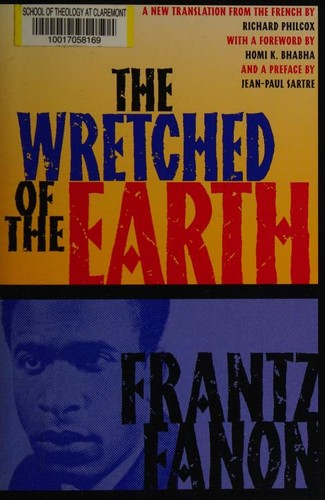
The Wretched of the Earth, published in 1961 shortly before Fanon's death from leukemia, is a political and psychiatric analysis of colonialism and the conditions required for genuine decolonization.
Frantz Fanon · 1961 · 6h 45m
Full summary and key takeaways →The 12 questions
- 1.
Fanon argues that colonialism is ontological, not just economic. What does he mean, and does that claim change how you think about political solutions?
- 2.
His argument about violence as cathartic has been both celebrated and condemned. What is the most accurate reading of what he is actually claiming?
- 3.
Fanon wrote from within the Algerian war. How does that specific context shape his generalizations about colonialism globally?
- 4.
He warns that national independence can be captured by a native bourgeoisie that replicates colonial structures. How accurate was that prediction in postcolonial Africa and Asia?
- 5.
The book draws on Marxism, phenomenology, and psychoanalysis simultaneously. Is that theoretical eclecticism a strength or does it create contradictions?
- 6.
Sartre's preface argued the book endorsed colonial subjects killing Europeans. Did you read it that way? What is the relationship between Sartre's framing and Fanon's own argument?
- 7.
Fanon describes specific psychiatric cases from the Algerian war. What does the clinical material add to the political analysis?
- 8.
The book was enormously influential in liberation movements from the Black Panthers to the Palestinian resistance. Does that reception affect how you evaluate the arguments?
- 9.
Fanon distinguishes between national consciousness and nationalism. Why does he make that distinction, and does it hold?
- 10.
He argues that genuine decolonization must transform the consciousness of the colonized, not just their political status. Is that a psychological argument, a political one, or both?
- 11.
Reading this in 2026, which of Fanon's diagnoses feel confirmed by history, and which feel dated or wrong?
- 12.
Fanon died at 36, before seeing most post-independence African history. How do you think he would have evaluated what followed?
How to run the discussion
- Pick six to eight, not all of them. An hour of real discussion covers fewer questions than anyone expects, and racing the list is what makes a book club feel like homework.
- Open with what people noticed, not what they concluded. Asking for a verdict first hardens opinions before anyone has heard each other.
- Let the disagreement run. The questions below that split a room are the ones worth the time; the ones everyone answers the same way can be skipped.
- Ask the quiet person a specific question. A direct, narrow question is far easier to answer than an open invitation to contribute.
Themes worth steering toward
If the conversation stalls, these are the threads that usually restart it.
Common questions
What are good book club questions for The Wretched of the Earth?
Here are 12 book club questions for The Wretched of the Earth by Frantz Fanon, ordered to open easily and end somewhere worth arguing about. The strongest openers ask what each reader noticed rather than what they concluded, and the discussion usually turns on colonialism, decolonization, violence.
How long should a book club discussion of The Wretched of the Earth last?
Most groups run 60 to 90 minutes of actual discussion. That is roughly six to eight questions, not all of them, so pick the ones that suit your group rather than working down the list in order.
What are the main themes in The Wretched of the Earth?
Colonialism, Decolonization, Violence, National identity, Race and psychology. Those are the threads most likely to divide a room, which makes them the useful places to steer a discussion that has gone quiet.
Picking the next one? See books like The Wretched of the Earth or questions for other book club picks.
