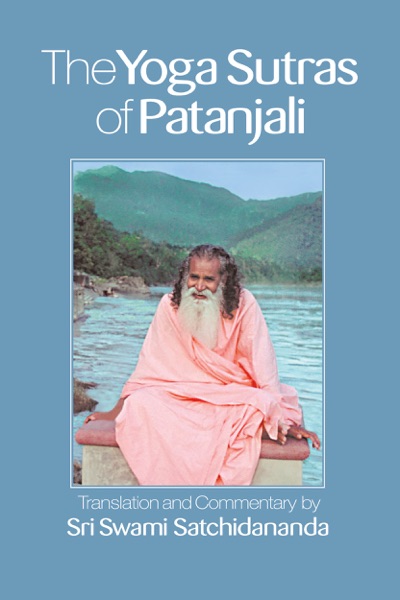
Talk to The Yoga Sutras of Patanjali like its author wrote you back.
Get the ideas that fit your life — not generic summaries.
- Chat with the book
- Audiobook-style main ideas
- Adapts to your life and goals
- Helps you take action
What it argues
The Yoga Sutras is a foundational text of classical Indian philosophy, compiled by the sage Patanjali — likely around 400 CE, though some scholars place the compilation earlier or later. The text consists of 196 short aphorisms (sutras) organized into four chapters (padas), covering the nature of mind, the practice of yoga, the powers that arise from deep practice, and the state of liberation. This edition, translated and commented by Swami Satchidananda and first published in 1978, has become one of the most widely used introductions to the text in the Western world.
Patanjali defines yoga in the second sutra with a single Sanskrit phrase: "Yoga chitta vritti nirodha" — yoga is the cessation of the fluctuations of the mind. Everything else in the text is either the elaboration of what that means or the practical description of how to achieve it. The five types of mental modifications (vrittis) are identified and analyzed: correct knowledge, incorrect knowledge, verbal knowledge, sleep, and memory. All of them, including correct knowledge, are modifications that yoga seeks to still.
What it gets right
- 1.
Yoga is defined as the cessation of mental fluctuations, not as physical exercise. The asana practice familiar in modern gyms is one of eight limbs, and a preparatory one at that.
- 2.
The mind's natural state, according to Patanjali, is turbulence. All five types of mental modification — including correct knowledge — are fluctuations that cloud the recognition of pure awareness.
- 3.
The eight-limbed path (ashtanga yoga) is a sequential practice: ethical conduct before posture, posture before breath control, breath control before meditation. Each stage prepares the conditions for the next.
What it covers
Who wrote it
Swami Satchidananda (1914–2002) was an Indian yoga master and founder of Integral Yoga International. He gained wide recognition in the West after appearing at the Woodstock festival in 1969. Born in Tamil Nadu, he was a disciple of Swami Sivananda and spent decades teaching a synthesis of classical yoga philosophy and practice to Western students. His translation and commentary of the Yoga Sutras, first published in 1978, has become one of the most widely used introductory editions to Patanjali's text in the English-speaking world. He founded the Satchidananda Ashram in Virginia, now known as Yogaville.
