Self-help · Book club
Thinking with Type book club questions
Here are 11 book club questions for Thinking with Type by Ellen Lupton, ordered to open easily and end somewhere worth arguing about. Copy them, print them, or bring them up one at a time.
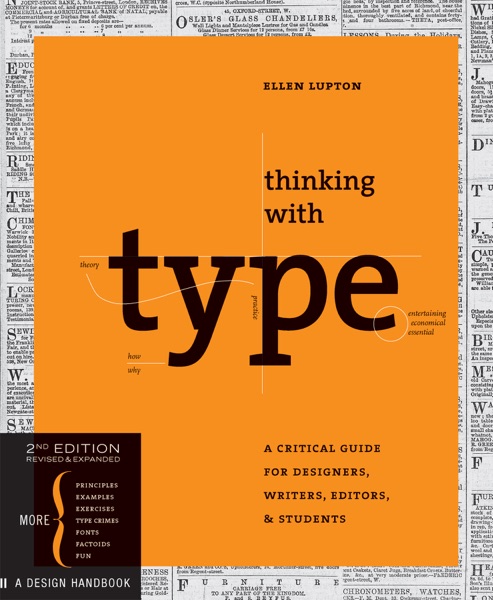
Thinking with Type is Ellen Lupton's critical guide to typography — not as a catalog of fonts, but as a discipline for thinking about how written language takes visual form.
Ellen Lupton · 2004 · 2h 45m
Full summary and key takeaways →The 11 questions
- 1.
Lupton argues that typography is part of how language means, not just decoration applied to it. Can you identify a piece of writing where the typography changed how you understood the content?
- 2.
The book covers letter, text, and grid as three scales of typographic decision. Which of the three do you find you pay most attention to in your own work?
- 3.
She describes the grid as generative rather than restrictive. What other design constraints do you find work the same way — enabling rather than limiting?
- 4.
Lupton is both a practitioner and a historian. Does the historical context she provides change how you think about the typefaces in everyday use around you?
- 5.
Hierarchy is central to the text section. Think of a recent piece of design you found confusing. Was hierarchy the problem?
- 6.
The book is itself typographically designed to demonstrate its principles. Did you notice that as you read, and did it help or distract?
- 7.
Type spacing — leading, kerning, tracking — is mostly invisible when it's done well. Have you ever been in an environment where you noticed bad spacing? What made it visible?
- 8.
The grid section argues that knowing the rules makes breaking them legible. Is that principle specific to typography, or does it apply more broadly?
- 9.
Lupton writes about the associations that accumulate around typefaces through historical use. Which typeface has the strongest cultural associations for you, and what are they?
- 10.
The book was first published in 2004. Screen typography has changed dramatically since then. Which principles translate directly and which feel like print-era assumptions?
- 11.
If typography shapes how written language means, what responsibilities does that place on designers who work with public communication?
How to run the discussion
- Pick six to eight, not all of them. An hour of real discussion covers fewer questions than anyone expects, and racing the list is what makes a book club feel like homework.
- Open with what people noticed, not what they concluded. Asking for a verdict first hardens opinions before anyone has heard each other.
- Let the disagreement run. The questions below that split a room are the ones worth the time; the ones everyone answers the same way can be skipped.
- Ask the quiet person a specific question. A direct, narrow question is far easier to answer than an open invitation to contribute.
Themes worth steering toward
If the conversation stalls, these are the threads that usually restart it.
Common questions
What are good book club questions for Thinking with Type?
Here are 11 book club questions for Thinking with Type by Ellen Lupton, ordered to open easily and end somewhere worth arguing about. The strongest openers ask what each reader noticed rather than what they concluded, and the discussion usually turns on typography, visual communication, graphic design.
How long should a book club discussion of Thinking with Type last?
Most groups run 60 to 90 minutes of actual discussion. That is roughly six to eight questions, not all of them, so pick the ones that suit your group rather than working down the list in order.
What are the main themes in Thinking with Type?
Typography, Visual communication, Graphic design, Layout and structure, Type history. Those are the threads most likely to divide a room, which makes them the useful places to steer a discussion that has gone quiet.
Picking the next one? See books like Thinking with Type or questions for other book club picks.
