Thus Spoke Zarathustra by Friedrich Nietzsche is a 1883 philosophy book about nihilism, self-overcoming, will to power. God is dead — the collapse of the transcendent foundation of Western values — and the appropriate response is not despair but the creation of new values.
Summary
Thus Spoke Zarathustra is Nietzsche's most ambitious and peculiar work — part philosophical treatise, part prose poem, styled deliberately after the Hebrew Bible and the New Testament. The protagonist, Zarathustra, is a fictionalized version of the Zoroastrian prophet reinvented as a herald of new values. He descends from his mountain cave to teach humanity, encounters contempt and misunderstanding, and returns again and again to the same fundamental insight: God is dead, and it is up to human beings to create meaning in the vacuum that leaves behind.
The book's central concepts arrive gradually and obliquely. The Ubermensch (often translated as Superman or Overman) is not a racial ideal — Nietzsche explicitly mocks German nationalism — but a philosophical aspiration: a being who creates values from strength rather than inheriting or reacting to existing ones. The last man is the opposite, the complacent herd-dweller who has abolished suffering and risk in pursuit of trivial comfort. Zarathustra's challenge is to persuade humanity to take the harder path of self-overcoming rather than the easier path of the last man.
The doctrine of eternal recurrence is the book's most metaphysically daring idea: what if every moment of your life recurred infinitely, in exactly the same sequence, forever? It is not presented as a cosmological claim but as a psychological test. Could you affirm your life in its entirety — its suffering, failures, and losses — to the point of willing its infinite repetition? This is Nietzsche's alternative to nihilism: not the consolation of an afterlife but the radical affirmation of this life.
Zarathustra speaks in parables, aphorisms, and songs, not arguments. The famous section on the three metamorphoses — camel, lion, child — describes the stages of spiritual development: bearing burdens, destroying old values, and finally creating new ones with the innocent affirmation of a child. The work resists systematic summary precisely because its form is the argument: genuine self-overcoming cannot be achieved by following instructions.
Talk to Thus Spoke Zarathustra like its author wrote you back.
Get the ideas that fit your life — not generic summaries.
- Chat with the book
- Audiobook-style main ideas
- Adapts to your life and goals
- Helps you take action
Key takeaways
- 1.
God is dead — the collapse of the transcendent foundation of Western values — and the appropriate response is not despair but the creation of new values.
- 2.
The Ubermensch is not a superior race but a philosophical aspiration: someone who creates values from strength and affirms life without needing external justification.
- 3.
The last man is the most dangerous figure — not the tyrant but the comfortable conformist who has traded all risk and excellence for security and boredom.
- 4.
Eternal recurrence asks: if this moment — and every moment of your life — were to repeat infinitely, could you affirm it? The question is a test of whether you are living your life or merely enduring it.
- 5.
The will to power is not domination over others but the drive to overcome oneself — to discharge energy, impose form, and grow beyond previous limits.
- 6.
The three metamorphoses — camel (duty), lion (freedom from old values), child (creation of new ones) — describe the stages of genuine self-transformation.
- 7.
Pity, as Nietzsche uses it here, is a problem: it perpetuates weakness rather than strengthening others and corrupts the one who practices it.
- 8.
Self-overcoming is the only authentic response to nihilism; all other responses — hedonism, resignation, nostalgia — are forms of avoidance.
Discussion questions
Use these on your own, with a book club, or as chat starters in Superbook. Book club version, ready to copy or print →
- 1.
Nietzsche's test of eternal recurrence asks whether you would will your life to repeat infinitely. When you apply that test honestly, what does it reveal about how you're living?
- 2.
The last man is comfortable, healthy, and meaningless. Do you see aspects of last-man culture in contemporary life? In yourself?
- 3.
The Ubermensch creates values rather than inheriting them. Is genuine value-creation possible, or are we always reacting to and modifying what we received?
- 4.
Zarathustra repeatedly fails to be understood by his audience. Is the problem with the audience, the message, or the medium? What does that suggest about how transformative ideas spread?
- 5.
The three metamorphoses describe the camel (bearing burdens), the lion (breaking free), and the child (creating anew). Where are you in that sequence right now?
- 6.
Nietzsche writes in parables and poetry rather than argument. Does the form make the ideas more or less convincing? Why might he have chosen it?
- 7.
The doctrine of eternal recurrence was described by Nietzsche as his 'heaviest thought.' What is your heaviest thought — the idea that, if true, would most demand you change how you live?
- 8.
Nietzsche distinguishes between giving and taking, between those who overflow and those who need. Where do most of your significant relationships sit on that spectrum?
- 9.
Is the concept of the Ubermensch necessarily elitist, or is it available to everyone? What would it mean for everyone to be 'self-overcoming'?
- 10.
Zarathustra's affirmation of life includes affirming its suffering and failures. Is that psychologically realistic, or is it a philosophical ideal that collapses when tested by actual loss?
- 11.
The book is full of mockery aimed at equality and democratic values. Is Nietzsche's critique of egalitarianism something to take seriously, or is it the most dangerous part of his work?
- 12.
Nietzsche's prose is often ecstatic and prophetic. Does the style amplify the ideas or get in the way of evaluating them honestly?
Themes
Frequently asked questions
-
What is Thus Spoke Zarathustra about?
A fictional prophet named Zarathustra descends from his mountain to teach humanity about the death of God, the Ubermensch, eternal recurrence, and the will to power. It is Nietzsche's attempt to articulate a response to nihilism and a vision of what a life fully affirmed would look like.
-
Do I need to read other Nietzsche before Zarathustra?
It helps to have read The Gay Science, which announces the death of God and previews many themes. But Zarathustra can be read on its own — just be prepared for a book that operates through poetry and parable rather than argumentation.
-
What is the Ubermensch?
Often translated as Superman or Overman, the Ubermensch is Nietzsche's aspiration for a being who creates values from strength rather than inheriting or reacting to conventional morality. It is emphatically not a racial ideal — Nietzsche was contemptuous of German nationalism.
-
What is the doctrine of eternal recurrence?
The thought experiment that every moment of your life recurs infinitely in the same sequence. It functions not as a cosmological claim but as a psychological test: can you affirm your life fully enough to will its endless repetition?
-
Is Thus Spoke Zarathustra hard to read?
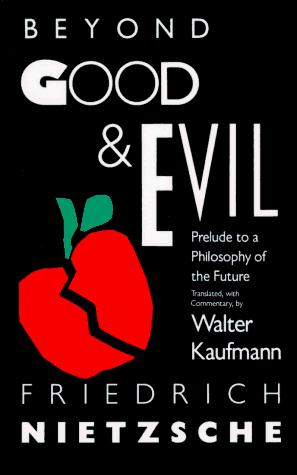
Very. It is written as prose poetry in a quasi-biblical style, with no conventional argument structure. Many readers find it inspiring but vague. The ideas become clearer if you read it alongside Beyond Good and Evil or On the Genealogy of Morality.