Thriller · Book club
Tinker, Tailor, Soldier, Spy book club questions
Here are 12 book club questions for Tinker, Tailor, Soldier, Spy by John le Carré, ordered to open easily and end somewhere worth arguing about. Copy them, print them, or bring them up one at a time.
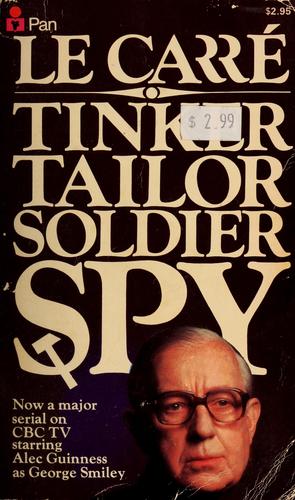
George Smiley, a rumpled, semi-retired British intelligence officer, is pulled back from the cold to investigate a claim that a Soviet mole has burrowed into the very top of MI6 — the Circus, as insiders call it.
John le Carré · 1974 · 7h 0m
Full summary and key takeaways →The 12 questions
- 1.
Smiley is the opposite of a thriller hero — slow, methodical, personally humiliated. Why does le Carré choose this kind of protagonist, and does it work for you?
- 2.
The Circus is rotten at the top whether or not there's a mole. Does the mole's identity change how you read the institution, or just confirm what was already apparent?
- 3.
The novel argues, implicitly, that the West and the Soviet Union are morally equivalent. Do you agree with that framing, or does it feel like Cold War-era false balance?
- 4.
How much does knowing about Kim Philby change how you read this novel? Can it be read cleanly without that historical context?
- 5.
Smiley's loyalty to the Circus survives every betrayal. Is that loyalty admirable, pathetic, or something else?
- 6.
Lady Ann barely appears, yet she shapes every major relationship in the book. What is le Carré doing with her character?
- 7.
The vocabulary le Carré invented — lamplighters, babysitters, scalphunters — creates a feeling of initiation. Is that a flaw or a feature?
- 8.
Jim Prideaux's storyline runs parallel to Smiley's investigation. How does his experience of betrayal differ from Smiley's?
- 9.
The ending gives Smiley the professional victory he was denied. Does he actually win anything that matters?
- 10.
The novel was written in 1974. Which aspects feel most dated, and which feel uncomfortably current?
- 11.
Karla, the Soviet spymaster, appears only briefly but looms over everything. How does le Carré characterize the enemy without ever letting him speak?
- 12.
If this is a novel about loyalty, who in the book actually earns the word? Who merely performs it?
How to run the discussion
- Pick six to eight, not all of them. An hour of real discussion covers fewer questions than anyone expects, and racing the list is what makes a book club feel like homework.
- Open with what people noticed, not what they concluded. Asking for a verdict first hardens opinions before anyone has heard each other.
- Let the disagreement run. The questions below that split a room are the ones worth the time; the ones everyone answers the same way can be skipped.
- Ask the quiet person a specific question. A direct, narrow question is far easier to answer than an open invitation to contribute.
Themes worth steering toward
If the conversation stalls, these are the threads that usually restart it.
Common questions
What are good book club questions for Tinker, Tailor, Soldier, Spy?
Here are 12 book club questions for Tinker, Tailor, Soldier, Spy by John le Carré, ordered to open easily and end somewhere worth arguing about. The strongest openers ask what each reader noticed rather than what they concluded, and the discussion usually turns on betrayal, cold war paranoia, institutional loyalty.
How long should a book club discussion of Tinker, Tailor, Soldier, Spy last?
Most groups run 60 to 90 minutes of actual discussion. That is roughly six to eight questions, not all of them, so pick the ones that suit your group rather than working down the list in order.
What are the main themes in Tinker, Tailor, Soldier, Spy?
Betrayal, Cold War paranoia, Institutional loyalty, Identity and deception, Moral compromise. Those are the threads most likely to divide a room, which makes them the useful places to steer a discussion that has gone quiet.
Picking the next one? See books like Tinker, Tailor, Soldier, Spy or questions for other book club picks.
