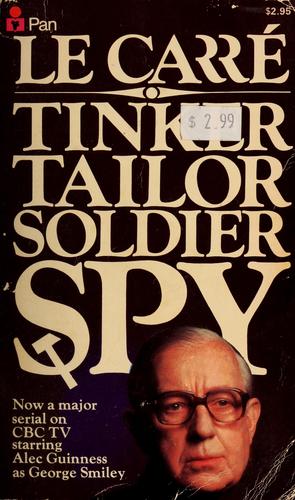
Talk to Tinker, Tailor, Soldier, Spy like its author wrote you back.
Get the ideas that fit your life — not generic summaries.
- Chat with the book
- Audiobook-style main ideas
- Adapts to your life and goals
- Helps you take action
What it argues
George Smiley, a rumpled, semi-retired British intelligence officer, is pulled back from the cold to investigate a claim that a Soviet mole has burrowed into the very top of MI6 — the Circus, as insiders call it. The mole is code-named Gerald. Smiley's task is to work through a short list of four suspects, each a senior officer, any of whom could have spent decades feeding secrets to Moscow. The novel moves slowly, deliberately, at the pace of memory and inference rather than action.
What the book is really about is the emotional and moral cost of working inside institutions built on lies. Le Carré shows you the Circus from the inside: its small jealousies, its class snobberies, its appetite for self-deception. The betrayal at the center is not just a professional catastrophe — it is a personal one. Smiley's investigation keeps circling back to his own past, his marriage to the faithless Lady Ann, and his long rivalry with Control, the former chief who died without naming the mole. The Cold War is the backdrop; the real subject is what loyalty means when the institution you serve may itself be corrupt.
What it gets right
- 1.
Le Carré's Circus is a portrait of institutional rot: an organization so dedicated to secrets that it has become incapable of knowing the truth about itself.
- 2.
The mole hunt is as much an excavation of the past as an investigation of the present — Smiley works almost entirely through memory, inference, and patience.
- 3.
Betrayal here operates at multiple levels: professional, personal, and ideological. The novel refuses to rank them.
What it covers
Who wrote it
John le Carré (1931–2020), born David John Moore Cornwell, worked for MI5 and MI6 before leaving to write full time after the success of The Spy Who Came in from the Cold in 1963. He is the author of more than twenty novels, including the Smiley trilogy, The Night Manager, The Constant Gardener, and A Most Wanted Man. His fiction reshaped the espionage genre by treating intelligence work as morally ambiguous rather than heroic. He was shortlisted for the Man Booker Prize and received the Goethe Medal and the Olof Palme Prize.
