Literary fiction · Book club
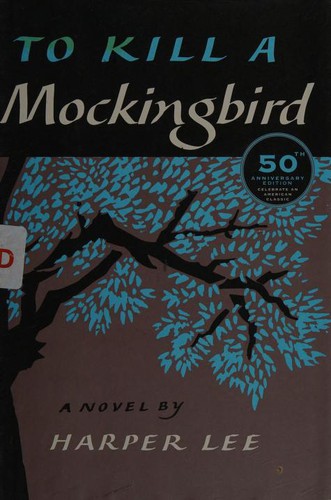
To Kill a Mockingbird book club questions
Here are 12 book club questions for To Kill a Mockingbird by Harper Lee, ordered to open easily and end somewhere worth arguing about. Copy them, print them, or bring them up one at a time.
Jean Louise "Scout" Finch is six years old at the start of the novel and nine by the end.
Harper Lee · 1960 · 6h 45m
Full summary and key takeaways →The 12 questions
- 1.
Atticus says you can't really understand someone until you climb inside their skin and walk around in it. Does the novel actually do that for Tom Robinson, or does it stop short?
- 2.
The verdict is unjust and Atticus knows it will be before the trial begins. Why does he take the case? Is his moral position heroic, or is it the minimum decency the situation required?
- 3.
Go Set a Watchman shows an older Atticus with segregationist views. Does that novel change how you read Mockingbird's Atticus, or should they be read as separate characters?
- 4.
Scout gets in trouble at school for already knowing how to read. What does the novel think about institutional education versus what children learn at home?
- 5.
The Ewells are the novel's villains, but they're also poor white Southerners trapped in their own degraded status. Does Lee ask you to have any sympathy for Bob Ewell? Should she?
- 6.
Maycomb is depicted as a community with good people who nevertheless convict an innocent man. Is the novel's overall view of the town too gentle, or appropriately complex?
- 7.
Boo Radley has been imprisoned by his father and brother, but the town calls him a ghost and invents stories about him. What does the novel think the community's treatment of Boo says about it?
- 8.
The novel is assigned in schools constantly and often taught as a lesson in not being racist. Does being taught that way reduce it? What does teaching it from a child narrator do to the lesson?
- 9.
Calpurnia takes the children to her church and navigates both worlds — the Finch household and the Black community. What does the novel do, and not do, with her character?
- 10.
Tom Robinson dies trying to escape from prison, which the novel calls 'typical' of Black men who give up hope. How do you read that framing? Is it Lee's view or something the novel is examining?
- 11.
At the end, Scout realizes that Boo never left his house because he was watching them — that they were his connection to the world. How does that change the Boo storyline retroactively?
- 12.
The novel was published in 1960, in the middle of the civil rights movement. How much of its impact was historical timing, and how much is the book itself?
How to run the discussion
- Pick six to eight, not all of them. An hour of real discussion covers fewer questions than anyone expects, and racing the list is what makes a book club feel like homework.
- Open with what people noticed, not what they concluded. Asking for a verdict first hardens opinions before anyone has heard each other.
- Let the disagreement run. The questions below that split a room are the ones worth the time; the ones everyone answers the same way can be skipped.
- Ask the quiet person a specific question. A direct, narrow question is far easier to answer than an open invitation to contribute.
Themes worth steering toward
If the conversation stalls, these are the threads that usually restart it.
Common questions
What are good book club questions for To Kill a Mockingbird?
Here are 12 book club questions for To Kill a Mockingbird by Harper Lee, ordered to open easily and end somewhere worth arguing about. The strongest openers ask what each reader noticed rather than what they concluded, and the discussion usually turns on racial injustice, moral courage, childhood and innocence.
How long should a book club discussion of To Kill a Mockingbird last?
Most groups run 60 to 90 minutes of actual discussion. That is roughly six to eight questions, not all of them, so pick the ones that suit your group rather than working down the list in order.
What are the main themes in To Kill a Mockingbird?
Racial injustice, Moral courage, Childhood and innocence, Class and community, Empathy and perspective. Those are the threads most likely to divide a room, which makes them the useful places to steer a discussion that has gone quiet.
Picking the next one? See books like To Kill a Mockingbird or questions for other book club picks.
