Business · Book club
Topgrading: The Proven Hiring and Promoting Method That Turbocharges Company Performance book club questions
Here are 12 book club questions for Topgrading: The Proven Hiring and Promoting Method That Turbocharges Company Performance by Bradford D. Smart, ordered to open easily and end somewhere worth arguing about. Copy them, print them, or bring them up one at a time.
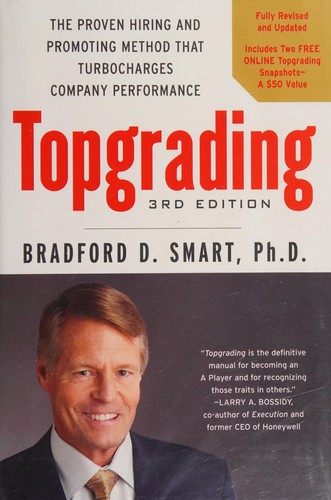
Topgrading is Bradford Smart's comprehensive argument that companies succeed or fail primarily based on whether they have high performers — A-players — in every role, and that most organizations are far worse at identifying and retaining them than they believe.
Bradford D. Smart · 1999 · 6h 45m
Full summary and key takeaways →The 12 questions
- 1.
Smart claims most managers misassess candidates at high rates. Based on your own hiring history, what's your honest estimate of your success rate?
- 2.
The Topgrading Interview runs three to four hours. What does your organization's current interview process look like, and how does it compare?
- 3.
Have you ever discovered, too late, that someone you hired was a C-player who had learned to perform well in short interviews? What gave it away?
- 4.
Smart argues that C-players hire other C-players. Have you seen that dynamic in practice — a team that consistently attracts mediocrity because the leader sets the ceiling?
- 5.
Topgrading involves assessing current employees, not just new hires. How transparent is your organization about who is actually performing at what level?
- 6.
What's the most difficult talent conversation you've avoided, and what has that avoidance cost?
- 7.
Smart distinguishes between A-players at one compensation level and another. Does that relative framing of 'A-player' change how you think about your own team?
- 8.
The book is very explicit about removing C-players. Is there a case where keeping a C-player is the right call? What would make that true?
- 9.
Coaching B-players requires honest feedback they may not have received before. What makes that feedback difficult to give in practice?
- 10.
If you interviewed yourself using the Topgrading method — walking through every job chronologically — what patterns would emerge that your current employer doesn't know about?
- 11.
Smart argues that the cost of a bad hire is severely underestimated. How does your organization actually calculate or account for hiring mistakes?
- 12.
What would it take for your team to commit to a three-hour structured interview for every senior hire? What's the real barrier?
How to run the discussion
- Pick six to eight, not all of them. An hour of real discussion covers fewer questions than anyone expects, and racing the list is what makes a book club feel like homework.
- Open with what people noticed, not what they concluded. Asking for a verdict first hardens opinions before anyone has heard each other.
- Let the disagreement run. The questions below that split a room are the ones worth the time; the ones everyone answers the same way can be skipped.
- Ask the quiet person a specific question. A direct, narrow question is far easier to answer than an open invitation to contribute.
Themes worth steering toward
If the conversation stalls, these are the threads that usually restart it.
Common questions
What are good book club questions for Topgrading: The Proven Hiring and Promoting Method That Turbocharges Company Performance?
Here are 12 book club questions for Topgrading: The Proven Hiring and Promoting Method That Turbocharges Company Performance by Bradford D. Smart, ordered to open easily and end somewhere worth arguing about. The strongest openers ask what each reader noticed rather than what they concluded, and the discussion usually turns on hiring, talent management, leadership development.
How long should a book club discussion of Topgrading: The Proven Hiring and Promoting Method That Turbocharges Company Performance last?
Most groups run 60 to 90 minutes of actual discussion. That is roughly six to eight questions, not all of them, so pick the ones that suit your group rather than working down the list in order.
What are the main themes in Topgrading: The Proven Hiring and Promoting Method That Turbocharges Company Performance?
Hiring, Talent management, Leadership development, Organizational performance, Executive assessment. Those are the threads most likely to divide a room, which makes them the useful places to steer a discussion that has gone quiet.
Picking the next one? See books like Topgrading: The Proven Hiring and Promoting Method That Turbocharges Company Performance or questions for other book club picks.
