Historical fiction · Book club
True History of the Kelly Gang book club questions
Here are 12 book club questions for True History of the Kelly Gang by Peter Carey, ordered to open easily and end somewhere worth arguing about. Copy them, print them, or bring them up one at a time.
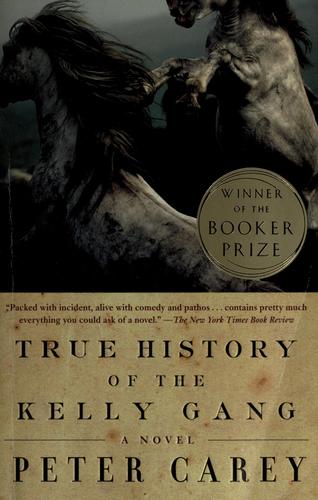
Ned Kelly, the infamous Australian bushranger executed in 1880, writes a long confession to his infant daughter that explains — from his point of view — everything that led him to outlawry, armor, and the gallows.
Peter Carey · 2000 · 8h 0m
Full summary and key takeaways →The 12 questions
- 1.
Carey invents Ned Kelly's voice wholesale, based on a few real documents. Does that feel like an act of sympathy, an act of appropriation, or something in between?
- 2.
The unpunctuated prose style is deliberately difficult. Did it work on you emotionally, or did you find it a barrier to the story?
- 3.
The novel presents Kelly's crimes as produced by the system. Does it succeed in making that case without making Kelly unaccountable for the violence he commits?
- 4.
Kelly's mother and her many disasters are central to his story. How does Carey use her character to ground the novel's political argument?
- 5.
The armor Kelly and his gang wore is one of Australian history's most famous images. What does Carey do with it as a symbol?
- 6.
Australia has a complicated relationship with the Kelly legend — he's simultaneously a criminal and a folk hero. Does this novel change how you think about outlaw mythology in general?
- 7.
The novel is addressed to Kelly's infant daughter. How does that framing device — writing to someone who cannot yet understand — affect the emotional register of the book?
- 8.
Compare this to another novel written in an invented historical voice — Hilary Mantel's Wolf Hall, for instance, or Colm Tóibín's The Master. How does the choice of 'uneducated' vernacular versus cultivated literary prose change the moral argument?
- 9.
Kelly is partly a nationalist figure — an Irish-Australian resisting British-Australian authority. How much of the novel's sympathy is political rather than personal?
- 10.
The ending is historically fixed — we know Kelly will hang. Did that inevitability add to or diminish your engagement with the story?
- 11.
What is the novel saying about the difference between the story we tell about ourselves and the story others will tell about us after we're gone?
- 12.
Which character besides Kelly surprised you the most, and why?
How to run the discussion
- Pick six to eight, not all of them. An hour of real discussion covers fewer questions than anyone expects, and racing the list is what makes a book club feel like homework.
- Open with what people noticed, not what they concluded. Asking for a verdict first hardens opinions before anyone has heard each other.
- Let the disagreement run. The questions below that split a room are the ones worth the time; the ones everyone answers the same way can be skipped.
- Ask the quiet person a specific question. A direct, narrow question is far easier to answer than an open invitation to contribute.
Themes worth steering toward
If the conversation stalls, these are the threads that usually restart it.
Common questions
What are good book club questions for True History of the Kelly Gang?
Here are 12 book club questions for True History of the Kelly Gang by Peter Carey, ordered to open easily and end somewhere worth arguing about. The strongest openers ask what each reader noticed rather than what they concluded, and the discussion usually turns on colonial injustice, outlaw mythology, class and dispossession.
How long should a book club discussion of True History of the Kelly Gang last?
Most groups run 60 to 90 minutes of actual discussion. That is roughly six to eight questions, not all of them, so pick the ones that suit your group rather than working down the list in order.
What are the main themes in True History of the Kelly Gang?
Colonial injustice, Outlaw mythology, Class and dispossession, Identity and performance, Loyalty and betrayal. Those are the threads most likely to divide a room, which makes them the useful places to steer a discussion that has gone quiet.
Picking the next one? See books like True History of the Kelly Gang or questions for other book club picks.
