Business · Book club
True North book club questions
Here are 12 book club questions for True North by Bill George, ordered to open easily and end somewhere worth arguing about. Copy them, print them, or bring them up one at a time.
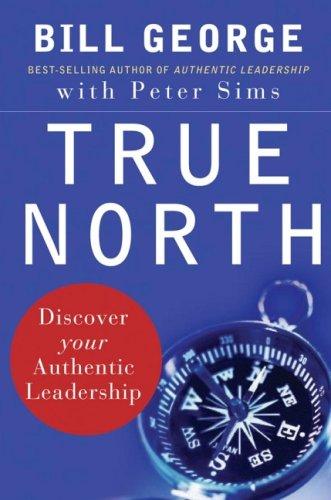
True North is Bill George's argument that the most effective leaders are those who lead from a clear sense of who they are — their values, their purpose, their motivations — rather than from a performance of what leadership is supposed to look like.
Bill George · 2007
Full summary and key takeaways →The 12 questions
- 1.
George says your True North is your internal compass. How consistently does the way you work reflect your actual values, as opposed to the values you say you hold?
- 2.
Think of a crucible experience that shaped how you lead or work. What did you learn from it that you couldn't have learned any other way?
- 3.
George argues that leaders who haven't examined their own motivations lead from insecurity. Where in your current role does ego or insecurity affect your decisions?
- 4.
He emphasizes support networks as infrastructure, not luxury. Who are the two or three people who give you honest feedback — and when did you last actually use it?
- 5.
What's the gap, if any, between who you are at work and who you are in the rest of your life? What does that gap cost you?
- 6.
George interviewed 125 leaders who described specific moments when their compass was tested. What would that moment be for you?
- 7.
The book distinguishes purpose from ambition. Do you know the purpose behind your current work — beyond the job description and the compensation?
- 8.
Many leaders George profiles describe leading differently after failure. Has a professional failure changed how you lead? How?
- 9.
Which of the five dimensions — purpose, values, relationships, self-discipline, heart — is most underdeveloped in your own leadership right now?
- 10.
If the people you manage described your leadership style honestly, would it match how you see yourself? What would the gap tell you?
- 11.
George's leaders who drifted from their True North often didn't notice it happening gradually. What signals — in behavior, in relationships, in how you feel — would tell you that you're drifting?
- 12.
He argues that authentic leadership requires ongoing self-examination, not just a one-time values exercise. What practices do you actually use to stay honest with yourself?
How to run the discussion
- Pick six to eight, not all of them. An hour of real discussion covers fewer questions than anyone expects, and racing the list is what makes a book club feel like homework.
- Open with what people noticed, not what they concluded. Asking for a verdict first hardens opinions before anyone has heard each other.
- Let the disagreement run. The questions below that split a room are the ones worth the time; the ones everyone answers the same way can be skipped.
- Ask the quiet person a specific question. A direct, narrow question is far easier to answer than an open invitation to contribute.
Themes worth steering toward
If the conversation stalls, these are the threads that usually restart it.
Common questions
What are good book club questions for True North?
Here are 12 book club questions for True North by Bill George, ordered to open easily and end somewhere worth arguing about. The strongest openers ask what each reader noticed rather than what they concluded, and the discussion usually turns on authentic leadership, self-awareness, purpose.
How long should a book club discussion of True North last?
Most groups run 60 to 90 minutes of actual discussion. That is roughly six to eight questions, not all of them, so pick the ones that suit your group rather than working down the list in order.
What are the main themes in True North?
Authentic leadership, Self-awareness, Purpose, Values, Leadership development. Those are the threads most likely to divide a room, which makes them the useful places to steer a discussion that has gone quiet.
Picking the next one? See books like True North or questions for other book club picks.
