Trust by Hernan Diaz is a 2022 literary fiction book about wealth and narrative control, female erasure, historical fiction and fiction-within-fiction. The four-part structure is not a gimmick: each section genuinely revises what came before, and the reader's trust in any single account deteriorates with each new perspective.
Summary
Trust is a novel in four parts, each of which tells a related story about a fabulously wealthy New York financier and his wife in the early twentieth century. The first section is a lush, Jamesian novella about a plutocrat named Andrew Bevel and his wife Mildred. The second is an unfinished memoir by the real financier Benjamin Rask, furious at being fictionally depicted. The third is a memoir by Ida Partenza, a young Italian-American woman who served as Rask's ghostwriter. The fourth is a fragment of diary by Mildred herself. By the end, the reader has four different accounts of the same life and marriage, each one revising what came before.
The formal architecture is the novel's main argument: wealth buys narrative, and those with power over capital have power over how their lives are remembered. Rask commissions a memoir to correct the novel's unflattering portrait of his wife, then employs a ghostwriter to write it, which produces its own distortions. Mildred's diary fragment — the shortest section and the last to arrive — is the most unsettling because it's the voice the other three sections have been writing over.
Diaz's literary influences are visible and worn proudly: Edith Wharton for the social milieu, Henry James for the psychological indirection, and something more contemporary and structural for the meta-fictional architecture. The prose in the first section is deliberately pastiche and deliberately beautiful. The later sections work by contrast — plainer, more direct, increasingly urgent. The effect is of a painting being progressively stripped of varnish.
Trust won the Pulitzer Prize in 2023 and was widely celebrated as one of the most sophisticated American novels in years. Some readers find the structural cleverness a little cool — that Diaz's formal intelligence runs slightly ahead of his emotional engagement. That criticism has some merit. But the novel's questions about who gets to narrate power and whose story gets absorbed into someone else's legacy are serious ones, and the execution is near-flawless.
Talk to Trust like its author wrote you back.
Get the ideas that fit your life — not generic summaries.
- Chat with the book
- Audiobook-style main ideas
- Adapts to your life and goals
- Helps you take action
Key takeaways
- 1.
The four-part structure is not a gimmick: each section genuinely revises what came before, and the reader's trust in any single account deteriorates with each new perspective.
- 2.
Mildred — the wife — is the novel's real subject, but she appears only through other people's accounts until the final section. Her absence from her own story is Diaz's central point.
- 3.
Wealth in the novel functions as narrative control: the ability to fund your own biography, to correct the record, to ensure your version persists is inseparable from capital.
- 4.
The first section's pastiche of Jamesian/Whartonian prose is so convincing that many readers finish it not realizing it's deliberately imitative — which is exactly the point.
- 5.
Ida Partenza — the ghostwriter — is the novel's moral center, the person who does the labor that gets attributed to someone else, and whose own perspective keeps threatening to break through.
- 6.
The novel is about American financial history (the 1920s crash, the mechanisms of extreme wealth) but uses that history as a lens for the permanent question of whose story gets told.
- 7.
Trust uses the word not just in its financial sense (bonds, fiduciary duty) but in its epistemic sense: whom do we believe, and what makes a narrative trustworthy?
- 8.
The diary fragment at the end is deliberately incomplete — Mildred's voice, recovered but still partial — which is an honest formal choice about the limits of historical recovery.
Discussion questions
Use these on your own, with a book club, or as chat starters in Superbook. Book club version, ready to copy or print →
- 1.
The novel's first section presents as a conventional Jamesian novel. How quickly did you realize it was a fictional novel within the larger novel, and did that realization change how you read the first section retrospectively?
- 2.
Benjamin Rask's memoir is driven by a desire to correct the fiction's portrait of his wife — but his 'correction' also distorts. What does Diaz seem to think about the possibility of setting the record straight?
- 3.
Ida Partenza is hired to write Rask's memoir in his voice. She's aware of what she's doing and aware of the compromises involved. How does the novel treat her complicity?
- 4.
Mildred's diary — the final section — is fragmentary and incomplete. Does its incompleteness feel like an honest formal limit or like Diaz evading the full weight of what he's set up?
- 5.
The novel has a thesis about wealth and narrative control that is pretty explicit by the end. Did you find that thesis more persuasive as argument, or more affecting as fiction?
- 6.
The first section's prose is deliberately beautiful — it's the voice that has the most resources. What happens to your reading experience when that voice is stripped away in subsequent sections?
- 7.
Trust won the Pulitzer Prize. Does the Pulitzer feel deserved based on what the novel is doing, or does it seem like an award to a formally impressive book that rewards critical analysis more than emotional engagement?
- 8.
How does Diaz use the 1920s setting — the crash, the gilded age of American finance — as a mirror for contemporary anxieties about wealth and inequality?
- 9.
Ida's story is in some ways the most compelling and the most underwritten. Did you want more of her, or is her partial presence the point?
- 10.
The title Trust resonates across financial trust, interpersonal trust, and narrative trust. Which meaning felt most central to you by the end?
- 11.
Some critics found Trust structurally brilliant but emotionally cool. Do you agree? Is that a fair criticism, or is the emotional engagement operating at a level the criticism misses?
- 12.
If you could read only one of the four sections as a standalone piece, which would you choose — and what would be lost by reading it alone?
Themes
Frequently asked questions
-
Is Trust hard to read?
No, not in the prose-difficulty sense. The first section is the most ornate; subsequent sections become progressively plainer. The structural complexity — tracking four accounts of the same story — requires attention but rewards it. This is a book that benefits from a second reading.
-
Do you need to know about financial history to appreciate Trust?
Not much. The early twentieth-century financial world is the setting, but Diaz doesn't require specialist knowledge. The novel's concerns — who controls narrative, whose story gets told — are independent of the financial specifics.
-
What makes Trust more than a clever structural exercise?
Mildred. The novel's four sections progressively recover a woman who has been written over by every other account, and when her voice finally appears it carries the weight of everything that preceded it. The structure is in service of that recovery.
-
Is there a satisfying resolution?
Yes and no. The structural puzzle resolves clearly; the emotional and ethical questions it raises don't. That feels intentional — Diaz isn't interested in tidy endings.
-
Who might not enjoy Trust?
Readers who want emotional directness and intimate character immersion. The novel's formal sophistication keeps a certain analytical distance throughout, and the characters are rendered through distorted accounts rather than unmediated access. It's a book that impresses more than it moves, for some readers.
Similar books
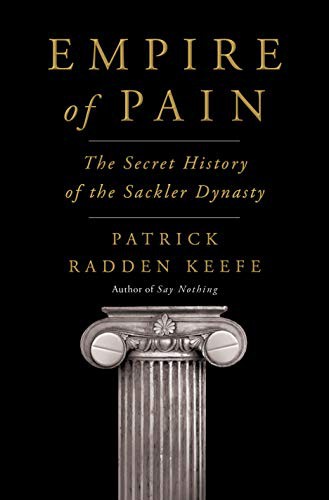
Empire of Pain: The Secret History of the Sackler Dynasty
Patrick Radden Keefe
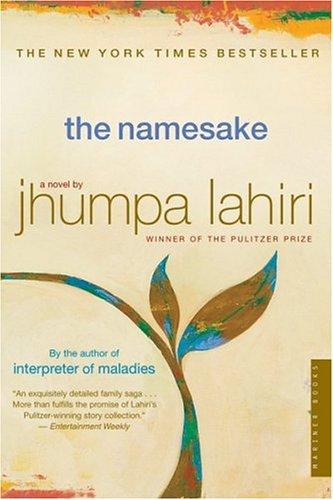
The Namesake
Jhumpa Lahiri
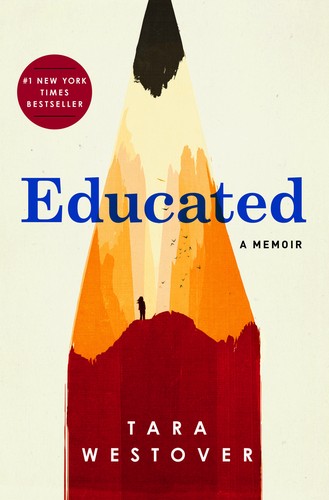
Educated: A Memoir
Tara Westover
A Heartbreaking Work of Staggering Genius
Dave Eggers
