Business · Book club
Turn the Ship Around! book club questions
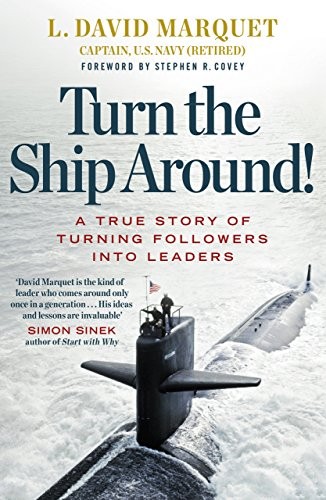
Here are 12 book club questions for Turn the Ship Around! by L. David Marquet, ordered to open easily and end somewhere worth arguing about. Copy them, print them, or bring them up one at a time.
The 12 questions
- 1.
Marquet realized the leader-follower model was broken when his crew executed an impossible order without question. Have you witnessed something similar — a team doing what the boss said rather than what was right?
- 2.
What's the ratio of 'I intend to' thinking to 'what should I do' thinking on your team? What does that ratio tell you about how much decision-making authority has actually been distributed?
- 3.
The book argues that control without competence is dangerous. Are there areas where your team has been given autonomy they don't yet have the knowledge to use well? What would closing that gap require?
- 4.
What decisions do you currently make that someone on your team could and should be making? What's stopping the transfer?
- 5.
Marquet describes building a ship where problems got shouted up rather than hidden. What happens in your organization when something goes wrong? Does it surface quickly or slowly?
- 6.
The Santa Fe became a ship that produced officers — a development engine, not just a high performer. What's your team's record of developing people who go on to lead other teams?
- 7.
Have you ever worked for a leader who was so decisive and competent that the team around them never developed? What were the long-term effects?
- 8.
What would have to change about the language you use at work for the shift from 'asking for permission' to 'stating intentions' to feel natural?
- 9.
The book is set in the military, which has an extreme hierarchy. What's gained and what's lost in translating the leader-leader model to a civilian organization with lower stakes?
- 10.
Marquet says the goal is to not be needed. How comfortable are you with the idea of making yourself unnecessary in your current role?
- 11.
What feedback loops in your organization have significant lag — where the consequences of a decision don't become visible for weeks or months? What does that lag cost?
- 12.
If your organization ran on 'I intend to' instead of 'may I,' what's the first place that would break down, and why?
How to run the discussion
- Pick six to eight, not all of them. An hour of real discussion covers fewer questions than anyone expects, and racing the list is what makes a book club feel like homework.
- Open with what people noticed, not what they concluded. Asking for a verdict first hardens opinions before anyone has heard each other.
- Let the disagreement run. The questions below that split a room are the ones worth the time; the ones everyone answers the same way can be skipped.
- Ask the quiet person a specific question. A direct, narrow question is far easier to answer than an open invitation to contribute.
Themes worth steering toward
If the conversation stalls, these are the threads that usually restart it.
Common questions
What are good book club questions for Turn the Ship Around!?
Here are 12 book club questions for Turn the Ship Around! by L. David Marquet, ordered to open easily and end somewhere worth arguing about. The strongest openers ask what each reader noticed rather than what they concluded, and the discussion usually turns on leadership, autonomy, organizational transformation.
How long should a book club discussion of Turn the Ship Around! last?
Most groups run 60 to 90 minutes of actual discussion. That is roughly six to eight questions, not all of them, so pick the ones that suit your group rather than working down the list in order.
What are the main themes in Turn the Ship Around!?
Leadership, Autonomy, Organizational transformation, Empowerment, Decision-making. Those are the threads most likely to divide a room, which makes them the useful places to steer a discussion that has gone quiet.
Picking the next one? See books like Turn the Ship Around! or questions for other book club picks.
