Self-help · Book club
Turning Pro book club questions
Here are 11 book club questions for Turning Pro by Steven Pressfield, ordered to open easily and end somewhere worth arguing about. Copy them, print them, or bring them up one at a time.
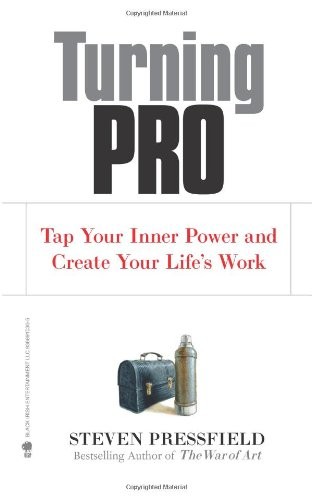
Turning Pro is Pressfield's follow-up to The War of Art, taking the Professional/Amateur distinction and developing it into a full examination of what the shift actually looks like — and what it costs.
Steven Pressfield · 2012 · 2h 30m
Full summary and key takeaways →The 11 questions
- 1.
Do you have a shadow career — an activity that looks like your calling but lets you avoid full commitment to it? What is it?
- 2.
Pressfield defines addiction broadly as any pattern that numbs or distracts from the work. What is your most reliable form of distraction when facing important work?
- 3.
What does 'turning pro' mean to you in your most important domain? What would you have to give up or accept to make that shift?
- 4.
He argues the moment of turning pro usually comes from hitting bottom. Have you had that experience? What preceded your biggest commitments?
- 5.
If your identity was fully defined by the work rather than by recognition or approval, what would change about how you approach it?
- 6.
What external validation are you still waiting for before you let yourself fully commit?
- 7.
The Amateur hedges. Where in your life are you maintaining exits — keeping options open in a way that prevents full commitment?
- 8.
Pressfield says the professional is bored by what doesn't serve the work. What activities in your life would you eliminate if you adopted this standard?
- 9.
How does Turning Pro change how you think about procrastination? Is procrastination a time-management problem or an identity problem?
- 10.
What is the work you are most afraid to fully commit to? What would change if you did?
- 11.
The book is very short and personal. Does Pressfield's autobiographical approach make the argument more or less convincing for you?
How to run the discussion
- Pick six to eight, not all of them. An hour of real discussion covers fewer questions than anyone expects, and racing the list is what makes a book club feel like homework.
- Open with what people noticed, not what they concluded. Asking for a verdict first hardens opinions before anyone has heard each other.
- Let the disagreement run. The questions below that split a room are the ones worth the time; the ones everyone answers the same way can be skipped.
- Ask the quiet person a specific question. A direct, narrow question is far easier to answer than an open invitation to contribute.
Themes worth steering toward
If the conversation stalls, these are the threads that usually restart it.
Common questions
What are good book club questions for Turning Pro?
Here are 11 book club questions for Turning Pro by Steven Pressfield, ordered to open easily and end somewhere worth arguing about. The strongest openers ask what each reader noticed rather than what they concluded, and the discussion usually turns on creativity, resistance, discipline.
How long should a book club discussion of Turning Pro last?
Most groups run 60 to 90 minutes of actual discussion. That is roughly six to eight questions, not all of them, so pick the ones that suit your group rather than working down the list in order.
What are the main themes in Turning Pro?
Creativity, Resistance, Discipline, Identity, Craft. Those are the threads most likely to divide a room, which makes them the useful places to steer a discussion that has gone quiet.
Picking the next one? See books like Turning Pro or questions for other book club picks.
