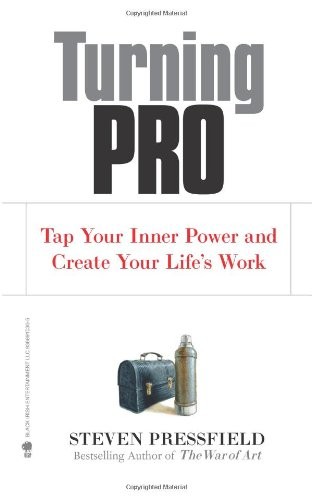
Turning Pro by Steven Pressfield is a 2012 self-help book about creativity, resistance, discipline. The Amateur has not yet committed fully to their calling. They hedge, maintain shadow careers, and organize their life around avoiding the anxiety of facing their real work.
Summary
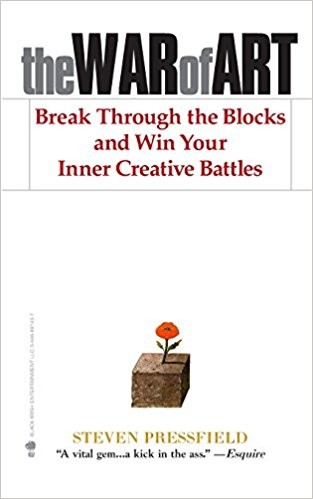
Turning Pro is Pressfield's follow-up to The War of Art, taking the Professional/Amateur distinction and developing it into a full examination of what the shift actually looks like — and what it costs. Where The War of Art focused primarily on Resistance as an external enemy to overcome, Turning Pro looks inward at the Amateur: the person who is still negotiating with their calling, still hedging, still looking for a comfortable version of the commitment.
Pressfield argues that the Amateur, in his definition, is not someone who is unskilled but someone who hasn't yet given themselves fully to their work. Amateurs are defined by shadow careers — activities that look like their calling but allow them to avoid the real one. They are defined by addictions: not just to substances, but to any pattern of distraction that helps them avoid confronting the work. The Amateur's life is organized around managing the anxiety of facing the work rather than doing it.
Turning Pro is a meditation on the moment of commitment — what it requires, what it costs, and what it transforms. Pressfield is autobiographical here, drawing on his years of struggle and the specific moment he stopped negotiating. He argues that turning pro is a decision and a posture, not an achievement. You don't wait until you're good enough; you adopt the professional posture now and let the work improve.
The book is shorter and more personal than The War of Art, and some readers find it redundant if they've already absorbed the predecessor. But Pressfield adds something important: the idea that the Amateur's shadow career, addictions, and distractions are symptoms of a deeper avoidance — and that until you identify what you're truly avoiding, no amount of technique will help.
Talk to Turning Pro like its author wrote you back.
Get the ideas that fit your life — not generic summaries.
- Chat with the book
- Audiobook-style main ideas
- Adapts to your life and goals
- Helps you take action
Key takeaways
- 1.
The Amateur has not yet committed fully to their calling. They hedge, maintain shadow careers, and organize their life around avoiding the anxiety of facing their real work.
- 2.
Shadow careers look like your calling but let you avoid the real commitment. A person who wants to write novels might teach writing; a would-be painter might manage an art gallery.
- 3.
Addiction, in Pressfield's broadest sense, is any pattern of behavior that numbs or distracts the practitioner from confronting the work. Technology, food, social media, and busyness are all forms.
- 4.
Turning pro is a decision, not an achievement. You don't wait until you are good enough; you adopt the professional posture and let the quality follow.
- 5.
The moment of turning pro is usually precipitated by hitting bottom — exhausting every other option — rather than by an inspiring realization.
- 6.
The Professional's identity is defined by the work, not by external recognition. Approval and validation become secondary to the practice itself.
- 7.
What you are resisting most is where your calling lives. The strength of the avoidance is proportional to the importance of what's being avoided.
- 8.
Turning pro changes your relationship with time: you stop waiting for conditions to be right and start protecting the hours for the work regardless of circumstance.
Discussion questions
Use these on your own, with a book club, or as chat starters in Superbook. Book club version, ready to copy or print →
- 1.
Do you have a shadow career — an activity that looks like your calling but lets you avoid full commitment to it? What is it?
- 2.
Pressfield defines addiction broadly as any pattern that numbs or distracts from the work. What is your most reliable form of distraction when facing important work?
- 3.
What does 'turning pro' mean to you in your most important domain? What would you have to give up or accept to make that shift?
- 4.
He argues the moment of turning pro usually comes from hitting bottom. Have you had that experience? What preceded your biggest commitments?
- 5.
If your identity was fully defined by the work rather than by recognition or approval, what would change about how you approach it?
- 6.
What external validation are you still waiting for before you let yourself fully commit?
- 7.
The Amateur hedges. Where in your life are you maintaining exits — keeping options open in a way that prevents full commitment?
- 8.
Pressfield says the professional is bored by what doesn't serve the work. What activities in your life would you eliminate if you adopted this standard?
- 9.
How does Turning Pro change how you think about procrastination? Is procrastination a time-management problem or an identity problem?
- 10.
What is the work you are most afraid to fully commit to? What would change if you did?
- 11.
The book is very short and personal. Does Pressfield's autobiographical approach make the argument more or less convincing for you?
Themes
Frequently asked questions
-
Do I need to read The War of Art before Turning Pro?
It helps. The two books share the same framework — Resistance, the Professional, the Amateur — and Turning Pro assumes you understand the first book. Reading The War of Art first makes Turning Pro more coherent, though it can stand alone.
-
How long does it take to read Turning Pro?
About two hours. The chapters are very short, and the book is even smaller than The War of Art. Most readers finish it in one sitting.
-
What is the main difference between The War of Art and Turning Pro?
The War of Art is about Resistance — what it is and how to fight it. Turning Pro is about the Amateur — the person who is still negotiating with their calling. Turning Pro is more personal and more focused on identity; The War of Art is more focused on the creative battle.
-
Is Turning Pro worth reading if you've already read The War of Art?
Yes, though it covers some of the same ground. The new material — shadow careers, broad addiction, the anatomy of the Amateur's life — adds meaningfully to the framework. If The War of Art resonated, Turning Pro is worth two hours.
-
Who should read Turning Pro?
Anyone who recognized themselves in The War of Art and wants to go deeper on what's actually preventing them from committing. Also useful for people in obvious transition — leaving a safe career, starting a creative project — who sense they are still hedging.