Philosophy · Book club
Twilight of the Idols book club questions
Here are 11 book club questions for Twilight of the Idols by Friedrich Nietzsche, ordered to open easily and end somewhere worth arguing about. Copy them, print them, or bring them up one at a time.
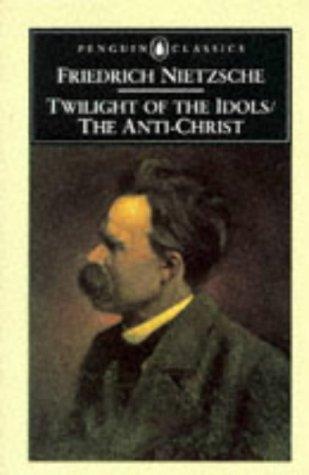
Twilight of the Idols, written by Nietzsche in just a few weeks in 1888 and published the following year, is one of his most concentrated and accessible works.
Friedrich Nietzsche · 1889 · 2h 15m
Full summary and key takeaways →The 11 questions
- 1.
Nietzsche argues that the distinction between appearance and reality, as developed from Plato onward, is the foundational error of Western thought. Do you find that argument convincing, or is some version of that distinction necessary?
- 2.
His diagnosis of Socrates as symptomatic of cultural decline is deliberately provocative. What evidence could count for or against the claim that reason becomes dominant when instinct fails, rather than when instinct thrives?
- 3.
Nietzsche often writes as though he is diagnosing cultural illness in others. Is there a tension between that diagnostic stance and his own philosophical project? Can a nihilism-demolisher avoid being infected by the nihilism he diagnoses?
- 4.
The Goethe portrait in the book is Nietzsche's model of the affirmative type. Does that portrait match what you know of Goethe, and is it an inspiring model or a convenient fiction?
- 5.
He says he philosophizes with a hammer — testing idols to see whether they ring hollow. Which of the idols he strikes seems most hollow to you today? Which still rings solid?
- 6.
The morality of weakness claiming to be virtue is Nietzsche's characterization of Christian ethics and its descendants. Where in contemporary culture do you see that pattern most clearly?
- 7.
Nietzsche's critique of German culture in 1888 is specific to Wilhelmine Germany. How much of it is historical curiosity and how much transfers to contemporary conditions?
- 8.
He argues that the apparent world and the true world must both be abolished — what survives is just the world. What does that mean for ethics, for epistemology, and for how you actually live?
- 9.
The title parodies Wagner, whom Nietzsche had once admired and later broke with. The intellectual break with a former hero is a recurring Nietzsche theme. What does it reveal about how he thought philosophical development worked?
- 10.
Twilight of the Idols is both a demolition and a hint of an affirmative philosophy. Do you find the affirmative parts convincing, or does Nietzsche work better as a critic than as a builder?
- 11.
His writing style here — aphoristic, combative, compressed — is part of the argument about how philosophy should be done. Does the style enhance or undermine the content for you?
How to run the discussion
- Pick six to eight, not all of them. An hour of real discussion covers fewer questions than anyone expects, and racing the list is what makes a book club feel like homework.
- Open with what people noticed, not what they concluded. Asking for a verdict first hardens opinions before anyone has heard each other.
- Let the disagreement run. The questions below that split a room are the ones worth the time; the ones everyone answers the same way can be skipped.
- Ask the quiet person a specific question. A direct, narrow question is far easier to answer than an open invitation to contribute.
Themes worth steering toward
If the conversation stalls, these are the threads that usually restart it.
Common questions
What are good book club questions for Twilight of the Idols?
Here are 11 book club questions for Twilight of the Idols by Friedrich Nietzsche, ordered to open easily and end somewhere worth arguing about. The strongest openers ask what each reader noticed rather than what they concluded, and the discussion usually turns on nihilism, morality, culture.
How long should a book club discussion of Twilight of the Idols last?
Most groups run 60 to 90 minutes of actual discussion. That is roughly six to eight questions, not all of them, so pick the ones that suit your group rather than working down the list in order.
What are the main themes in Twilight of the Idols?
Nihilism, Morality, Culture, Philosophy critique, Values. Those are the threads most likely to divide a room, which makes them the useful places to steer a discussion that has gone quiet.
Picking the next one? See books like Twilight of the Idols or questions for other book club picks.
