Literary fiction · Book club
Ulysses book club questions
Here are 12 book club questions for Ulysses by James Joyce, ordered to open easily and end somewhere worth arguing about. Copy them, print them, or bring them up one at a time.
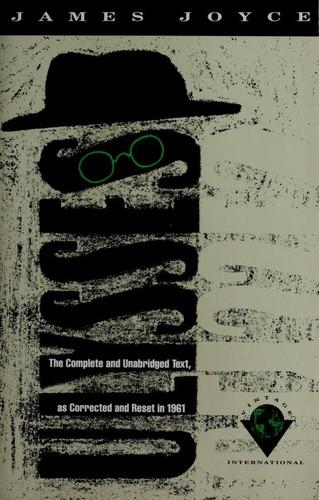
Ulysses takes place on a single day — June 16, 1904 — in Dublin, following three characters: Leopold Bloom, an advertising canvasser; his wife Molly; and Stephen Dedalus, the young writer from A Portrait of the Artist as a Young Man.
James Joyce · 1922 · 17h 45m
Full summary and key takeaways →The 12 questions
- 1.
Most readers find Bloom more accessible than Stephen. Which character did you find yourself more interested in, and why?
- 2.
The Nighttown episode reads like a fever dream — hallucinatory, expressionistic, hard to follow. How did you experience it? Did you feel it was worth the difficulty it imposes?
- 3.
Molly's final soliloquy is often read as affirmative — the 'yes' at the end. But is it? What is she actually thinking and feeling in those forty pages?
- 4.
Joyce never lets you forget the day has a specific historical and geographic setting. Does the Dublin-in-1904 specificity feel like richness or like being kept outside a private joke?
- 5.
The novel is built on the Odyssey but most readers can't see the correspondences without a guide. Does knowing the structure change your reading, or does it feel like a scholar's game?
- 6.
Leopold Bloom is Jewish, and the novel is interested in his outsider status in a city of Catholic nationalism. How does that thread develop across the day?
- 7.
The Oxen of the Sun episode is a parody of the history of English prose style. Is that the kind of difficulty you find interesting, or does it feel like a stunt?
- 8.
Ulysses is often called the greatest novel in English. Do you think it's the greatest, or just the most technically ambitious? Are those different things?
- 9.
Did you use a guide (Gifford, Gilbert, or similar) while reading? If so, did it help or did it make the experience feel like homework?
- 10.
The book's central relationship — Bloom and Molly's marriage, defined by his passivity and her affair with Blazes Boylan — is never directly dramatized. We only know it through interiority. Does that feel like a limitation?
- 11.
Compared to other ambitious modernist novels you've read — The Waves, Mrs Dalloway, The Sound and the Fury — where does Ulysses fall in terms of difficulty-to-reward ratio?
- 12.
The final word is 'yes.' What do you think Joyce means by ending there, and does it feel earned?
How to run the discussion
- Pick six to eight, not all of them. An hour of real discussion covers fewer questions than anyone expects, and racing the list is what makes a book club feel like homework.
- Open with what people noticed, not what they concluded. Asking for a verdict first hardens opinions before anyone has heard each other.
- Let the disagreement run. The questions below that split a room are the ones worth the time; the ones everyone answers the same way can be skipped.
- Ask the quiet person a specific question. A direct, narrow question is far easier to answer than an open invitation to contribute.
Themes worth steering toward
If the conversation stalls, these are the threads that usually restart it.
Common questions
What are good book club questions for Ulysses?
Here are 12 book club questions for Ulysses by James Joyce, ordered to open easily and end somewhere worth arguing about. The strongest openers ask what each reader noticed rather than what they concluded, and the discussion usually turns on identity, consciousness, modern dublin.
How long should a book club discussion of Ulysses last?
Most groups run 60 to 90 minutes of actual discussion. That is roughly six to eight questions, not all of them, so pick the ones that suit your group rather than working down the list in order.
What are the main themes in Ulysses?
Identity, Consciousness, Modern Dublin, Marriage and fidelity, Time and mortality. Those are the threads most likely to divide a room, which makes them the useful places to steer a discussion that has gone quiet.
Picking the next one? See books like Ulysses or questions for other book club picks.
