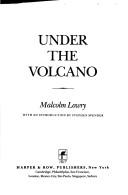
Under the Volcano by Malcolm Lowry is a 1947 literary fiction book about alcoholism and self-destruction, guilt and penance, political violence. The Consul's alcoholism is portrayed not as a weakness but as a philosophical choice — a refusal of life's terms that has its own terrible coherence.
Summary
Malcolm Lowry's 1947 novel takes place on a single day — the Mexican Day of the Dead, November 2, 1938 — in the small town of Quauhnahuac (Cuernavaca) in the shadow of the Popocatépetl volcano. Geoffrey Firmin, the British ex-Consul, is drinking himself to death. His estranged wife Yvonne has returned to try to save him. His half-brother Hugh is present, politically engaged and morally serious in ways that implicitly indict Geoffrey. By nightfall, it will end badly. There is no suspense about the direction of travel.
Lowry wrote the novel as a sustained meditation on what it means to choose self-destruction when you could choose otherwise — or might be able to, if you could stop drinking long enough to find out. Geoffrey is a formidable intelligence slowly dissolving his own mind, and the novel's interiority is correspondingly vertiginous. The prose streams through his consciousness at high temperature: hallucinations, literary allusions, guilt, moments of terrible lucidity, more drinking. The Consul knows exactly what he's doing and cannot stop. That combination — self-awareness without self-rescue — is the novel's central horror.
The politics of 1938 — Hitler's rise, the Spanish Civil War, Mexico's revolutionary murals — run through the background, giving Geoffrey's private collapse a larger frame. Lowry implies a parallel between the Consul's chosen destruction and Europe's. Hugh represents the political conscience the Consul abandoned; Yvonne represents the emotional life he won't accept. The volcano looms over everything as symbol so heavy it almost collapses under its own weight, though Lowry just about earns it.
This is one of the most demanding novels in the English language — not in the Joycean sense of being deliberately obscure, but in the sense that Lowry asks you to spend twelve hours inside the mind of a brilliant drunk on the worst day of his life. Readers who find that premise unbearable should skip it. Readers who respond to language at the edge of its capacity, and to fiction that takes addiction seriously as a philosophical state, will find it extraordinary and exhausting in roughly equal measure.
Talk to Under the Volcano like its author wrote you back.
Get the ideas that fit your life — not generic summaries.
- Chat with the book
- Audiobook-style main ideas
- Adapts to your life and goals
- Helps you take action
Key takeaways
- 1.
The Consul's alcoholism is portrayed not as a weakness but as a philosophical choice — a refusal of life's terms that has its own terrible coherence.
- 2.
The single-day structure collapses the distance between reader and event: you're present for the whole collapse in real time.
- 3.
Lowry uses the Day of the Dead setting deliberately — Geoffrey is already a kind of ghost, moving through a festival of death while dying himself.
- 4.
The political backdrop of 1938 is not decoration: Lowry treats European fascism and Geoffrey's personal disintegration as parallel forms of chosen darkness.
- 5.
Yvonne's return is simultaneously an act of love and an imposition Geoffrey cannot bear — the novel refuses to make her straightforwardly heroic or him straightforwardly wrong.
- 6.
The prose is one of the most sustained examples of stream-of-consciousness alcoholic thinking in fiction: precise about intoxication in a way that only a serious drinker could achieve.
- 7.
The volcano is the dominant symbol — looming, beautiful, deadly — and Lowry manages to make it feel earned rather than labored in a novel this saturated with symbolism.
- 8.
Lowry spent ten years writing and rewriting the novel; the obsessiveness of its construction mirrors its subject.
Discussion questions
Use these on your own, with a book club, or as chat starters in Superbook. Book club version, ready to copy or print →
- 1.
Geoffrey says at one point that he likes Hell, that it suits him. Is that a moment of self-knowledge or self-deception? Does the novel allow a difference?
- 2.
Yvonne comes back to save Geoffrey. Does the novel treat that as noble, misguided, or something more complicated? Does it matter whether she can save him?
- 3.
Hugh is politically engaged — he fought in the Spanish Civil War, he's going to fight again. How does his presence indict the Consul, and is that indictment fair?
- 4.
The entire novel takes place in a single day. What does that compressed structure do to your experience of the events?
- 5.
Lowry was himself a serious alcoholic. Does knowing that change how you read the novel? Is it autobiography, confession, or something else?
- 6.
The political world of 1938 is visible in the background throughout — the rising fascism, the civil war. Is Lowry drawing a real parallel between public and private catastrophe, or is that reading too convenient?
- 7.
The novel is dense with literary allusion — Dante, Goethe, the Cabbala, the Tarot. Does that density feel earned, or does it tip toward showing off?
- 8.
Geoffrey's drinking seems to be the cause of his failures, but the novel also suggests it's the symptom of something that already failed. What came first, and can you tell?
- 9.
The ending is violent in a way that feels both inevitable and sudden. Was the specific form of Geoffrey's death the right ending for the novel?
- 10.
Compared to a memoir about addiction like Beautiful Boy, what does fiction do that memoir can't? What does it sacrifice?
- 11.
The Day of the Dead setting could feel like a heavy-handed allegory. Does Lowry make it work, or does it feel imposed?
- 12.
The novel was rejected thirty times before publication. Having read it, what do you think publishers were rejecting? What about it would be commercially difficult?
Themes
Frequently asked questions
-
Is Under the Volcano worth the effort?
For the right reader, yes — it's one of the most intense reading experiences in twentieth-century fiction. For a reader who wants narrative momentum or sympathetic characters, probably not. Go in knowing what it is: a long, dense, harrowing portrait of a brilliant man choosing destruction.
-
Is it really that hard to read?
It's demanding rather than difficult in the way Ulysses is difficult. The sentences are long and the consciousness is intoxicated, but Lowry isn't deliberately obscuring meaning. The challenge is sustaining attention through a very long, very dark passage. Reading in long sittings rather than short ones helps.
-
Do I need to know about the Cabbala and Dante to get the symbolism?
No. The major emotional and thematic currents are available without the allusions. Catching the allusions deepens the experience but the novel works without them.
-
Is there a film adaptation?
John Huston directed a 1984 adaptation with Albert Finney as the Consul. It's a serious attempt and Finney is remarkable, but the novel's interiority doesn't translate fully to film.
-
Who shouldn't read this book?
Anyone who finds alcoholism as a subject tedious rather than interesting, or who needs a protagonist they can root for. The Consul is fully aware of his destruction and chooses it. If that makes you want to put the book down rather than keep reading, trust that instinct.
Similar books
A Moveable Feast
Ernest Hemingway
Man's Search for Meaning
Viktor E. Frankl
In the Realm of Hungry Ghosts
Gabor Maté
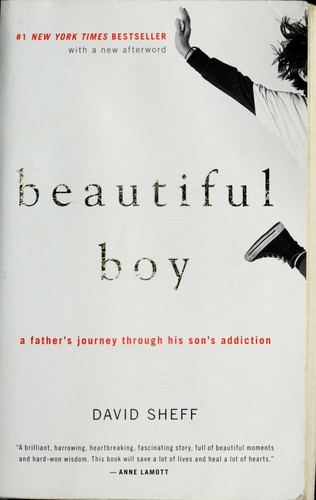
Beautiful Boy: A Father's Journey Through His Son's Addiction
David Sheff
