Philosophy · Book club
Understanding Media book club questions
Here are 11 book club questions for Understanding Media by Marshall McLuhan, ordered to open easily and end somewhere worth arguing about. Copy them, print them, or bring them up one at a time.
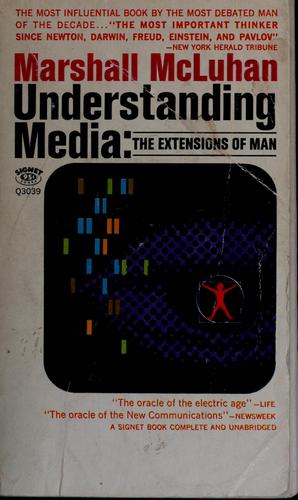
Understanding Media, published in 1964, is Marshall McLuhan's most developed work and the book that made "the medium is the message" a catchphrase of the twentieth century.
Marshall McLuhan · 1964 · 7h 15m
Full summary and key takeaways →The 11 questions
- 1.
McLuhan says we focus on content and miss the medium's effects. Can you think of a contemporary technology where this dynamic is playing out — where the debate is about content while the form is doing something larger?
- 2.
How does McLuhan's 'hot versus cool' distinction apply to digital media? Is social media hot, cool, or something he didn't have a category for?
- 3.
McLuhan predicted a 'global village' through electric media — a return to tribal, communal experience. Does that prediction feel accurate, and is the result what he seemed to expect?
- 4.
He argues that the printing press rewired European consciousness. What rewiring, if any, does the internet seem to be doing to contemporary cognition and social organization?
- 5.
McLuhan's writing style is famously non-linear and aphoristic. Did you find that frustrating, stimulating, or both? Is his method part of his message?
- 6.
The book argues that every medium extends some faculty and numbs others. What faculties do you think smartphones have extended, and what have they numbed?
- 7.
McLuhan saw television as cool media requiring active completion by the viewer. Does that claim still feel right? What about streaming video or YouTube?
- 8.
He treats money, roads, and weapons as 'media' in the same sense as print or television. Does extending the concept that far illuminate anything, or does it dilute the term?
- 9.
McLuhan wrote in the early 1960s before the internet. Which of his concepts apply most directly to digital media, and which seem most obviously inapplicable?
- 10.
Understanding Media was controversial when published and remains contested. What's the strongest objection to McLuhan's approach, and what's the strongest thing he gets right?
- 11.
If 'the medium is the message' for books, what does that mean about the form of this book — its length, its linear structure, its argument-based format?
How to run the discussion
- Pick six to eight, not all of them. An hour of real discussion covers fewer questions than anyone expects, and racing the list is what makes a book club feel like homework.
- Open with what people noticed, not what they concluded. Asking for a verdict first hardens opinions before anyone has heard each other.
- Let the disagreement run. The questions below that split a room are the ones worth the time; the ones everyone answers the same way can be skipped.
- Ask the quiet person a specific question. A direct, narrow question is far easier to answer than an open invitation to contribute.
Themes worth steering toward
If the conversation stalls, these are the threads that usually restart it.
Common questions
What are good book club questions for Understanding Media?
Here are 11 book club questions for Understanding Media by Marshall McLuhan, ordered to open easily and end somewhere worth arguing about. The strongest openers ask what each reader noticed rather than what they concluded, and the discussion usually turns on media theory, technology and society, communication.
How long should a book club discussion of Understanding Media last?
Most groups run 60 to 90 minutes of actual discussion. That is roughly six to eight questions, not all of them, so pick the ones that suit your group rather than working down the list in order.
What are the main themes in Understanding Media?
Media theory, Technology and society, Communication, Culture, Perception. Those are the threads most likely to divide a room, which makes them the useful places to steer a discussion that has gone quiet.
Picking the next one? See books like Understanding Media or questions for other book club picks.
