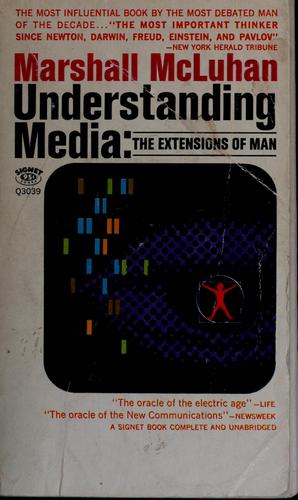
Understanding Media by Marshall McLuhan is a 1964 philosophy book about media theory, technology and society, communication. 'The medium is the message': the form of a medium shapes perception and social organization more profoundly than any content it carries. We attend to content and miss the form's effects.
Summary
Understanding Media, published in 1964, is Marshall McLuhan's most developed work and the book that made "the medium is the message" a catchphrase of the twentieth century. McLuhan was a Canadian literary critic and communications theorist who argued that scholars, journalists, and citizens were making a fundamental error when they focused on the content of media — what television programs said, what newspapers reported — rather than on the form of the medium itself and what it does to human perception and social organization.
The book's core argument is that every medium extends some human faculty — print extends the eye, radio extends the ear, clothing extends the skin — and in doing so, it also amputates or numbs the faculties not extended. Literacy, in McLuhan's account, did not merely change what people could read; it rewired the sensorium toward linear, sequential, visual processing and away from the oral, acoustic, communal modes of pre-literate culture. The printing press did not just spread content; it created the conditions for nationalism, individualism, and modern science by training millions of people to think in straight lines.
McLuhan distinguishes "hot" media (high-definition, low-participation, like film and radio) from "cool" media (low-definition, high-participation, like television and telephone). A hot medium fills in all the data; a cool medium requires the audience to complete the picture. Television, famously, McLuhan called cool — its low-resolution image requires active engagement to make sense of, which is why it produces the communal, tribal responses it does. This taxonomy is counterintuitive and not always convincing, but it generates surprising observations throughout the book.
The second part of Understanding Media is a chapter-by-chapter survey of individual media: roads, money, clocks, comics, film, radio, television, weapons. These chapters are uneven and often deliberately provocative. McLuhan wrote in a deliberately aphoristic, non-linear style that many readers find either stimulating or infuriating. He does not build careful arguments from evidence; he juxtaposes observations and invites the reader to make connections. Reading him requires a tolerance for intellectual improvisation. What the book offers in return is a set of questions about technology and perception that have aged better than almost any other media criticism of the period, and that apply with striking relevance to the internet, smartphones, and social media.
Talk to Understanding Media like its author wrote you back.
Get the ideas that fit your life — not generic summaries.
- Chat with the book
- Audiobook-style main ideas
- Adapts to your life and goals
- Helps you take action
Key takeaways
- 1.
'The medium is the message': the form of a medium shapes perception and social organization more profoundly than any content it carries. We attend to content and miss the form's effects.
- 2.
Every medium extends a human faculty and simultaneously amputates others. Print extended vision and sequential thinking; it also diminished oral, communal, and multi-sensory engagement.
- 3.
Hot media (film, radio) are high-definition and demand low participation from the audience. Cool media (telephone, television) are low-definition and require the audience to complete them actively.
- 4.
The printing press did not just spread literacy — it restructured European consciousness toward individualism, nationalism, and linear reasoning, making the Reformation and the scientific revolution possible.
- 5.
Electric media collapse the boundaries of space and time that print created. McLuhan argued that electricity was re-tribalizing human experience, creating a 'global village' of simultaneous, communal experience.
- 6.
The 'global village' is not utopia. McLuhan recognized that tribal electronic media produce conformity, intensified emotions, and a hunger for collective identity — not necessarily enlightenment.
- 7.
Economic and financial systems are also media, in McLuhan's sense — they extend human exchange capacity and restructure the social relations built around it. Money is a medium.
- 8.
The content of a medium often disguises its effects. We argue about what television shows say while television's form is rewiring the viewer's attention, pace, and emotional processing.
Discussion questions
Use these on your own, with a book club, or as chat starters in Superbook. Book club version, ready to copy or print →
- 1.
McLuhan says we focus on content and miss the medium's effects. Can you think of a contemporary technology where this dynamic is playing out — where the debate is about content while the form is doing something larger?
- 2.
How does McLuhan's 'hot versus cool' distinction apply to digital media? Is social media hot, cool, or something he didn't have a category for?
- 3.
McLuhan predicted a 'global village' through electric media — a return to tribal, communal experience. Does that prediction feel accurate, and is the result what he seemed to expect?
- 4.
He argues that the printing press rewired European consciousness. What rewiring, if any, does the internet seem to be doing to contemporary cognition and social organization?
- 5.
McLuhan's writing style is famously non-linear and aphoristic. Did you find that frustrating, stimulating, or both? Is his method part of his message?
- 6.
The book argues that every medium extends some faculty and numbs others. What faculties do you think smartphones have extended, and what have they numbed?
- 7.
McLuhan saw television as cool media requiring active completion by the viewer. Does that claim still feel right? What about streaming video or YouTube?
- 8.
He treats money, roads, and weapons as 'media' in the same sense as print or television. Does extending the concept that far illuminate anything, or does it dilute the term?
- 9.
McLuhan wrote in the early 1960s before the internet. Which of his concepts apply most directly to digital media, and which seem most obviously inapplicable?
- 10.
Understanding Media was controversial when published and remains contested. What's the strongest objection to McLuhan's approach, and what's the strongest thing he gets right?
- 11.
If 'the medium is the message' for books, what does that mean about the form of this book — its length, its linear structure, its argument-based format?
Themes
Frequently asked questions
-
What does 'the medium is the message' mean?
That the form of a medium — not its content — is what most significantly shapes human behavior and society. A television set reorganizes family life and attention regardless of what's on. Print created individualism and nationalism regardless of what was printed. McLuhan argues we debate content while missing the structural effects of the form.
-
Is Understanding Media hard to read?
Yes, deliberately. McLuhan wrote in a non-linear, aphoristic style that resists straightforward argument. He juxtaposes ideas rather than building cases. Readers who want clear evidence-based argument will find it frustrating. Readers who enjoy associative thinking and provocative hypotheses will find it generative.
-
Do McLuhan's ideas apply to the internet and social media?
Surprisingly well. The distinction between medium and message, the concept of re-tribalization, the idea that electric media collapse space and time — all of these seem prescient about social media dynamics, attention fragmentation, and the political effects of platforms.
-
Who should read Understanding Media?
Designers, journalists, technologists, and anyone trying to think seriously about how communication technology shapes culture. Also useful for anyone studying media theory, where it remains a foundational text. Less suitable for readers who want a practical guide to anything.
-
What is McLuhan's 'global village'?
His term for the world reshaped by electric media — a world where events everywhere are simultaneously present everywhere, producing a tribal, emotionally intense communal experience analogous to pre-literate village life. He saw this as neither purely good nor bad, but as transformative.
Similar books
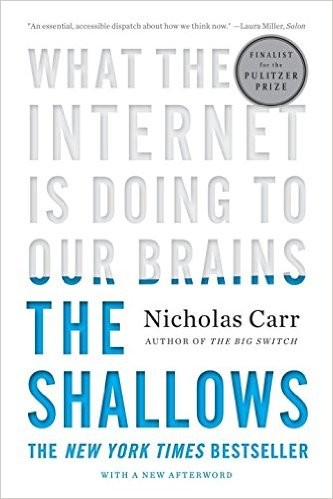
The Shallows: What the Internet Is Doing to Our Brains
Nicholas Carr
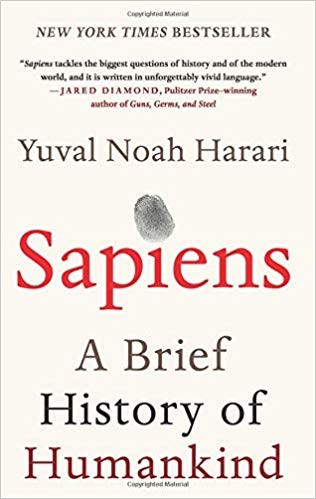
Sapiens: A Brief History of Humankind
Yuval Noah Harari
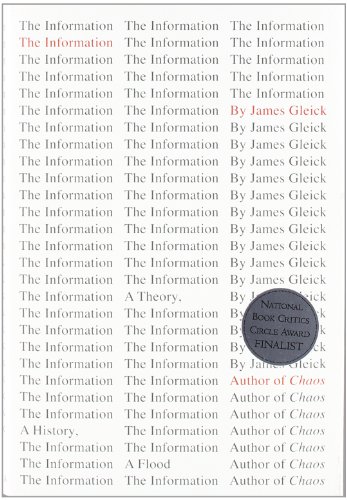
The Information: A History, a Theory, a Flood
James Gleick
The Age of Surveillance Capitalism: The Fight for a Human Future at the New Frontier of Power
Shoshana Zuboff
