Business · Book club
Venture Deals: Be Smarter Than Your Lawyer and Venture Capitalist book club questions
Here are 11 book club questions for Venture Deals: Be Smarter Than Your Lawyer and Venture Capitalist by Brad Feld and Jason Mendelson, ordered to open easily and end somewhere worth arguing about. Copy them, print them, or bring them up one at a time.
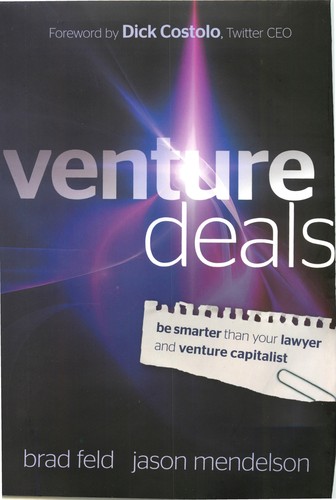
Venture Deals is Brad Feld and Jason Mendelson's guide to understanding venture capital term sheets — the documents that define the economic and control terms of startup funding.
Brad Feld and Jason Mendelson · 2011 · 5h 0m
Full summary and key takeaways →The 11 questions
- 1.
Feld and Mendelson argue that most founders don't understand the term sheets they sign. What are the consequences of that information asymmetry, and who bears the cost of it?
- 2.
The option pool shuffle effectively reduces the pre-money valuation from the founder's perspective. Is that a problem with the practice itself or with how it is communicated?
- 3.
What factors beyond valuation should a founder use to evaluate a VC offer? How do you weight them?
- 4.
Board composition is described as the most important control term. When would a founder-controlled board be better for a company, and when would an investor-controlled or balanced board be?
- 5.
How has the rise of SAFEs and YC-standard documents for seed rounds changed the dynamics Venture Deals describes? What problems have they solved and what have they not addressed?
- 6.
Feld and Mendelson say the relationship with the VC matters more than most specific deal terms. How do you evaluate that relationship quality before closing a deal?
- 7.
Anti-dilution provisions protect investors in down rounds. What should a founder know about their anti-dilution terms before hitting a difficult fundraising environment?
- 8.
What is the difference between a participating and non-participating liquidation preference, and in what outcome scenarios does the difference matter most?
- 9.
The book argues that most deal economics are within a relatively narrow market range. If that's true, why do negotiations over economic terms consume so much time and emotional energy?
- 10.
How does the structure of a VC fund — its vintage, size, and stage focus — affect the advice your investors will give you and the decisions they'll push you toward?
- 11.
Venture Deals focuses on US VC conventions. How much do terms and norms vary in other startup ecosystems — Europe, Southeast Asia, Latin America?
How to run the discussion
- Pick six to eight, not all of them. An hour of real discussion covers fewer questions than anyone expects, and racing the list is what makes a book club feel like homework.
- Open with what people noticed, not what they concluded. Asking for a verdict first hardens opinions before anyone has heard each other.
- Let the disagreement run. The questions below that split a room are the ones worth the time; the ones everyone answers the same way can be skipped.
- Ask the quiet person a specific question. A direct, narrow question is far easier to answer than an open invitation to contribute.
Themes worth steering toward
If the conversation stalls, these are the threads that usually restart it.
Common questions
What are good book club questions for Venture Deals: Be Smarter Than Your Lawyer and Venture Capitalist?
Here are 11 book club questions for Venture Deals: Be Smarter Than Your Lawyer and Venture Capitalist by Brad Feld and Jason Mendelson, ordered to open easily and end somewhere worth arguing about. The strongest openers ask what each reader noticed rather than what they concluded, and the discussion usually turns on venture capital, startups, finance.
How long should a book club discussion of Venture Deals: Be Smarter Than Your Lawyer and Venture Capitalist last?
Most groups run 60 to 90 minutes of actual discussion. That is roughly six to eight questions, not all of them, so pick the ones that suit your group rather than working down the list in order.
What are the main themes in Venture Deals: Be Smarter Than Your Lawyer and Venture Capitalist?
Venture capital, Startups, Finance, Entrepreneurship, Strategy. Those are the threads most likely to divide a room, which makes them the useful places to steer a discussion that has gone quiet.
Picking the next one? See books like Venture Deals: Be Smarter Than Your Lawyer and Venture Capitalist or questions for other book club picks.
