Fantasy · Book club
Vicious book club questions
Here are 12 book club questions for Vicious by V.E. Schwab, ordered to open easily and end somewhere worth arguing about. Copy them, print them, or bring them up one at a time.
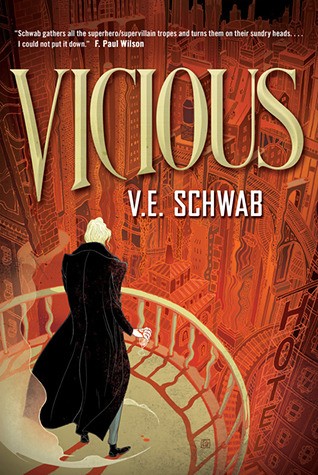
Vicious follows Victor Vale and Eli Cardale, two college roommates who discover through a thesis project that near-death experiences can create ExtraOrdinary humans — people with abilities.
V.E. Schwab · 2013 · 6h 45m
Full summary and key takeaways →The 12 questions
- 1.
By the end, did you decide that Victor or Eli was the villain? Or does the novel make that distinction meaningless?
- 2.
Eli frames his killing of ExtraOrdinaries as religious obligation. Does the novel treat that as delusion, or as a coherent worldview it takes seriously?
- 3.
Victor is capable of genuine loyalty — to Mitch, to Sydney — but not to Eli. What changed?
- 4.
The ExtraOrdinary abilities are defined by near-death psychology. What ability do you think you'd develop, based on what you'd fear most in that moment?
- 5.
Sydney is twelve years old and her ability is raising the dead. The novel doesn't make her a victim of that — she has genuine agency. Did that feel true?
- 6.
The non-linear structure means we know from early chapters that things go badly. Did dramatic irony help or hurt your engagement with the college flashbacks?
- 7.
Eli's thesis was about what makes people extraordinary. Do you think the novel answers that question, or just complicates it?
- 8.
Victor escapes from prison at the start of the novel for revenge. Does the reader ever fully know whether that's the only reason?
- 9.
Schwab gives both characters their own supporting ensemble. Mitch and Sydney versus Eli's institutional allies. How do those secondary characters define the two protagonists?
- 10.
The novel has been described as a superhero story without heroes. Is that frame accurate, or is that too cynical about what it's doing?
- 11.
Vicious was followed by Vengeful. Does the first book feel complete as a standalone, or does it require the sequel to resolve properly?
- 12.
What does the novel say about what ambition does to friendships, as distinct from what it does to the people individually?
How to run the discussion
- Pick six to eight, not all of them. An hour of real discussion covers fewer questions than anyone expects, and racing the list is what makes a book club feel like homework.
- Open with what people noticed, not what they concluded. Asking for a verdict first hardens opinions before anyone has heard each other.
- Let the disagreement run. The questions below that split a room are the ones worth the time; the ones everyone answers the same way can be skipped.
- Ask the quiet person a specific question. A direct, narrow question is far easier to answer than an open invitation to contribute.
Themes worth steering toward
If the conversation stalls, these are the threads that usually restart it.
Common questions
What are good book club questions for Vicious?
Here are 12 book club questions for Vicious by V.E. Schwab, ordered to open easily and end somewhere worth arguing about. The strongest openers ask what each reader noticed rather than what they concluded, and the discussion usually turns on moral ambiguity and villainy, obsession and rivalry, power and its costs.
How long should a book club discussion of Vicious last?
Most groups run 60 to 90 minutes of actual discussion. That is roughly six to eight questions, not all of them, so pick the ones that suit your group rather than working down the list in order.
What are the main themes in Vicious?
Moral ambiguity and villainy, Obsession and rivalry, Power and its costs, What makes a hero versus a villain, Friendship corrupted by ambition. Those are the threads most likely to divide a room, which makes them the useful places to steer a discussion that has gone quiet.
Picking the next one? See books like Vicious or questions for other book club picks.
