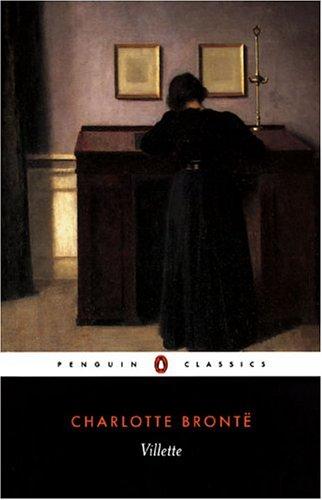
Villette by Charlotte Brontë is a 1853 literary fiction book about repression and interiority, female independence, grief and displacement. Lucy Snowe's withholding narration is the novel's formal argument: a woman so thoroughly trained in self-suppression that she cannot even grant herself a complete first-person account of her own life.
Summary
Villette is Charlotte Brontë's final and most autobiographical novel, narrated by Lucy Snowe, an Englishwoman who travels alone to the fictional Belgian city of Villette after an unspecified catastrophe has stripped her of family, home, and prospects. She finds work as a teacher at a girls' boarding school run by the formidable Madame Beck and spends most of the novel in a state of compressed, tightly observed solitude — watching others, suppressing her own desires, and conducting an interior life far richer than the life she is allowed to live outwardly.
The novel's real subject is not plot but consciousness. Lucy Snowe is an unreliable narrator not out of deception but out of self-protection; she withholds information from the reader as she withholds emotion from the characters around her. Brontë is doing something formally sophisticated: showing us a woman who has internalized repression so thoroughly that she cannot trust her own emotional life, let alone express it. The famous long-withheld revelation about the identity of Dr. John is less a twist than a demonstration of how Lucy survives — by not fully inhabiting her own experience.
The prose is more psychologically dense and formally odd than Jane Eyre. The Gothic passages — Lucy's wandering through Villette during a drugged midsummer night, her breakdown in a Catholic confessional — feel like eruptions of the unconscious into a surface narrative of careful self-containment. Brontë is working in territory that would not become mainstream literary territory until the twentieth century. The ending is famously ambiguous, and readers who need resolution will find it unsatisfying.
Villette is difficult to love in the way Jane Eyre is easy to love, but it is harder to forget. Lucy Snowe is the more honest character — someone who has not been rescued, who does not get the story she deserves, and who endures with a bleak self-possession that Brontë renders without sentimentality. It is one of the great Victorian novels and one of the most underread.
Talk to Villette like its author wrote you back.
Get the ideas that fit your life — not generic summaries.
- Chat with the book
- Audiobook-style main ideas
- Adapts to your life and goals
- Helps you take action
Key takeaways
- 1.
Lucy Snowe's withholding narration is the novel's formal argument: a woman so thoroughly trained in self-suppression that she cannot even grant herself a complete first-person account of her own life.
- 2.
Villette anticipates modernist stream-of-consciousness by fifty years — Brontë is working out how to render interiority in a form that Victorian plot machinery wasn't designed for.
- 3.
The Dr. John revelation is Brontë's most discussed formal choice: Lucy knows the reader knows, but Lucy chooses not to say. This is not a trick but a characterization.
- 4.
Madame Beck's school is a surveillance apparatus — all observation, no privacy — and Lucy's survival depends on her becoming harder to read than the institution that watches her.
- 5.
The confessional scene is one of Victorian literature's most psychologically accurate depictions of a breakdown — Lucy seeking absolution from a religion she doesn't belong to because she has nowhere else to go.
- 6.
Paul Emanuel starts as a comic antagonist and ends as the novel's deepest portrait of a human being: difficult, generous, flawed, and genuinely loving in ways that Rochester is not.
- 7.
The ambiguous ending refuses the consolation of Jane Eyre. Brontë reportedly told her family the outcome; the text withholds it from the reader. The ambiguity is the point.
- 8.
Villette is as much about Protestantism and Catholicism as it is about gender — Lucy's suspicion of Catholic confession and Jesuit education is also a cultural suspicion Brontë shares and interrogates.
Discussion questions
Use these on your own, with a book club, or as chat starters in Superbook.
- 1.
Lucy withholds the identity of Dr. John from the reader for several chapters after it's clear she knows. What does that choice tell us about her psychology rather than just Brontë's plotting?
- 2.
Is Paul Emanuel a satisfying romantic hero, or does he represent the same dynamic as Rochester — a difficult man who has to be tamed before the heroine can love him?
- 3.
The Gothic episodes — the nun, the drugged night-walk — feel tonally different from the rest of the novel. Are they failures of realism, or are they doing something the realistic sections can't?
- 4.
How does Villette treat Catholicism? Is Brontë's view fair, or does her Protestant bias undercut what she's trying to say about Lucy's position as a foreigner?
- 5.
Lucy describes herself as plain, repressed, and not deserving of love. Is this accurate self-knowledge or a survival strategy? Does the novel agree with her self-assessment?
- 6.
Madame Beck is presented as an antagonist but also as someone who has solved the problem of female independence in ways Lucy hasn't. Do you find her admirable, sinister, or both?
- 7.
Compare Lucy Snowe to Jane Eyre. Why does Jane Eyre get the marriage and the happy ending, while Lucy probably doesn't? What does Brontë think is the difference between them?
- 8.
The ending is famously ambiguous. Do you read it as tragedy or as Brontë refusing to give the reader a consolation the novel hasn't earned? What do you think happened?
- 9.
Lucy's breakdown and visit to the confessional is one of the novel's most intense passages. What does it reveal about the cost of the self-containment she has maintained throughout?
- 10.
Villette is set in Belgium, barely disguised as 'Villette.' How does Lucy's foreignness — her position as an outsider who cannot read the social codes around her — shape what the novel can say?
- 11.
The novel is very long and some readers find the middle sections slow. Does the length feel necessary to the portrait of a woman whose life has very little action in it?
- 12.
Is Villette a feminist novel? What kind of female future does it imagine, and does it seem possible in the world Brontë depicts?
Themes
Frequently asked questions
-
Is Villette worth reading if I loved Jane Eyre?
Yes, but adjust your expectations. Villette is less immediately gripping and far less romantic in the conventional sense. Lucy Snowe is a more complex and less heroic narrator than Jane, and the novel's refusal of a clean resolution will frustrate readers who loved Jane Eyre's cathartic ending. It is the deeper book.
-
Is Villette hard to read?
It is long and the prose is dense, and Brontë's formal experiments — Lucy's unreliable narration, the Gothic eruptions — can disorient readers expecting a traditional Victorian plot. The first fifty pages are particularly demanding. Readers who stick with it generally find the novel expands and deepens considerably by the midpoint.
-
What is Villette about without spoilers?
A young Englishwoman, adrift after an unnamed loss, takes a teaching position in a Belgian boarding school and navigates solitude, repression, two very different men, and a Catholic culture she is suspicious of. The plot is quieter than Jane Eyre. The interiority is far richer.
-
Why is Villette less famous than Jane Eyre?
Partly because it is harder and less romantic. Jane Eyre offers catharsis; Villette offers something more unsettling. The ending is ambiguous in ways that Victorian readers found troubling and modern readers can find frustrating or brilliant depending on temperament.
-
Who shouldn't read Villette?
Readers who need plot momentum and sympathetic characters. Lucy Snowe is deliberately withholding and sometimes difficult to like. If you want Brontë with more heat and forward motion, Jane Eyre and even Shirley are better entry points.
Similar books
Homage to Catalonia
George Orwell
A Heartbreaking Work of Staggering Genius
Dave Eggers
Reading Lolita in Tehran: A Memoir in Books
Azar Nafisi
Between the World and Me
Ta-Nehisi Coates
