Talk to Wanting like its author wrote you back.
Get the ideas that fit your life — not generic summaries.
- Chat with the book
- Audiobook-style main ideas
- Adapts to your life and goals
- Helps you take action
Wanting, in detail
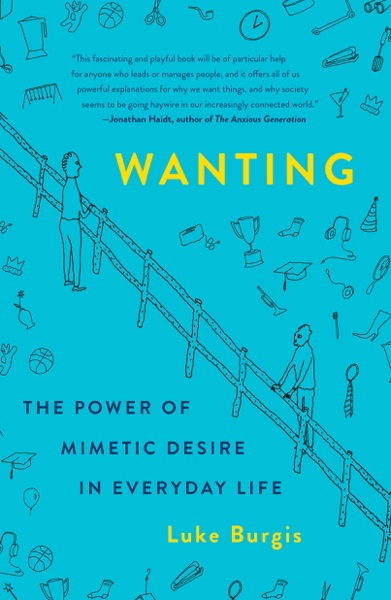
Wanting is Luke Burgis's attempt to bring René Girard's theory of mimetic desire to a general audience. Girard, a French literary critic and anthropologist who spent most of his career at Stanford, argued that human beings don't actually know what they want on their own. Instead, they borrow desires from other people — specifically from people they look up to or identify with. Those people function as what Girard called "models." We want things because our models want them, not because of any innate preference.
Burgis walks through the mechanics of this. Mimetic desire is invisible precisely because we experience it as internal and personal. The person who suddenly wants a particular career, a particular neighborhood, a particular status symbol — they feel like they're choosing freely. Girard's argument is that they're mostly responding to signals from their social environment. The more two people share the same model, the more likely they are to become rivals for the same thing, even when there's more than enough to go around.
The book's practical sections explore how mimetic desire shapes Silicon Valley, social media, financial markets, and romantic relationships. Burgis draws on his own experience building companies and advising entrepreneurs. The most dangerous situation, he argues, is proximity to a mimetic model without realizing that's what's happening. Startups that copy each other's features, investors who pile into the same trade, people who reorient their careers based on what their peer group values — all are running mimetic desire scripts without examining them.
Burgis proposes what he calls "thick desires" versus "thin desires." Thin desires are mimetic and fungible — wanting what others want because they want it. Thick desires are rooted in long-term goals and values that don't shift with social signals. The book's aim is to help readers identify which of their wants are genuinely their own and which are borrowed. That's harder than it sounds, and Burgis is honest that Girard's framework doesn't come with a neat escape hatch. Awareness helps, but it doesn't immunize.
The big ideas
- 1.
Humans don't generate desires independently. They borrow them from 'models' — people they admire or compete with — through a process Girard called mimetic desire.
- 2.
Mimetic desire is invisible because it feels like authentic wanting. Most people never realize how much of what they chase is borrowed from their social environment.
- 3.
The closer two people are to the same model, the more intense their rivalry becomes. Girard called this 'mimetic rivalry,' and it explains why competition is fiercest between near-equals.
