Business · Book club
Warren Buffett and the Interpretation of Financial Statements book club questions
Here are 12 book club questions for Warren Buffett and the Interpretation of Financial Statements by Mary Buffett, ordered to open easily and end somewhere worth arguing about. Copy them, print them, or bring them up one at a time.
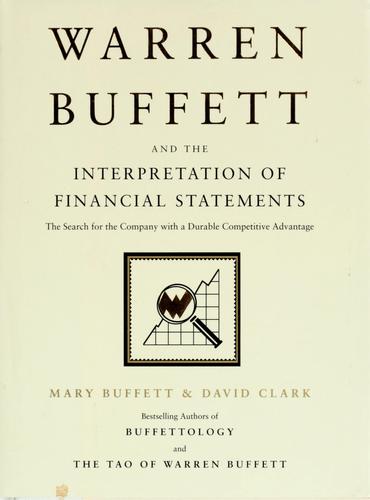
Warren Buffett and the Interpretation of Financial Statements is Mary Buffett's guide to reading the three core financial statements — income statement, balance sheet, and cash flow statement — through the lens Warren Buffett uses when evaluating companies.
Mary Buffett · 2008 · 2h 45m
Full summary and key takeaways →The 12 questions
- 1.
The book argues moats show up in financial statements. Pick a company you use every day. Where do you think its moat shows up in its numbers?
- 2.
Buffett emphasizes consistency over a decade rather than a single year's results. What does that imply about how we should evaluate companies in fast-moving sectors?
- 3.
The book treats high gross margins as a sign of competitive advantage. Can you think of industries where high gross margins exist without a real moat?
- 4.
Mary Buffett describes companies with heavy R&D as risky investments. Does that view hold for technology companies today, where R&D often is the moat?
- 5.
Long-term debt is treated as a warning sign. How does that framework apply to utilities or real estate businesses where debt is structurally normal?
- 6.
What does it mean for a company to 'sell itself'? Can you name a business in your life that feels like it doesn't need to advertise heavily to retain customers?
- 7.
Retained earnings growing over a decade indicate good capital allocation. How do you distinguish between retained earnings from operational excellence versus retained earnings from deferred maintenance?
- 8.
The book is relatively short on valuation. If you know a company has a moat, what additional information do you need to decide whether it's worth buying?
- 9.
Buffett avoids startups and disruptive industries. What are the tradeoffs of this approach in an economy where disruption is increasingly common?
- 10.
Return on equity above 15% is highlighted as a benchmark. What are the limitations of ROE as a metric, particularly for companies that use financial leverage?
- 11.
How do you think about the difference between a company temporarily reporting weak numbers due to macro conditions and one that is genuinely losing its moat?
- 12.
The book assumes a relatively stable business environment. How would you adapt these screening criteria for evaluating companies in volatile or cyclical industries?
How to run the discussion
- Pick six to eight, not all of them. An hour of real discussion covers fewer questions than anyone expects, and racing the list is what makes a book club feel like homework.
- Open with what people noticed, not what they concluded. Asking for a verdict first hardens opinions before anyone has heard each other.
- Let the disagreement run. The questions below that split a room are the ones worth the time; the ones everyone answers the same way can be skipped.
- Ask the quiet person a specific question. A direct, narrow question is far easier to answer than an open invitation to contribute.
Themes worth steering toward
If the conversation stalls, these are the threads that usually restart it.
Common questions
What are good book club questions for Warren Buffett and the Interpretation of Financial Statements?
Here are 12 book club questions for Warren Buffett and the Interpretation of Financial Statements by Mary Buffett, ordered to open easily and end somewhere worth arguing about. The strongest openers ask what each reader noticed rather than what they concluded, and the discussion usually turns on financial analysis, value investing, accounting.
How long should a book club discussion of Warren Buffett and the Interpretation of Financial Statements last?
Most groups run 60 to 90 minutes of actual discussion. That is roughly six to eight questions, not all of them, so pick the ones that suit your group rather than working down the list in order.
What are the main themes in Warren Buffett and the Interpretation of Financial Statements?
Financial analysis, Value investing, Accounting, Business durability, Competitive advantage. Those are the threads most likely to divide a room, which makes them the useful places to steer a discussion that has gone quiet.
Picking the next one? See books like Warren Buffett and the Interpretation of Financial Statements or questions for other book club picks.
