Warren Buffett and the Interpretation of Financial Statements by Mary Buffett is a 2008 business book about financial analysis, value investing, accounting. Consistent gross margins above 40% are a strong signal of durable competitive advantage. Erratic or thin margins suggest intense competition.
Summary
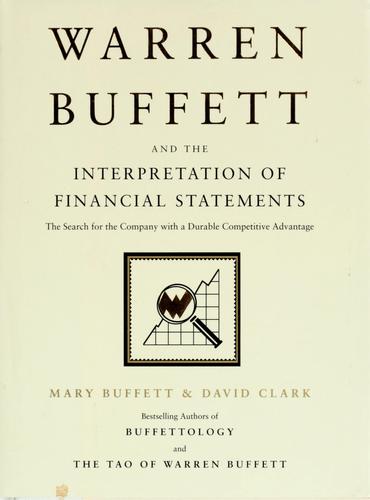
Warren Buffett and the Interpretation of Financial Statements is Mary Buffett's guide to reading the three core financial statements — income statement, balance sheet, and cash flow statement — through the lens Warren Buffett uses when evaluating companies. The central thesis is that Buffett isn't looking at earnings per se; he's looking for evidence of a durable competitive advantage. Companies with real moats show their moat in the numbers, and once you know what to look for, the signals are consistent.
The book is organized around each statement in turn. On the income statement, high and consistent gross margins signal pricing power. Low research and development expenses, combined with minimal selling and administrative costs, indicate a business that doesn't have to spend heavily to stay competitive. On the balance sheet, low or zero long-term debt is a hallmark of durable competitive advantage. Companies that need a lot of long-term debt to operate are generally fighting uphill battles. Strong retained earnings, growing year over year, indicate management that reinvests efficiently.
The cash flow statement gets less space but is treated as the final verification: free cash flow is what actually determines whether a company can grow without diluting shareholders, pay down debt, or buy back stock. Buffett's preference for capital-light businesses shows up clearly in capex as a percentage of net earnings — the lower, the better.
What makes the book useful is the specificity. Buffett's thinking has been discussed at length, but Mary Buffett's contribution is translating abstract concepts about moats into concrete ratios and line items. The book is short by design, which means the breadth of topics is limited. It doesn't cover valuation deeply, it sidesteps macroeconomic context, and it assumes a relatively stable business environment. Read alongside something on valuation and it becomes a more complete toolkit. On its own, it's the clearest short treatment of what Buffett actually sees when he reads a 10-K.
Talk to Warren Buffett and the Interpretation of Financial Statements like its author wrote you back.
Get the ideas that fit your life — not generic summaries.
- Chat with the book
- Audiobook-style main ideas
- Adapts to your life and goals
- Helps you take action
Key takeaways
- 1.
Consistent gross margins above 40% are a strong signal of durable competitive advantage. Erratic or thin margins suggest intense competition.
- 2.
Low selling, general, and administrative expenses as a percentage of gross profit indicate a business that sells itself rather than relying on expensive marketing.
- 3.
Buffett avoids companies with heavy research and development needs. Heavy R&D is a sign that the competitive advantage isn't durable.
- 4.
Little or no long-term debt is a hallmark of companies with moats. Businesses that need constant debt financing are inherently vulnerable.
- 5.
Growing retained earnings over a decade tell you management is deploying capital efficiently rather than distributing it wastefully or squandering it.
- 6.
Low capital expenditures relative to net earnings — ideally under 25% — mean the business doesn't need constant reinvestment to stay competitive.
- 7.
Return on equity above 15%, consistently over many years, is one of Buffett's most reliable indicators that a company has a durable advantage.
- 8.
The treasury stock line on the balance sheet shows whether management buys back shares when prices are attractive — another signal of capital discipline.
Discussion questions
Use these on your own, with a book club, or as chat starters in Superbook. Book club version, ready to copy or print →
- 1.
The book argues moats show up in financial statements. Pick a company you use every day. Where do you think its moat shows up in its numbers?
- 2.
Buffett emphasizes consistency over a decade rather than a single year's results. What does that imply about how we should evaluate companies in fast-moving sectors?
- 3.
The book treats high gross margins as a sign of competitive advantage. Can you think of industries where high gross margins exist without a real moat?
- 4.
Mary Buffett describes companies with heavy R&D as risky investments. Does that view hold for technology companies today, where R&D often is the moat?
- 5.
Long-term debt is treated as a warning sign. How does that framework apply to utilities or real estate businesses where debt is structurally normal?
- 6.
What does it mean for a company to 'sell itself'? Can you name a business in your life that feels like it doesn't need to advertise heavily to retain customers?
- 7.
Retained earnings growing over a decade indicate good capital allocation. How do you distinguish between retained earnings from operational excellence versus retained earnings from deferred maintenance?
- 8.
The book is relatively short on valuation. If you know a company has a moat, what additional information do you need to decide whether it's worth buying?
- 9.
Buffett avoids startups and disruptive industries. What are the tradeoffs of this approach in an economy where disruption is increasingly common?
- 10.
Return on equity above 15% is highlighted as a benchmark. What are the limitations of ROE as a metric, particularly for companies that use financial leverage?
- 11.
How do you think about the difference between a company temporarily reporting weak numbers due to macro conditions and one that is genuinely losing its moat?
- 12.
The book assumes a relatively stable business environment. How would you adapt these screening criteria for evaluating companies in volatile or cyclical industries?
Themes
Frequently asked questions
-
Is Warren Buffett and the Interpretation of Financial Statements worth reading?
Yes, for investors who want a short, practical guide to reading financial statements through a value-investing lens. The book is one of the clearest explanations of what Buffett actually looks for in a 10-K, though it's light on valuation and best paired with a more comprehensive investing book.
-
How long does it take to read this book?
About two to three hours. It's deliberately short and structured around specific financial statement line items, so it reads quickly and can serve as a reference you return to when analyzing individual companies.
-
What is the main idea of the book?
That companies with durable competitive advantages leave consistent, identifiable traces in their financial statements — particularly in gross margins, debt levels, return on equity, and retained earnings growth. Learning to spot these signals is what separates Buffett's approach from conventional fundamental analysis.
-
Who should read this book?
Investors who already understand basic accounting and want to connect financial ratios to business quality. It's less useful for complete beginners who haven't yet learned what an income statement or balance sheet is.
-
Does this book teach how to value a company?
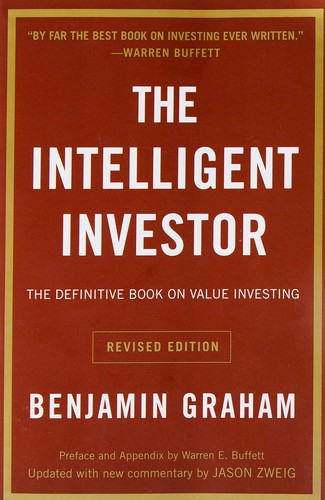
Only partially. It focuses on identifying companies with competitive advantages but doesn't go deep on how to determine what price to pay for them. Readers looking for valuation methodology should supplement it with books like The Intelligent Investor or Buffettology.