Philosophy · Book club
Ways of Seeing book club questions
Here are 12 book club questions for Ways of Seeing by John Berger, ordered to open easily and end somewhere worth arguing about. Copy them, print them, or bring them up one at a time.
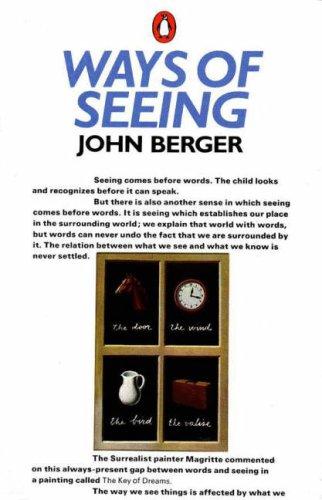
Ways of Seeing began as a BBC television series in 1972 and was published the same year as a slim, deliberately designed paperback.
John Berger · 1972 · 3h 0m
Full summary and key takeaways →The 12 questions
- 1.
Berger argues that cameras have permanently changed how we see paintings. Has your own experience of seeing a famous painting in person felt different from seeing it reproduced — and if so, how?
- 2.
The book was written in 1972. Do you think advertising has changed its visual grammar since then, or does Berger's analysis of the spectator-buyer relationship still hold?
- 3.
Berger draws a sharp line between oil painting as a tradition and its social function. Is it possible to appreciate the paintings he critiques aesthetically while also accepting his political reading?
- 4.
The chapter on the nude makes a structural argument about the male gaze. Where do you see this logic operating in contemporary visual media — or where has it broken down?
- 5.
Berger claims mystification is a deliberate strategy — that art criticism obscures the social meaning of paintings behind the language of genius and beauty. Do you think critics do this consciously?
- 6.
The book includes pages of images with no text, inviting readers to look before they read. Did you notice your responses to images changing after reading his arguments?
- 7.
What does Berger mean when he says 'publicity images dream of the past'? Is his comparison between oil painting and advertising persuasive?
- 8.
If seeing is always shaped by who we are and where we stand, does that mean there's no such thing as an innocent or objective view of an image?
- 9.
Berger's analysis is explicitly Marxist. Does knowing that affect how you read his arguments — does it make them more or less persuasive?
- 10.
Pick any advertisement you've seen recently. Apply Berger's framework: who is being shown, who is doing the looking, and what is being promised?
- 11.
The book was made to be cheap and widely accessible — small format, inexpensive. Does the physical form of a book about art change how you read it?
- 12.
Berger says the relationship between the 'ideal' self in advertising and the 'actual' self creates envy as an economic emotion. Do you feel this mechanism at work on yourself?
How to run the discussion
- Pick six to eight, not all of them. An hour of real discussion covers fewer questions than anyone expects, and racing the list is what makes a book club feel like homework.
- Open with what people noticed, not what they concluded. Asking for a verdict first hardens opinions before anyone has heard each other.
- Let the disagreement run. The questions below that split a room are the ones worth the time; the ones everyone answers the same way can be skipped.
- Ask the quiet person a specific question. A direct, narrow question is far easier to answer than an open invitation to contribute.
Themes worth steering toward
If the conversation stalls, these are the threads that usually restart it.
Common questions
What are good book club questions for Ways of Seeing?
Here are 12 book club questions for Ways of Seeing by John Berger, ordered to open easily and end somewhere worth arguing about. The strongest openers ask what each reader noticed rather than what they concluded, and the discussion usually turns on visual culture, power and representation, capitalism and art.
How long should a book club discussion of Ways of Seeing last?
Most groups run 60 to 90 minutes of actual discussion. That is roughly six to eight questions, not all of them, so pick the ones that suit your group rather than working down the list in order.
What are the main themes in Ways of Seeing?
Visual culture, Power and representation, Capitalism and art, Gender and the gaze, Reproduction of images. Those are the threads most likely to divide a room, which makes them the useful places to steer a discussion that has gone quiet.
Picking the next one? See books like Ways of Seeing or questions for other book club picks.
