Memoir · Book club
When Breath Becomes Air book club questions
Here are 12 book club questions for When Breath Becomes Air by Paul Kalanithi, ordered to open easily and end somewhere worth arguing about. Copy them, print them, or bring them up one at a time.
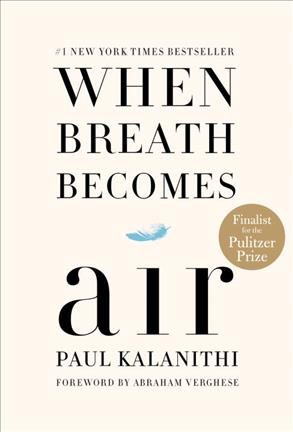
When Breath Becomes Air is Paul Kalanithi's account of his life before and after being diagnosed with stage IV lung cancer at 36, while completing his residency in neurosurgery at Stanford.
Paul Kalanithi · 2016 · 4h 45m
Full summary and key takeaways →The 12 questions
- 1.
Kalanithi trained in both literature and medicine because he believed they were asking the same question. Do you think that's true? What does each field offer that the other can't?
- 2.
He describes the experience of becoming a patient after years as a physician. Where in your own life has switching roles — from expert to novice, from caregiver to recipient — changed what you understood?
- 3.
What does Kalanithi mean when he says he wanted his life to be about meaning rather than happiness? Is that a distinction that makes sense to you?
- 4.
He chose to return to surgery during remission despite his prognosis. How do you think about the balance between extending life and living on your own terms inside a shortened one?
- 5.
The book offers no clear answer to the question of what makes a life complete. Did reading it give you a working answer, even a provisional one?
- 6.
Lucy's epilogue describes the same period from outside. What did her account add that Paul's could not? Have you ever read a parallel account of a shared experience and been surprised by the gap?
- 7.
Kalanithi writes about the moral weight of neurosurgery — that the stakes are different from other medicine. What work do you do, or have you witnessed, where the ethical stakes are similarly irreducible?
- 8.
He uses T.S. Eliot, Tolstoy, and Beckett as genuine guides rather than as literary ornament. Is there a book or work that has actually functioned that way for you in a serious moment?
- 9.
The book ends before he has resolved the questions he set out to answer. Does that feel like a failure of the project, or is the incompleteness part of the point?
- 10.
Kalanithi's daughter Cady is born knowing she will not remember her father. He wrote partly for her. If you were writing something for someone who wouldn't read it for twenty years, what would you most want them to understand?
- 11.
How does the book's discussion of mortality compare to how mortality is usually talked about — in medicine, in family, in culture? What does it get right that most accounts get wrong?
- 12.
After reading it, did you think differently about what you want from your own doctors — the information they give, the way they speak about prognosis, what they leave unsaid?
How to run the discussion
- Pick six to eight, not all of them. An hour of real discussion covers fewer questions than anyone expects, and racing the list is what makes a book club feel like homework.
- Open with what people noticed, not what they concluded. Asking for a verdict first hardens opinions before anyone has heard each other.
- Let the disagreement run. The questions below that split a room are the ones worth the time; the ones everyone answers the same way can be skipped.
- Ask the quiet person a specific question. A direct, narrow question is far easier to answer than an open invitation to contribute.
Themes worth steering toward
If the conversation stalls, these are the threads that usually restart it.
Common questions
What are good book club questions for When Breath Becomes Air?
Here are 12 book club questions for When Breath Becomes Air by Paul Kalanithi, ordered to open easily and end somewhere worth arguing about. The strongest openers ask what each reader noticed rather than what they concluded, and the discussion usually turns on mortality, medicine, meaning.
How long should a book club discussion of When Breath Becomes Air last?
Most groups run 60 to 90 minutes of actual discussion. That is roughly six to eight questions, not all of them, so pick the ones that suit your group rather than working down the list in order.
What are the main themes in When Breath Becomes Air?
Mortality, Medicine, Meaning, Identity, Literature and science. Those are the threads most likely to divide a room, which makes them the useful places to steer a discussion that has gone quiet.
Picking the next one? See books like When Breath Becomes Air or questions for other book club picks.
