Health · Book club
When the Body Says No book club questions
Here are 12 book club questions for When the Body Says No by Gabor Maté, ordered to open easily and end somewhere worth arguing about. Copy them, print them, or bring them up one at a time.
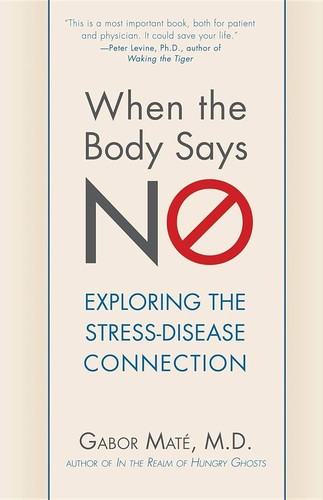
When the Body Says No is Gabor Maté's investigation into how chronic stress and emotional suppression contribute to serious illness.
Gabor Maté · 2003 · 6h 0m
Full summary and key takeaways →The 12 questions
- 1.
Maté argues that people who cannot say no are at elevated disease risk. Do you recognize that pattern in yourself or someone close to you, and what would it cost to change it?
- 2.
The book distinguishes between physical pain and emotional pain that gets converted into physical symptoms. How confident are you that you can tell the difference in your own experience?
- 3.
Maté traces adult emotional patterns back to childhood attachment. What emotional rules did you absorb growing up about what feelings were acceptable to express?
- 4.
Which relationships in your life require you to suppress something in order to keep the peace? What is the cumulative cost of that suppression?
- 5.
The research Maté cites shows that loneliness affects immune function measurably. What does genuine connection look like in your life, versus connection that requires you to perform?
- 6.
Maté argues the inability to feel anger is more dangerous than expressing it. Is that true in your experience — do you find it easier to accommodate than to set limits?
- 7.
The book suggests illness is sometimes the body enforcing the boundaries the person could not. Has your own body ever communicated something you were not consciously acknowledging?
- 8.
How do you respond when someone in your life is sick? Does Maté's framing change how you think about their illness or the circumstances around it?
- 9.
Maté is careful to say he is not blaming patients for their illness. Do you find his argument exonerating, or does it still feel like it implies personal responsibility for disease?
- 10.
What would it mean to take your own emotional needs as seriously as you take other people's? What would have to change?
- 11.
The book covers conditions ranging from cancer to MS to rheumatoid arthritis. Are you persuaded that the same emotional mechanisms apply across such different diseases?
- 12.
Maté draws on his own history — including his ADHD and workaholism — as data. Does his willingness to implicate himself make the argument more or less credible?
How to run the discussion
- Pick six to eight, not all of them. An hour of real discussion covers fewer questions than anyone expects, and racing the list is what makes a book club feel like homework.
- Open with what people noticed, not what they concluded. Asking for a verdict first hardens opinions before anyone has heard each other.
- Let the disagreement run. The questions below that split a room are the ones worth the time; the ones everyone answers the same way can be skipped.
- Ask the quiet person a specific question. A direct, narrow question is far easier to answer than an open invitation to contribute.
Themes worth steering toward
If the conversation stalls, these are the threads that usually restart it.
Common questions
What are good book club questions for When the Body Says No?
Here are 12 book club questions for When the Body Says No by Gabor Maté, ordered to open easily and end somewhere worth arguing about. The strongest openers ask what each reader noticed rather than what they concluded, and the discussion usually turns on mind-body connection, stress, trauma.
How long should a book club discussion of When the Body Says No last?
Most groups run 60 to 90 minutes of actual discussion. That is roughly six to eight questions, not all of them, so pick the ones that suit your group rather than working down the list in order.
What are the main themes in When the Body Says No?
Mind-body connection, Stress, Trauma, Emotional repression, Chronic illness. Those are the threads most likely to divide a room, which makes them the useful places to steer a discussion that has gone quiet.
Picking the next one? See books like When the Body Says No or questions for other book club picks.
