Psychology · Book club
When: The Scientific Secrets of Perfect Timing book club questions
Here are 12 book club questions for When: The Scientific Secrets of Perfect Timing by Daniel H. Pink, ordered to open easily and end somewhere worth arguing about. Copy them, print them, or bring them up one at a time.
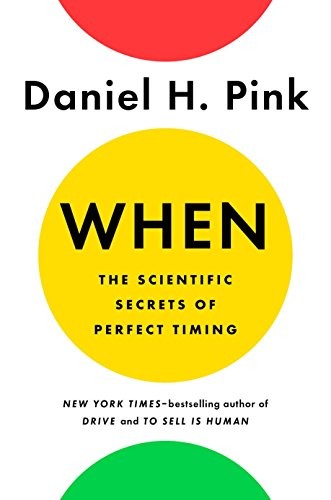
Daniel Pink's When, published in 2018, applies the science of chronobiology and cognitive timing to practical decisions about when to do things.
Daniel H. Pink · 2018 · 4h 20m
Full summary and key takeaways →The 12 questions
- 1.
What is your approximate chronotype — morning, intermediate, or evening? Does your daily schedule actually match it, and what would it take to change that?
- 2.
Pink argues that the trough is a real performance dip, not just perceived tiredness. Have you noticed your own trough? What are you usually doing during it?
- 3.
The peak-end rule suggests that how something ends shapes how it is remembered. Has that played out in your own experience — events that went well but ended badly, or vice versa?
- 4.
Fresh-start effects around temporal landmarks are well documented. Which fresh starts have worked for you, and which ones turned out to be motivation that dissipated within days?
- 5.
He recommends taking breaks more deliberately. What breaks have you found genuinely restorative, versus breaks that just delay work without restoring focus?
- 6.
The midpoint research suggests that people and teams rally when they recognize they are at a halfway point. Can you design your own projects to make that midpoint salient and useful?
- 7.
Pink discusses the costs of scheduling medical procedures, legal hearings, and other high-stakes activities in the afternoon trough. What structural changes would be required to fix that, and who has the incentives to make them?
- 8.
The book argues that beginnings, midpoints, and endings are psychologically distinct phases. Does that match your experience of extended projects or life transitions?
- 9.
Social jet lag — the mismatch between your chronotype and your work schedule — is common and costly. What would a workplace that took chronotype differences seriously actually look like?
- 10.
Pink writes mostly about cognition and mood. What does the timing framework say about emotional work — difficult conversations, empathy-intensive tasks, creative vulnerability?
- 11.
Is there a decision you have been putting off that is partly a timing decision in Pink's sense — not knowing when is the right moment to act?
- 12.
Which of Pink's prescriptions do you think you will actually try, and which seem impractical given your constraints?
How to run the discussion
- Pick six to eight, not all of them. An hour of real discussion covers fewer questions than anyone expects, and racing the list is what makes a book club feel like homework.
- Open with what people noticed, not what they concluded. Asking for a verdict first hardens opinions before anyone has heard each other.
- Let the disagreement run. The questions below that split a room are the ones worth the time; the ones everyone answers the same way can be skipped.
- Ask the quiet person a specific question. A direct, narrow question is far easier to answer than an open invitation to contribute.
Themes worth steering toward
If the conversation stalls, these are the threads that usually restart it.
Common questions
What are good book club questions for When: The Scientific Secrets of Perfect Timing?
Here are 12 book club questions for When: The Scientific Secrets of Perfect Timing by Daniel H. Pink, ordered to open easily and end somewhere worth arguing about. The strongest openers ask what each reader noticed rather than what they concluded, and the discussion usually turns on timing, circadian rhythms, decision-making.
How long should a book club discussion of When: The Scientific Secrets of Perfect Timing last?
Most groups run 60 to 90 minutes of actual discussion. That is roughly six to eight questions, not all of them, so pick the ones that suit your group rather than working down the list in order.
What are the main themes in When: The Scientific Secrets of Perfect Timing?
Timing, Circadian rhythms, Decision-making, Productivity, Mood. Those are the threads most likely to divide a room, which makes them the useful places to steer a discussion that has gone quiet.
Picking the next one? See books like When: The Scientific Secrets of Perfect Timing or questions for other book club picks.
