Contemporary fiction · Book club
Where the Crawdads Sing book club questions
Here are 12 book club questions for Where the Crawdads Sing by Delia Owens, ordered to open easily and end somewhere worth arguing about. Copy them, print them, or bring them up one at a time.
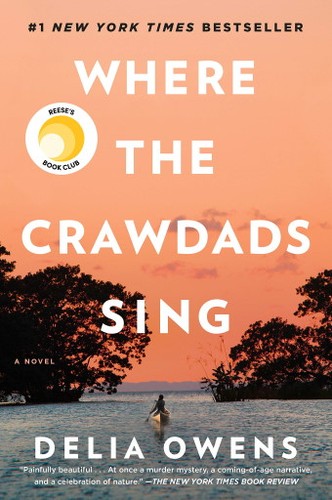
Where the Crawdads Sing tells two stories in alternating time frames.
Delia Owens · 2018 · 7h 0m
Full summary and key takeaways →The 12 questions
- 1.
The marsh is described as home for Kya in ways that the town never is. What does the book argue about place and belonging? Is her attachment to the marsh a strength or a limitation?
- 2.
Kya is abandoned multiple times — by each family member in turn, by the men who pursue her, by the community that could have helped her. The novel treats each abandonment differently. Which did you find most affecting, and why?
- 3.
The townspeople's suspicion of Kya is rooted partly in her otherness and partly in class. How does the novel balance those two causes? Does it give equal weight to both?
- 4.
Kya becomes a scientist without institutional training. The novel presents this as natural talent meeting necessity. Is that a romantic notion, or does it feel earned by how Owens writes the actual science?
- 5.
The courtroom sections in 1969 are structured as a conventional thriller. Did you find that structure compatible with the survival story in the earlier sections, or did it feel like a different kind of book?
- 6.
The two men Kya is involved with romantically are drawn very differently in terms of complexity. Is that an artistic choice or a flaw?
- 7.
Owens is a wildlife scientist. Where in the book did that background most visibly affect the quality of the writing?
- 8.
The ending changes how you understand the whole novel. Some readers find it satisfying; others find it a betrayal of what the book seemed to be about. Where do you land?
- 9.
Nature's rules — predation, survival of the fittest, female mimicry in fireflies — are given moral weight in the book. Is the novel arguing that nature provides a better framework for justice than civilization? Do you find that convincing?
- 10.
The book sold over fifteen million copies. What does its readership tell you about what it delivers that readers wanted?
- 11.
Where the Crawdads Sing is sometimes described as a love story and sometimes as a mystery and sometimes as a nature book. Which category fits it best?
- 12.
If Kya had been found guilty at trial, would the book have worked? What would the twist at the end have meant in that scenario?
How to run the discussion
- Pick six to eight, not all of them. An hour of real discussion covers fewer questions than anyone expects, and racing the list is what makes a book club feel like homework.
- Open with what people noticed, not what they concluded. Asking for a verdict first hardens opinions before anyone has heard each other.
- Let the disagreement run. The questions below that split a room are the ones worth the time; the ones everyone answers the same way can be skipped.
- Ask the quiet person a specific question. A direct, narrow question is far easier to answer than an open invitation to contribute.
Themes worth steering toward
If the conversation stalls, these are the threads that usually restart it.
Common questions
What are good book club questions for Where the Crawdads Sing?
Here are 12 book club questions for Where the Crawdads Sing by Delia Owens, ordered to open easily and end somewhere worth arguing about. The strongest openers ask what each reader noticed rather than what they concluded, and the discussion usually turns on solitude and self-reliance, nature as home, class and prejudice.
How long should a book club discussion of Where the Crawdads Sing last?
Most groups run 60 to 90 minutes of actual discussion. That is roughly six to eight questions, not all of them, so pick the ones that suit your group rather than working down the list in order.
What are the main themes in Where the Crawdads Sing?
Solitude and self-reliance, Nature as home, Class and prejudice, Female resilience, Justice and community failure. Those are the threads most likely to divide a room, which makes them the useful places to steer a discussion that has gone quiet.
Picking the next one? See books like Where the Crawdads Sing or questions for other book club picks.
