Literary fiction · Book club
White Noise book club questions
Here are 11 book club questions for White Noise by Don DeLillo, ordered to open easily and end somewhere worth arguing about. Copy them, print them, or bring them up one at a time.
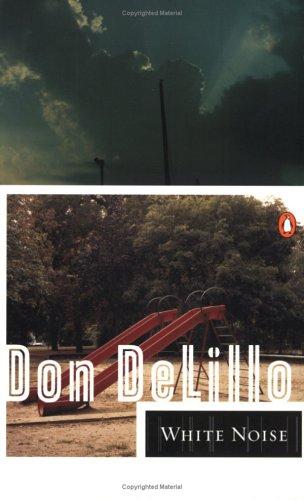
Don DeLillo's 1985 National Book Award winner follows Jack Gladney, professor of Hitler Studies at the fictional College-on-the-Hill, through domestic life with his fourth wife Babette and their assembled blended family of children.
Don DeLillo · 1985 · 5h 45m
Full summary and key takeaways →The 11 questions
- 1.
Jack is afraid of death but surrounds himself with an academic specialty in mass death. Does that make him a hypocrite, or is there a kind of logic to it?
- 2.
DeLillo lists brand names and product categories throughout the novel as prose texture. Did you find that technique illuminating or gimmicky? What is he claiming about American consciousness?
- 3.
The Airborne Toxic Event sections show the family watching news coverage of themselves. What is DeLillo saying about the relationship between media representation and lived experience?
- 4.
Babette takes Dylar in exchange for a transaction that devastates Jack. Is his response proportionate? Is the nature of what he feels jealousy, or something more specific?
- 5.
The novel was published in 1985. What has changed about the media landscape that makes it feel different now? What has stayed the same?
- 6.
DeLillo suggests that consumer culture functions as a substitute religion — that the supermarket provides a kind of transcendence. Is that reading convincing, or is it too clever?
- 7.
The academic satire — the department of Hitler Studies, the conference scenes, Murray's celebrity studies — is very funny. Does it earn its place in a novel about death anxiety, or is it a different book grafted on?
- 8.
Babette and Jack talk about their fear of death constantly but around each other. Is their marriage an honest partnership or a mutual conspiracy to avoid the truth?
- 9.
The ending returns to the supermarket with the shelves rearranged, and the tone is both elegiac and absurd. Did that ending satisfy you, frustrate you, or something more ambivalent?
- 10.
Murray is Jack's academic colleague and functions as a kind of philosophical chorus — he keeps reframing everything. Is he a reliable guide to the novel's meanings, or is he as lost as Jack?
- 11.
Compared to 1984 as a novel about media and control, White Noise is much warmer and funnier. What does DeLillo gain by domesticating his dystopia in that way?
How to run the discussion
- Pick six to eight, not all of them. An hour of real discussion covers fewer questions than anyone expects, and racing the list is what makes a book club feel like homework.
- Open with what people noticed, not what they concluded. Asking for a verdict first hardens opinions before anyone has heard each other.
- Let the disagreement run. The questions below that split a room are the ones worth the time; the ones everyone answers the same way can be skipped.
- Ask the quiet person a specific question. A direct, narrow question is far easier to answer than an open invitation to contribute.
Themes worth steering toward
If the conversation stalls, these are the threads that usually restart it.
Common questions
What are good book club questions for White Noise?
Here are 11 book club questions for White Noise by Don DeLillo, ordered to open easily and end somewhere worth arguing about. The strongest openers ask what each reader noticed rather than what they concluded, and the discussion usually turns on death anxiety, consumer culture, media and reality.
How long should a book club discussion of White Noise last?
Most groups run 60 to 90 minutes of actual discussion. That is roughly six to eight questions, not all of them, so pick the ones that suit your group rather than working down the list in order.
What are the main themes in White Noise?
Death anxiety, Consumer culture, Media and reality, Technology and meaning, American family life. Those are the threads most likely to divide a room, which makes them the useful places to steer a discussion that has gone quiet.
Picking the next one? See books like White Noise or questions for other book club picks.
