Science · Book club
Whole Earth Discipline book club questions
Here are 12 book club questions for Whole Earth Discipline by Stewart Brand, ordered to open easily and end somewhere worth arguing about. Copy them, print them, or bring them up one at a time.
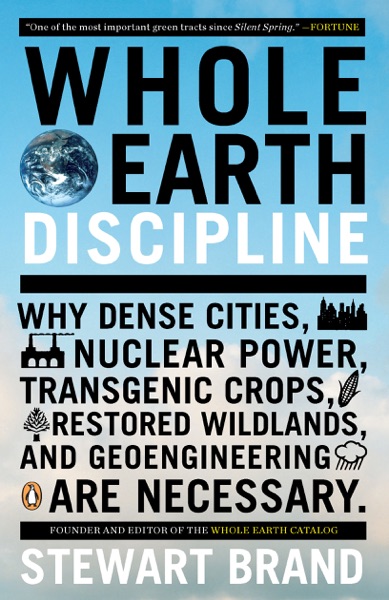
Whole Earth Discipline is Stewart Brand's argument that the environmental movement needs to update its orthodoxies in light of climate change and the actual evidence on the technologies it has historically opposed.
Stewart Brand · 2009 · 7h 45m
Full summary and key takeaways →The 12 questions
- 1.
Brand argues that the fear of nuclear power has been disproportionate to its actual mortality risk compared to fossil fuels. Does that argument change how you think about the anti-nuclear position?
- 2.
The precautionary principle says that when an action raises threats of harm, precautionary measures should be taken even in the absence of scientific certainty. Brand argues it has been misapplied to GMOs and nuclear. Is that a critique of the principle or its application?
- 3.
Brand comes from within the environmental movement and uses that credibility to challenge its orthodoxies. Does insider status make the critique more or less trustworthy to you?
- 4.
If you accept Brand's argument that cities are more environmentally efficient than dispersed living, what would that imply for urban planning policy and zoning in your own city?
- 5.
Brand says opposing urbanization in developing countries in the name of preserving traditional life is condescension. Do you agree, or is there something worth preserving that development erases?
- 6.
The book was published in 2009. How has the subsequent evidence on nuclear energy — including Fukushima — affected the case Brand makes?
- 7.
Brand argues geoengineering deserves serious research even though it could be misused. Is the argument that we shouldn't study something because we might misuse it ever compelling?
- 8.
What distinguishes evidence-based environmentalism from environmentalism that has become primarily about identity and tribe? How would you tell them apart in practice?
- 9.
Which of Brand's three heresies — pro-nuclear, pro-cities, pro-GMO — do you find most defensible? Which do you find least defensible, and why?
- 10.
Brand is explicit that he's changed his mind on all three issues. What would it take for you to change your mind on an issue where you currently have strong views?
- 11.
The book ends with a focus on the need for long-term thinking. Brand has been associated with the Long Now Foundation. How does a multi-century timeframe change the environmental arguments he makes?
- 12.
Critics said the book served fossil fuel and nuclear industry interests. Is that criticism a relevant consideration for evaluating the argument, or a form of genetic fallacy?
How to run the discussion
- Pick six to eight, not all of them. An hour of real discussion covers fewer questions than anyone expects, and racing the list is what makes a book club feel like homework.
- Open with what people noticed, not what they concluded. Asking for a verdict first hardens opinions before anyone has heard each other.
- Let the disagreement run. The questions below that split a room are the ones worth the time; the ones everyone answers the same way can be skipped.
- Ask the quiet person a specific question. A direct, narrow question is far easier to answer than an open invitation to contribute.
Themes worth steering toward
If the conversation stalls, these are the threads that usually restart it.
Common questions
What are good book club questions for Whole Earth Discipline?
Here are 12 book club questions for Whole Earth Discipline by Stewart Brand, ordered to open easily and end somewhere worth arguing about. The strongest openers ask what each reader noticed rather than what they concluded, and the discussion usually turns on environmentalism, nuclear energy, urbanization.
How long should a book club discussion of Whole Earth Discipline last?
Most groups run 60 to 90 minutes of actual discussion. That is roughly six to eight questions, not all of them, so pick the ones that suit your group rather than working down the list in order.
What are the main themes in Whole Earth Discipline?
Environmentalism, Nuclear energy, Urbanization, Biotechnology, Climate change. Those are the threads most likely to divide a room, which makes them the useful places to steer a discussion that has gone quiet.
Picking the next one? See books like Whole Earth Discipline or questions for other book club picks.
