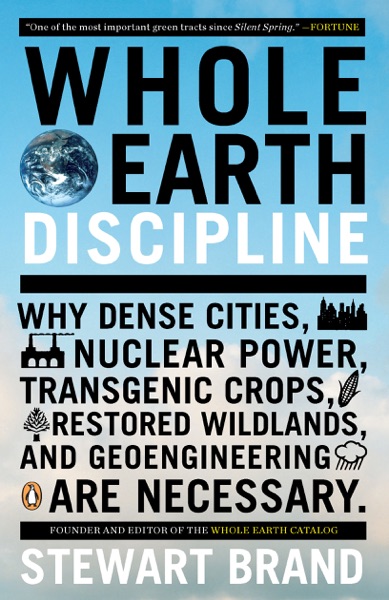
Whole Earth Discipline by Stewart Brand is a 2009 science book about environmentalism, nuclear energy, urbanization. Nuclear energy has a lower death rate per unit of electricity generated than coal, oil, gas, or even some renewable sources when full lifecycle impacts are counted. The fear of nuclear has been disproportionate to the actual risk.
Summary
Whole Earth Discipline is Stewart Brand's argument that the environmental movement needs to update its orthodoxies in light of climate change and the actual evidence on the technologies it has historically opposed. Brand — founder of the Whole Earth Catalog and a founding figure of the modern environmental movement — argues in favor of nuclear energy, dense urbanization, and genetic engineering, three positions that put him sharply at odds with much of the movement he helped build.
The nuclear chapter is the book's most carefully argued section. Brand's case rests on a comparison of mortality and carbon output per unit of electricity across different energy sources. He argues that the fear of nuclear power has cost tens of thousands of lives by displacing it with coal, and that the major accidents — Three Mile Island, Chernobyl, and, after the book's publication, Fukushima — have killed fewer people combined than coal kills in most individual years through air pollution and mining accidents. He is not naive about the waste problem or the capital costs but argues that the climate math justifies reconsideration.
On cities, Brand reverses the anti-urban strain common in environmentalism since Thoreau. Dense cities, he argues, are dramatically more resource-efficient than dispersed suburbs or rural living. Urbanization is also where poor people go to stop being poor — slums are the entry point to economic opportunity and, over a generation, become stable urban neighborhoods. Opposing urbanization in the developing world in the name of preserving traditional rural life is, in Brand's view, a form of condescension that serves aesthetics over outcomes.
The biotechnology chapter makes a similar argument: that the opposition to genetically modified organisms, built on the precautionary principle and a mistrust of corporate science, has prevented the deployment of crops that could reduce pesticide use, improve nutrition, and enable farming in drought conditions. Brand acknowledges that corporate control of seed supply is a legitimate concern, but argues it is a policy problem distinct from the safety question the anti-GMO movement typically invokes.
The book is explicitly polemical and does not hide its agenda. Brand is arguing that a certain kind of environmentalism has become more about identity and orthodoxy than about outcomes, and that the outcome that matters most — a stable climate — requires reconsidering the movement's assumptions. Critics on the left found the book a gift to fossil fuel and nuclear industries; critics from more pragmatic environmentalists found it essential.
Talk to Whole Earth Discipline like its author wrote you back.
Get the ideas that fit your life — not generic summaries.
- Chat with the book
- Audiobook-style main ideas
- Adapts to your life and goals
- Helps you take action
Key takeaways
- 1.
Nuclear energy has a lower death rate per unit of electricity generated than coal, oil, gas, or even some renewable sources when full lifecycle impacts are counted. The fear of nuclear has been disproportionate to the actual risk.
- 2.
Dense cities are more environmentally efficient than suburbs or rural living by almost every measure: energy, water, land use, transportation. Urbanization is an environmental good, not a problem to be reversed.
- 3.
Slums are not failures of urban planning but entry points to economic opportunity. Squatter settlements become stable neighborhoods over one to two generations when property rights are secured.
- 4.
The precautionary principle applied to genetic modification has prevented the deployment of crops that could reduce pesticide use and improve nutrition in the developing world. The principle has costs as well as benefits.
- 5.
The environmental movement's identity has become entangled with positions — anti-nuclear, anti-GMO, anti-urban — that made sense in their original context but may now be counterproductive given the scale of climate change.
- 6.
Geoengineering deserves serious research because the scale of climate intervention required may exceed what conventional mitigation can deliver in the available time. Refusing to study it doesn't make it unavailable to actors with fewer scruples.
- 7.
The most effective environmentalists have often been pragmatic engineers and scientists working within systems rather than activists opposing them from outside. Brand argues the movement needs more of the former.
- 8.
Brand's core move is to distinguish the fear associated with a technology from the evidence about its actual outcomes. He asks: what does the data show, not what does the technology feel like?
- 9.
The book's rhetorical strategy — a foundational environmentalist arguing against orthodoxies — is itself the argument. Brand's position demonstrates that evidence, not tribal loyalty, should determine green policy.
Discussion questions
Use these on your own, with a book club, or as chat starters in Superbook. Book club version, ready to copy or print →
- 1.
Brand argues that the fear of nuclear power has been disproportionate to its actual mortality risk compared to fossil fuels. Does that argument change how you think about the anti-nuclear position?
- 2.
The precautionary principle says that when an action raises threats of harm, precautionary measures should be taken even in the absence of scientific certainty. Brand argues it has been misapplied to GMOs and nuclear. Is that a critique of the principle or its application?
- 3.
Brand comes from within the environmental movement and uses that credibility to challenge its orthodoxies. Does insider status make the critique more or less trustworthy to you?
- 4.
If you accept Brand's argument that cities are more environmentally efficient than dispersed living, what would that imply for urban planning policy and zoning in your own city?
- 5.
Brand says opposing urbanization in developing countries in the name of preserving traditional life is condescension. Do you agree, or is there something worth preserving that development erases?
- 6.
The book was published in 2009. How has the subsequent evidence on nuclear energy — including Fukushima — affected the case Brand makes?
- 7.
Brand argues geoengineering deserves serious research even though it could be misused. Is the argument that we shouldn't study something because we might misuse it ever compelling?
- 8.
What distinguishes evidence-based environmentalism from environmentalism that has become primarily about identity and tribe? How would you tell them apart in practice?
- 9.
Which of Brand's three heresies — pro-nuclear, pro-cities, pro-GMO — do you find most defensible? Which do you find least defensible, and why?
- 10.
Brand is explicit that he's changed his mind on all three issues. What would it take for you to change your mind on an issue where you currently have strong views?
- 11.
The book ends with a focus on the need for long-term thinking. Brand has been associated with the Long Now Foundation. How does a multi-century timeframe change the environmental arguments he makes?
- 12.
Critics said the book served fossil fuel and nuclear industry interests. Is that criticism a relevant consideration for evaluating the argument, or a form of genetic fallacy?
Themes
Frequently asked questions
-
Is Whole Earth Discipline worth reading?
Yes, especially for anyone who holds strong views on nuclear energy or GMOs. Brand's willingness to reverse positions he helped build makes this more intellectually honest than most books on environmental policy. Whether you agree with his conclusions, the reasoning is worth engaging.
-
Is Brand pro-fossil fuels?
No. The book is explicitly motivated by climate concern. Brand's argument is that the policies he critiques — anti-nuclear, anti-GMO — make it harder to address climate change, not that climate change is overstated. He is more critical of environmental orthodoxy than of action on climate.
-
What is Brand's main argument about nuclear energy?
That its death toll per kilowatt-hour is lower than coal's by several orders of magnitude, that the fear of nuclear is disproportionate to the actual risk relative to the alternatives, and that climate math justifies reconsidering the blanket anti-nuclear position environmentalists have held since the 1970s.
-
Who should read Whole Earth Discipline?
Environmentalists willing to stress-test their assumptions, policymakers working on energy or agriculture, and anyone interested in how movements can become captured by their own identity rather than their stated goals.
-
How does this relate to the Whole Earth Catalog?
The Whole Earth Catalog, which Brand founded in 1968, promoted self-sufficiency, tool use, and countercultural independence. Whole Earth Discipline is an explicit sequel and partial repudiation — Brand revisiting the movement the Catalog helped create and arguing it has drifted from evidence toward ideology.
Similar books
Enlightenment Now
Steven Pinker
Factfulness: Ten Reasons We're Wrong About the World
Hans Rosling
The Rational Optimist: How Prosperity Evolves
Matt Ridley
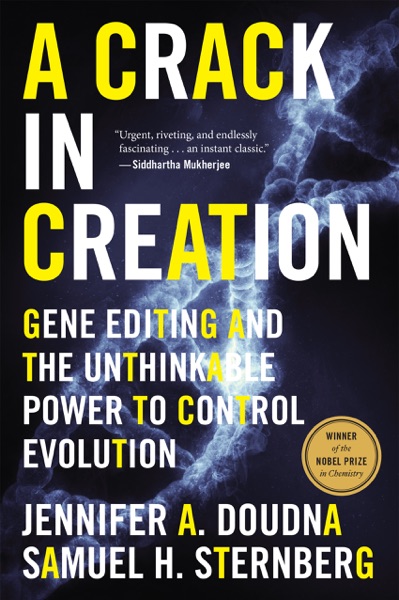
A Crack in Creation: Gene Editing and the Unthinkable Power to Control Evolution
Jennifer A. Doudna and Samuel H. Sternberg
