Science · Book club
Why Evolution Is True book club questions
Here are 12 book club questions for Why Evolution Is True by Jerry A. Coyne, ordered to open easily and end somewhere worth arguing about. Copy them, print them, or bring them up one at a time.
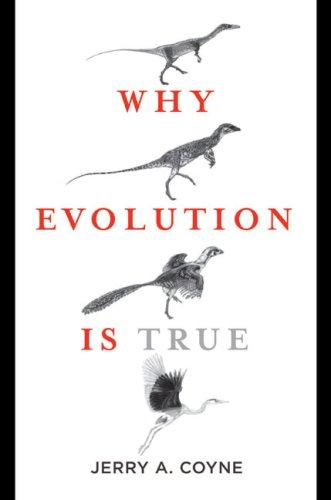
Why Evolution Is True is evolutionary geneticist Jerry Coyne's systematic case for evolution, written for readers who want a rigorous but accessible treatment of the evidence.
Jerry A. Coyne · 2009 · 6h 20m
Full summary and key takeaways →The 12 questions
- 1.
Coyne says evolution is falsifiable — it could be disproven by finding fossils in the wrong stratigraphic layer. What other evidence would count as falsification to you?
- 2.
The whale fossil sequence is unusually complete. Does the completeness of that particular sequence change how you think about the gaps in other parts of the fossil record?
- 3.
Endogenous retroviruses in the same chromosomal positions across related species are one of the strongest genomic arguments for common descent. Why do you think this argument is less commonly discussed than the fossil record?
- 4.
Coyne distinguishes evolution from the origin of life. Why does that distinction matter, and do you think the distinction is commonly understood in public debates about evolution?
- 5.
Sexual selection produces traits — like the peacock's tail — that reduce individual survival but increase reproductive success. What does that imply about the relationship between 'fitness' and what most people mean by 'better'?
- 6.
Atavisms — the occasional re-expression of ancestral traits like extra toes in horses or legs in dolphins — appear rarely but predictably. What do they tell us about how genetic information is maintained and suppressed over evolutionary time?
- 7.
Coyne acknowledges ongoing debates in evolutionary biology. Does uncertainty about some mechanisms undermine confidence in the core claim, or is that uncertainty just science working normally?
- 8.
The backward wiring of the vertebrate retina is a functional but suboptimal solution. If a designer made it, what would that imply about the designer? How should we evaluate that kind of argument?
- 9.
Direct observation of speciation in the laboratory seems like it should be decisive. Why do you think it doesn't end public debates about evolution?
- 10.
Industrial melanism in moths was used for decades as a textbook example of natural selection, then was challenged on methodological grounds, then was rehabilitated by better studies. What does that episode tell you about how science handles contested evidence?
- 11.
Coyne is passionate about evolution but careful about evidence. Is it possible to be both an advocate and a rigorous evaluator of the same claim, or does advocacy inevitably compromise rigor?
- 12.
Having read the evidence, how would you explain to someone who doubted evolution why the scientific consensus is so strong? Which piece of evidence would you lead with?
How to run the discussion
- Pick six to eight, not all of them. An hour of real discussion covers fewer questions than anyone expects, and racing the list is what makes a book club feel like homework.
- Open with what people noticed, not what they concluded. Asking for a verdict first hardens opinions before anyone has heard each other.
- Let the disagreement run. The questions below that split a room are the ones worth the time; the ones everyone answers the same way can be skipped.
- Ask the quiet person a specific question. A direct, narrow question is far easier to answer than an open invitation to contribute.
Themes worth steering toward
If the conversation stalls, these are the threads that usually restart it.
Common questions
What are good book club questions for Why Evolution Is True?
Here are 12 book club questions for Why Evolution Is True by Jerry A. Coyne, ordered to open easily and end somewhere worth arguing about. The strongest openers ask what each reader noticed rather than what they concluded, and the discussion usually turns on evolution, natural selection, evidence.
How long should a book club discussion of Why Evolution Is True last?
Most groups run 60 to 90 minutes of actual discussion. That is roughly six to eight questions, not all of them, so pick the ones that suit your group rather than working down the list in order.
What are the main themes in Why Evolution Is True?
Evolution, Natural selection, Evidence, Fossil record, Speciation. Those are the threads most likely to divide a room, which makes them the useful places to steer a discussion that has gone quiet.
Picking the next one? See books like Why Evolution Is True or questions for other book club picks.
