Science · Book club
Why We Sleep book club questions
Here are 12 book club questions for Why We Sleep by Matthew Walker, ordered to open easily and end somewhere worth arguing about. Copy them, print them, or bring them up one at a time.
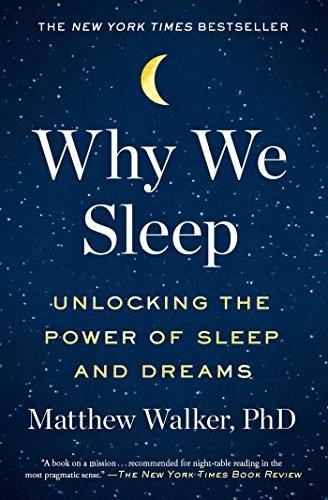
Why We Sleep is Matthew Walker's attempt to do for sleep what no amount of public health messaging has managed: make people genuinely afraid of what they're losing.
Matthew Walker · 2017 · 8h 30m
Full summary and key takeaways →The 12 questions
- 1.
Walker claims most people can't accurately assess their own level of impairment from sleep loss. Has there been a period in your life where you were clearly sleep-deprived but convinced you were functioning fine?
- 2.
The book argues that REM sleep is where emotional memory is processed and painful experiences lose their sting. What does that suggest about how people should think about the sleep they get after a difficult event?
- 3.
Walker is critical of napping as a substitute for sufficient night sleep, but some cultures and workplaces have embraced it. How do you think about napping in your own life — compensatory, preventative, or neither?
- 4.
Caffeine is the most widely consumed psychoactive drug in the world, largely used to override natural sleep pressure. How would your daily routine change if you treated caffeine as Walker describes — a debt instrument, not an energy source?
- 5.
The book details how alcohol disrupts REM sleep even in moderate amounts. Does this change how you think about the trade-off between the relaxation benefit of a drink before bed and its effect on sleep quality?
- 6.
Walker argues that alarm clocks are fundamentally at odds with healthy sleep because they interrupt the natural sleep cycle. How much of your current sleep schedule is determined by obligation versus biology?
- 7.
Schools and workplaces are organized around morning schedules that conflict with adolescent and adult circadian biology. Who bears the cost of that structural mismatch, and what would it take to change it?
- 8.
The association between short sleep and Alzheimer's risk is one of the book's more alarming claims. Does knowing that sleep clears amyloid plaques from the brain change anything about how you prioritize it?
- 9.
Walker draws a distinction between being unable to sleep (insomnia) and choosing not to sleep (voluntary restriction). Which one describes the pattern you recognize most in people around you, and in yourself?
- 10.
The book attributes much of the chronic sleep deprivation in modern societies to electric light, technology, and work culture rather than individual choice. Does framing it as a structural problem change how you think about your own sleep habits?
- 11.
Walker claims that consistently sleeping eight hours is correlated with better performance across almost every measurable domain. What would you have to change about your schedule to actually test that claim for a month?
- 12.
Some readers find the health risk data in the book motivating; others find it paralyzing. How do you respond to strongly alarming health information, and does that affect how seriously you take the prescriptions?
How to run the discussion
- Pick six to eight, not all of them. An hour of real discussion covers fewer questions than anyone expects, and racing the list is what makes a book club feel like homework.
- Open with what people noticed, not what they concluded. Asking for a verdict first hardens opinions before anyone has heard each other.
- Let the disagreement run. The questions below that split a room are the ones worth the time; the ones everyone answers the same way can be skipped.
- Ask the quiet person a specific question. A direct, narrow question is far easier to answer than an open invitation to contribute.
Themes worth steering toward
If the conversation stalls, these are the threads that usually restart it.
Common questions
What are good book club questions for Why We Sleep?
Here are 12 book club questions for Why We Sleep by Matthew Walker, ordered to open easily and end somewhere worth arguing about. The strongest openers ask what each reader noticed rather than what they concluded, and the discussion usually turns on sleep, health, neuroscience.
How long should a book club discussion of Why We Sleep last?
Most groups run 60 to 90 minutes of actual discussion. That is roughly six to eight questions, not all of them, so pick the ones that suit your group rather than working down the list in order.
What are the main themes in Why We Sleep?
Sleep, Health, Neuroscience, Performance, Mental health. Those are the threads most likely to divide a room, which makes them the useful places to steer a discussion that has gone quiet.
Picking the next one? See books like Why We Sleep or questions for other book club picks.
