Psychology · Book club
Willpower: Rediscovering the Greatest Human Strength book club questions
Here are 12 book club questions for Willpower: Rediscovering the Greatest Human Strength by Roy Baumeister and John Tierney, ordered to open easily and end somewhere worth arguing about. Copy them, print them, or bring them up one at a time.
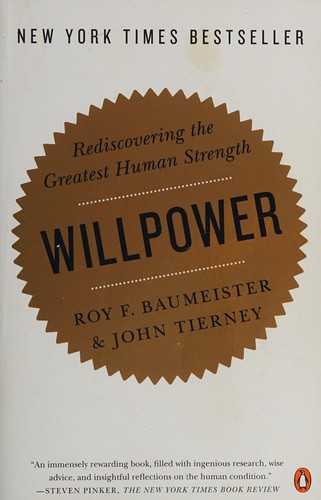
Willpower is social psychologist Roy Baumeister's synthesis of decades of laboratory research on self-control, translated into practical guidance by science journalist John Tierney.
Roy Baumeister and John Tierney · 2011 · 5h 0m
Full summary and key takeaways →The 12 questions
- 1.
At what point in your day does your self-control typically run lowest? What decisions are you making at that time that might be better moved earlier?
- 2.
Baumeister's research on ego depletion has faced replication challenges. Does that change how you read the book's practical advice? Can advice be useful even if the underlying mechanism is disputed?
- 3.
Where in your life do you rely on willpower in the moment when a bright-line rule or automation could replace it?
- 4.
Think of a decision you make regularly that consistently goes worse when you're tired or hungry. What would it take to make that decision at a different time or make it in advance?
- 5.
The book argues that monitoring is the first step to self-regulation. What in your life are you intentionally not monitoring? Why?
- 6.
Baumeister talks about competing goals — the way having too many active goals depletes willpower faster. What goals are you holding simultaneously that might be undermining each other?
- 7.
Implementation intentions specify exactly when and where you'll act. Pick one habit you've been trying to build. Can you write an implementation intention for it right now?
- 8.
The book covers the failure of New Year's resolutions in some detail. What pattern do you see in your own failed resolutions? Is it the goal, the plan, or the monitoring that breaks down?
- 9.
Where in your life are you most likely to make impulsive decisions you later regret? What conditions precede them?
- 10.
Baumeister argues that people with high self-control don't actually resist temptation more often — they structure their lives to encounter less of it. Who do you know who does this effectively?
- 11.
The book discusses how public commitment increases follow-through. What goal would benefit most from being stated publicly? What stops you from doing that?
- 12.
How does the idea of limited willpower change how you think about judging other people's behavior failures — laziness, overeating, poor financial decisions?
How to run the discussion
- Pick six to eight, not all of them. An hour of real discussion covers fewer questions than anyone expects, and racing the list is what makes a book club feel like homework.
- Open with what people noticed, not what they concluded. Asking for a verdict first hardens opinions before anyone has heard each other.
- Let the disagreement run. The questions below that split a room are the ones worth the time; the ones everyone answers the same way can be skipped.
- Ask the quiet person a specific question. A direct, narrow question is far easier to answer than an open invitation to contribute.
Themes worth steering toward
If the conversation stalls, these are the threads that usually restart it.
Common questions
What are good book club questions for Willpower: Rediscovering the Greatest Human Strength?
Here are 12 book club questions for Willpower: Rediscovering the Greatest Human Strength by Roy Baumeister and John Tierney, ordered to open easily and end somewhere worth arguing about. The strongest openers ask what each reader noticed rather than what they concluded, and the discussion usually turns on willpower, self-control, decision making.
How long should a book club discussion of Willpower: Rediscovering the Greatest Human Strength last?
Most groups run 60 to 90 minutes of actual discussion. That is roughly six to eight questions, not all of them, so pick the ones that suit your group rather than working down the list in order.
What are the main themes in Willpower: Rediscovering the Greatest Human Strength?
Willpower, Self-control, Decision making, Habits, Behavior change. Those are the threads most likely to divide a room, which makes them the useful places to steer a discussion that has gone quiet.
Picking the next one? See books like Willpower: Rediscovering the Greatest Human Strength or questions for other book club picks.
