Business · Book club
Winning the Loser's Game book club questions
Here are 11 book club questions for Winning the Loser's Game by Charles D. Ellis, ordered to open easily and end somewhere worth arguing about. Copy them, print them, or bring them up one at a time.
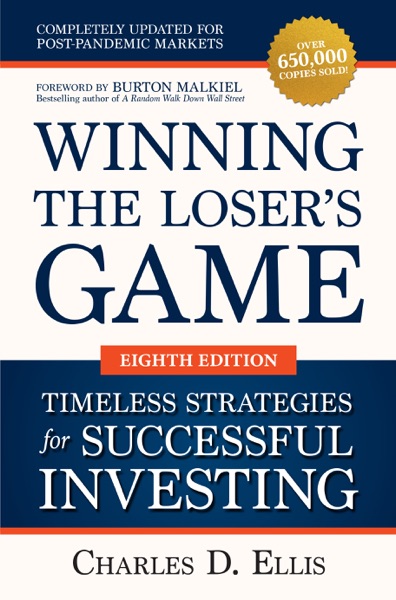
Winning the Loser's Game is Charles Ellis's case that most individual and institutional investors would be better served by passive index funds than by active management.
Charles D. Ellis · 1985 · 3h 40m
Full summary and key takeaways →The 11 questions
- 1.
Ellis's central analogy is amateur tennis — winning by not losing. In what other domains does the loser's-game framing apply? Where in your professional life is avoiding mistakes more important than brilliant plays?
- 2.
The book was first published in 1985, before index funds were widely available. How has the investment landscape changed since then, and does Ellis's argument apply equally or more forcefully today?
- 3.
Ellis argues that most investors — including sophisticated institutions — underperform index benchmarks after fees. If you manage investments, does your experience match or contradict that claim?
- 4.
What would it mean in practice to apply the 'avoid mistakes' philosophy to your own investment behavior? What would you stop doing?
- 5.
The book argues that fees are the most predictable drag on performance. How do you currently think about fees in your own financial decisions, and does this book change that?
- 6.
Ellis is honest that passive investing requires psychological discipline — staying invested through bear markets is genuinely hard. What makes that discipline so difficult, and what would help?
- 7.
The investment committee chapters describe how institutional dynamics push toward short-term thinking even when all participants know better. Have you observed similar dynamics in any organization you've been part of?
- 8.
Ellis argues that the goal is not to beat the market but to achieve the returns you need. How does that reframing change the measure of a successful investment program?
- 9.
If the arguments in this book are correct and widely known, why do so many investors still choose active management? What persists in the appeal?
- 10.
The book assumes a long time horizon. What changes about the advice if your time horizon is compressed — for example, if you expect to need the funds within five years?
- 11.
Ellis's argument is almost entirely about equities. Does the same loser's-game logic apply to bond management, real estate, or private equity?
How to run the discussion
- Pick six to eight, not all of them. An hour of real discussion covers fewer questions than anyone expects, and racing the list is what makes a book club feel like homework.
- Open with what people noticed, not what they concluded. Asking for a verdict first hardens opinions before anyone has heard each other.
- Let the disagreement run. The questions below that split a room are the ones worth the time; the ones everyone answers the same way can be skipped.
- Ask the quiet person a specific question. A direct, narrow question is far easier to answer than an open invitation to contribute.
Themes worth steering toward
If the conversation stalls, these are the threads that usually restart it.
Common questions
What are good book club questions for Winning the Loser's Game?
Here are 11 book club questions for Winning the Loser's Game by Charles D. Ellis, ordered to open easily and end somewhere worth arguing about. The strongest openers ask what each reader noticed rather than what they concluded, and the discussion usually turns on investing, index funds, long-term thinking.
How long should a book club discussion of Winning the Loser's Game last?
Most groups run 60 to 90 minutes of actual discussion. That is roughly six to eight questions, not all of them, so pick the ones that suit your group rather than working down the list in order.
What are the main themes in Winning the Loser's Game?
Investing, Index funds, Long-term thinking, Behavioral finance, Fees and costs. Those are the threads most likely to divide a room, which makes them the useful places to steer a discussion that has gone quiet.
Picking the next one? See books like Winning the Loser's Game or questions for other book club picks.
