Historical fiction · Book club
Wolf Hall book club questions
Here are 12 book club questions for Wolf Hall by Hilary Mantel, ordered to open easily and end somewhere worth arguing about. Copy them, print them, or bring them up one at a time.
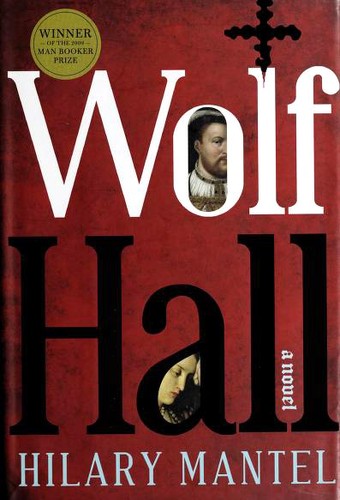
Wolf Hall is the first novel in Hilary Mantel's trilogy about Thomas Cromwell, the blacksmith's son who rose to become Henry VIII's chief minister and the most powerful non-royal figure in Tudor England.
Hilary Mantel · 2009 · 12h 0m
Full summary and key takeaways →The 12 questions
- 1.
Mantel uses 'he' to refer to Cromwell throughout, even in scenes with multiple men, requiring you to track who is speaking. Did you find this approach immersive or frustrating, and what do you think she gained by it?
- 2.
By the end of Wolf Hall, Cromwell has helped dismantle Wolsey, maneuvered Henry's divorce, and positioned himself at the center of English power. Do you trust him? Do you like him? Are those the same question?
- 3.
Cromwell is frequently underestimated in the novel because of his origins. How does Mantel portray the relationship between class and ability in Tudor England, and does it feel relevant today?
- 4.
Cardinal Wolsey is presented as a father figure to Cromwell — someone who saw his potential before anyone else. How does Wolsey's fall shape Cromwell's subsequent behavior, and does Cromwell grieve for him adequately?
- 5.
Henry VIII is kept at a certain distance in this novel — we see him largely through Cromwell's eyes. What picture of Henry emerges? Is he frightening, pathetic, sympathetic, or some combination?
- 6.
Anne Boleyn is often reduced in historical accounts to the woman who seduced a king. How does Mantel's Anne differ from that portrait, and is she a more sympathetic figure in this telling?
- 7.
The sweating sickness takes Cromwell's wife and daughters early in the novel. Mantel returns to this loss periodically. How does grief shape Cromwell's behavior at court?
- 8.
Several characters in the novel — More, Fisher, Wolsey — represent different stances toward conscience in the face of power. Where does Cromwell fall on that spectrum, and where do you think Mantel places him?
- 9.
The Tudor court is a place where information is power and everyone is performing. Are there contemporary parallels that came to mind as you read?
- 10.
The novel is notably long and the pacing is slow by contemporary standards. Did the length feel justified by the time you finished, or were there sections where Mantel could have cut without losing something essential?
- 11.
Thomas More appears in the novel as a man of principle who also tortured Protestant heretics. Mantel does not let us forget that. Does this complicate our usual sense of More as a martyr?
- 12.
The title 'Wolf Hall' refers to the Seymour family estate, which barely appears in this volume. What do you think Mantel is signaling with that choice of title?
How to run the discussion
- Pick six to eight, not all of them. An hour of real discussion covers fewer questions than anyone expects, and racing the list is what makes a book club feel like homework.
- Open with what people noticed, not what they concluded. Asking for a verdict first hardens opinions before anyone has heard each other.
- Let the disagreement run. The questions below that split a room are the ones worth the time; the ones everyone answers the same way can be skipped.
- Ask the quiet person a specific question. A direct, narrow question is far easier to answer than an open invitation to contribute.
Themes worth steering toward
If the conversation stalls, these are the threads that usually restart it.
Common questions
What are good book club questions for Wolf Hall?
Here are 12 book club questions for Wolf Hall by Hilary Mantel, ordered to open easily and end somewhere worth arguing about. The strongest openers ask what each reader noticed rather than what they concluded, and the discussion usually turns on power and ambition, loyalty and survival, class and self-making.
How long should a book club discussion of Wolf Hall last?
Most groups run 60 to 90 minutes of actual discussion. That is roughly six to eight questions, not all of them, so pick the ones that suit your group rather than working down the list in order.
What are the main themes in Wolf Hall?
Power and ambition, Loyalty and survival, Class and self-making, Conscience and compromise, Tudor England. Those are the threads most likely to divide a room, which makes them the useful places to steer a discussion that has gone quiet.
Picking the next one? See books like Wolf Hall or questions for other book club picks.
