History · Book club
World Order book club questions
Here are 12 book club questions for World Order by Henry Kissinger, ordered to open easily and end somewhere worth arguing about. Copy them, print them, or bring them up one at a time.
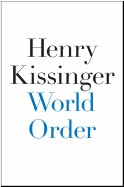
World Order is Kissinger's attempt, in his early nineties, to synthesize the historical argument he had been building since his doctoral dissertation on Metternich and the Congress of Vienna: that international stability depends on a recognized order — a set of rules, institutions, and expectations about legitimate behavior that the major powers all accept as constraining, even when it is inconvenient.
Henry Kissinger · 2014 · 8h 0m
Full summary and key takeaways →The 12 questions
- 1.
Kissinger argues world order is rare and constructed. Which historical periods of relative international stability does he find most instructive, and do you find those analogies convincing?
- 2.
His framework is primarily about state interests and power balance. What does it leave out, and does what it leaves out matter for the current world?
- 3.
The American tension between idealism (universal values) and realism (national interest) runs through the book. Where do you think that tension should be resolved?
- 4.
How does China's historical conception of its position in the world — as a civilization rather than just a state — change how you think about current US-China relations?
- 5.
Kissinger treats human rights and democratic norms as useful tools of foreign policy rather than as primary constraints on it. Is that the right level of analysis?
- 6.
He identifies four different traditions of world order. Are there traditions he is missing, or has he accurately captured the operative frameworks at the table today?
- 7.
The book was published in 2014. Which of Kissinger's concerns have been confirmed by subsequent events, and which have not materialized?
- 8.
What is the difference between a balance of power and an international order? Is a world of roughly equal competing powers automatically more stable?
- 9.
He argues political Islam has not reconciled itself with the Westphalian system. Is that observation fair? What would such reconciliation look like?
- 10.
The internet chapter argues that cyberspace needs its own order equivalent to the norms governing nuclear weapons. Has that happened in the decade since the book was published?
- 11.
Kissinger is writing as a practitioner as much as a historian. Does his experience give him insight or does it give him blind spots?
- 12.
If there were a contemporary statesman attempting to build a new concert of powers — the way Metternich did in 1815 — what would that effort look like today?
How to run the discussion
- Pick six to eight, not all of them. An hour of real discussion covers fewer questions than anyone expects, and racing the list is what makes a book club feel like homework.
- Open with what people noticed, not what they concluded. Asking for a verdict first hardens opinions before anyone has heard each other.
- Let the disagreement run. The questions below that split a room are the ones worth the time; the ones everyone answers the same way can be skipped.
- Ask the quiet person a specific question. A direct, narrow question is far easier to answer than an open invitation to contribute.
Themes worth steering toward
If the conversation stalls, these are the threads that usually restart it.
Common questions
What are good book club questions for World Order?
Here are 12 book club questions for World Order by Henry Kissinger, ordered to open easily and end somewhere worth arguing about. The strongest openers ask what each reader noticed rather than what they concluded, and the discussion usually turns on geopolitics, international order, diplomacy.
How long should a book club discussion of World Order last?
Most groups run 60 to 90 minutes of actual discussion. That is roughly six to eight questions, not all of them, so pick the ones that suit your group rather than working down the list in order.
What are the main themes in World Order?
Geopolitics, International order, Diplomacy, Balance of power, Sovereignty. Those are the threads most likely to divide a room, which makes them the useful places to steer a discussion that has gone quiet.
Picking the next one? See books like World Order or questions for other book club picks.
