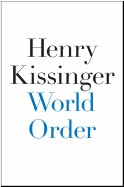
World Order by Henry Kissinger is a 2014 history book about geopolitics, international order, diplomacy. World order is not a natural condition but an achieved one, requiring shared principles about legitimate behavior that major powers accept as constraining even when inconvenient.
Summary
World Order is Kissinger's attempt, in his early nineties, to synthesize the historical argument he had been building since his doctoral dissertation on Metternich and the Congress of Vienna: that international stability depends on a recognized order — a set of rules, institutions, and expectations about legitimate behavior that the major powers all accept as constraining, even when it is inconvenient. The book argues that such an order is rare, fragile, and currently under threat from several directions simultaneously.
The first half is historical. Kissinger traces four distinct traditions of world order: the European Westphalian system, built on the concept of sovereign states and balance of power; the American tradition, which added an idealist layer — democracy, human rights, universal values — that sometimes collides with the realpolitik Westphalian inheritance; the Islamic world, which has not fully reconciled the concept of a state system with the religious universalism of the umma; and the Chinese tradition, which never fully internalized the Westphalian concept of a community of equal sovereign states, thinking instead in terms of a hierarchical system centered on Beijing. These four traditions are not just historical curiosities. They are the operative frameworks that different actors bring to contemporary diplomacy.
The structural problem Kissinger identifies is that the modern world requires an international order but lacks a broadly shared concept of what that order should look like. American idealism insists on universal values; Chinese strategic thought insists on national interest and hierarchical relationships; political Islam insists on religious authority; Russia insists on a sphere of influence that European law does not recognize. The Westphalian concepts that organized European diplomacy for three centuries depend on shared rules between parties that agree on what a "state" is and what it is entitled to — and that consensus is weaker than at any time since the system was created.
The final chapters address specific current challenges: the Middle East after the Arab Spring, the nuclear question in Iran and North Korea, the rising power of China, and the role of the internet as a new domain that no existing order has successfully incorporated. Kissinger is not optimistic, but he is not despairing. He argues that the historical cases he analyzes — Metternich's concert of Europe, Bismarck's careful management of German power — show that statesmen can construct and maintain order through deliberate effort. The implication is that understanding what such order requires is a precondition for building it.
Readers who find Kissinger's political record troubling will find little self-criticism here. The book is a statesman's view of statesmanship: power, interest, and stability are the relevant categories; human rights and democratic accountability appear primarily as complications in the management of order rather than as primary goods. That framing is itself an argument worth engaging critically rather than dismissing.
Talk to World Order like its author wrote you back.
Get the ideas that fit your life — not generic summaries.
- Chat with the book
- Audiobook-style main ideas
- Adapts to your life and goals
- Helps you take action
Key takeaways
- 1.
World order is not a natural condition but an achieved one, requiring shared principles about legitimate behavior that major powers accept as constraining even when inconvenient.
- 2.
The Westphalian system — sovereign states, balance of power, non-interference in internal affairs — was Europe's specific solution to religious civil war and is not universally accepted.
- 3.
The American tradition added idealism to realpolitik: universal values, democracy, human rights. This creates a tension between rule-through-norms and rule-through-force that American foreign policy has never fully resolved.
- 4.
China brings a different conception of order: hierarchical, centered, with surrounding states expected to acknowledge Chinese primacy. This is genuinely incompatible with Westphalian equality of states.
- 5.
Kissinger argues the current world order is fragile partly because there is no shared concept of what a legitimate order would look like between the major powers.
- 6.
Nuclear proliferation is the single greatest threat to any stable order because it multiplies the number of actors capable of triggering catastrophic conflict.
- 7.
The internet introduces a new domain where sovereignty, borders, and the rules of conflict are essentially undefined, and where the norms that might stabilize behavior have not been established.
- 8.
Historical cases — Metternich, Bismarck, Castlereagh — show that skilled statesmanship can build and maintain order, but this requires strategic vision as well as tactical skill.
Discussion questions
Use these on your own, with a book club, or as chat starters in Superbook. Book club version, ready to copy or print →
- 1.
Kissinger argues world order is rare and constructed. Which historical periods of relative international stability does he find most instructive, and do you find those analogies convincing?
- 2.
His framework is primarily about state interests and power balance. What does it leave out, and does what it leaves out matter for the current world?
- 3.
The American tension between idealism (universal values) and realism (national interest) runs through the book. Where do you think that tension should be resolved?
- 4.
How does China's historical conception of its position in the world — as a civilization rather than just a state — change how you think about current US-China relations?
- 5.
Kissinger treats human rights and democratic norms as useful tools of foreign policy rather than as primary constraints on it. Is that the right level of analysis?
- 6.
He identifies four different traditions of world order. Are there traditions he is missing, or has he accurately captured the operative frameworks at the table today?
- 7.
The book was published in 2014. Which of Kissinger's concerns have been confirmed by subsequent events, and which have not materialized?
- 8.
What is the difference between a balance of power and an international order? Is a world of roughly equal competing powers automatically more stable?
- 9.
He argues political Islam has not reconciled itself with the Westphalian system. Is that observation fair? What would such reconciliation look like?
- 10.
The internet chapter argues that cyberspace needs its own order equivalent to the norms governing nuclear weapons. Has that happened in the decade since the book was published?
- 11.
Kissinger is writing as a practitioner as much as a historian. Does his experience give him insight or does it give him blind spots?
- 12.
If there were a contemporary statesman attempting to build a new concert of powers — the way Metternich did in 1815 — what would that effort look like today?
Themes
Frequently asked questions
-
What is World Order about?
It is Kissinger's argument about what international stability requires — a shared understanding of legitimate behavior among major powers — and his analysis of why the current world order is fragile, drawing on historical cases from Westphalia to the present.
-
Is this a book about Kissinger's own career?
Mostly not. It is primarily a historical and analytical argument about international relations. His own career appears mainly in the later chapters on American foreign policy. Readers interested in his memoirs should look at The White House Years or Years of Upheaval.
-
Who should read World Order?
People interested in foreign policy, international history, and geopolitics. It is most useful for readers who want to understand the structural arguments behind contemporary debates about US-China relations, the role of international institutions, and the limits of American power.
-
Do I need background knowledge to read this?
Some familiarity with modern European history and the major actors in current geopolitics helps. The historical sections on the Congress of Vienna and European balance-of-power politics assume some background. The contemporary policy chapters are accessible without specialized knowledge.
-
Is Kissinger's framework still applicable after the events of 2022 and beyond?
His analysis of the tensions between the Westphalian system and both Russian and Chinese conceptions of legitimate order reads as quite prescient in light of Russian aggression in Ukraine. His concern about the absence of shared norms for managing great-power competition seems well-founded.
Similar books
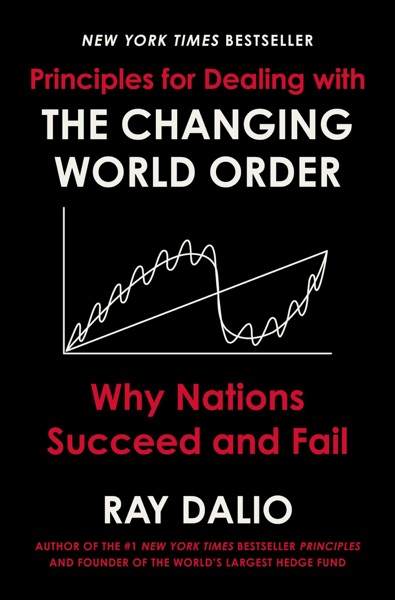
The Changing World Order
Ray Dalio
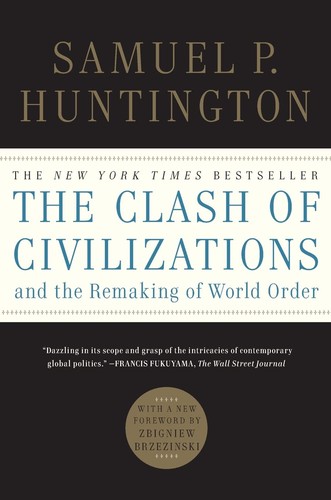
The Clash of Civilizations and the Remaking of World Order
Samuel P. Huntington
Political Order and Political Decay
Francis Fukuyama
Seeing Like a State
James C. Scott
