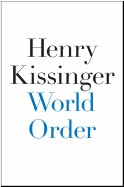
Talk to World Order like its author wrote you back.
Get the ideas that fit your life — not generic summaries.
- Chat with the book
- Audiobook-style main ideas
- Adapts to your life and goals
- Helps you take action
What it argues
World Order is Kissinger's attempt, in his early nineties, to synthesize the historical argument he had been building since his doctoral dissertation on Metternich and the Congress of Vienna: that international stability depends on a recognized order — a set of rules, institutions, and expectations about legitimate behavior that the major powers all accept as constraining, even when it is inconvenient. The book argues that such an order is rare, fragile, and currently under threat from several directions simultaneously.
The first half is historical. Kissinger traces four distinct traditions of world order: the European Westphalian system, built on the concept of sovereign states and balance of power; the American tradition, which added an idealist layer — democracy, human rights, universal values — that sometimes collides with the realpolitik Westphalian inheritance; the Islamic world, which has not fully reconciled the concept of a state system with the religious universalism of the umma; and the Chinese tradition, which never fully internalized the Westphalian concept of a community of equal sovereign states, thinking instead in terms of a hierarchical system centered on Beijing. These four traditions are not just historical curiosities. They are the operative frameworks that different actors bring to contemporary diplomacy.
What it gets right
- 1.
World order is not a natural condition but an achieved one, requiring shared principles about legitimate behavior that major powers accept as constraining even when inconvenient.
- 2.
The Westphalian system — sovereign states, balance of power, non-interference in internal affairs — was Europe's specific solution to religious civil war and is not universally accepted.
- 3.
The American tradition added idealism to realpolitik: universal values, democracy, human rights. This creates a tension between rule-through-norms and rule-through-force that American foreign policy has never fully resolved.
What it covers
Who wrote it
Henry Kissinger (1923–2023) served as National Security Advisor and Secretary of State under Presidents Nixon and Ford. He was awarded the Nobel Peace Prize in 1973 for negotiations that ended American military involvement in Vietnam, a decision that remains controversial. Born in Germany, he fled Nazi persecution and emigrated to the United States in 1938. He received his PhD from Harvard, where he later taught, and wrote A World Restored (1957) on the Congress of Vienna before entering government. After leaving office he founded Kissinger Associates and continued writing and advising governments until his death at the age of 100.
