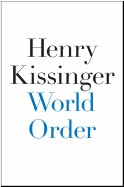
Talk to World Order like its author wrote you back.
Get the ideas that fit your life — not generic summaries.
- Chat with the book
- Audiobook-style main ideas
- Adapts to your life and goals
- Helps you take action
World Order, in detail
World Order is Kissinger's attempt, in his early nineties, to synthesize the historical argument he had been building since his doctoral dissertation on Metternich and the Congress of Vienna: that international stability depends on a recognized order — a set of rules, institutions, and expectations about legitimate behavior that the major powers all accept as constraining, even when it is inconvenient. The book argues that such an order is rare, fragile, and currently under threat from several directions simultaneously.
The first half is historical. Kissinger traces four distinct traditions of world order: the European Westphalian system, built on the concept of sovereign states and balance of power; the American tradition, which added an idealist layer — democracy, human rights, universal values — that sometimes collides with the realpolitik Westphalian inheritance; the Islamic world, which has not fully reconciled the concept of a state system with the religious universalism of the umma; and the Chinese tradition, which never fully internalized the Westphalian concept of a community of equal sovereign states, thinking instead in terms of a hierarchical system centered on Beijing. These four traditions are not just historical curiosities. They are the operative frameworks that different actors bring to contemporary diplomacy.
The structural problem Kissinger identifies is that the modern world requires an international order but lacks a broadly shared concept of what that order should look like. American idealism insists on universal values; Chinese strategic thought insists on national interest and hierarchical relationships; political Islam insists on religious authority; Russia insists on a sphere of influence that European law does not recognize. The Westphalian concepts that organized European diplomacy for three centuries depend on shared rules between parties that agree on what a "state" is and what it is entitled to — and that consensus is weaker than at any time since the system was created.
The final chapters address specific current challenges: the Middle East after the Arab Spring, the nuclear question in Iran and North Korea, the rising power of China, and the role of the internet as a new domain that no existing order has successfully incorporated. Kissinger is not optimistic, but he is not despairing. He argues that the historical cases he analyzes — Metternich's concert of Europe, Bismarck's careful management of German power — show that statesmen can construct and maintain order through deliberate effort. The implication is that understanding what such order requires is a precondition for building it.
Readers who find Kissinger's political record troubling will find little self-criticism here. The book is a statesman's view of statesmanship: power, interest, and stability are the relevant categories; human rights and democratic accountability appear primarily as complications in the management of order rather than as primary goods. That framing is itself an argument worth engaging critically rather than dismissing.
The big ideas
- 1.
World order is not a natural condition but an achieved one, requiring shared principles about legitimate behavior that major powers accept as constraining even when inconvenient.
- 2.
The Westphalian system — sovereign states, balance of power, non-interference in internal affairs — was Europe's specific solution to religious civil war and is not universally accepted.
- 3.
The American tradition added idealism to realpolitik: universal values, democracy, human rights. This creates a tension between rule-through-norms and rule-through-force that American foreign policy has never fully resolved.
