Memoir · Book club
Writing My Wrongs book club questions
Here are 12 book club questions for Writing My Wrongs by Shaka Senghor, ordered to open easily and end somewhere worth arguing about. Copy them, print them, or bring them up one at a time.
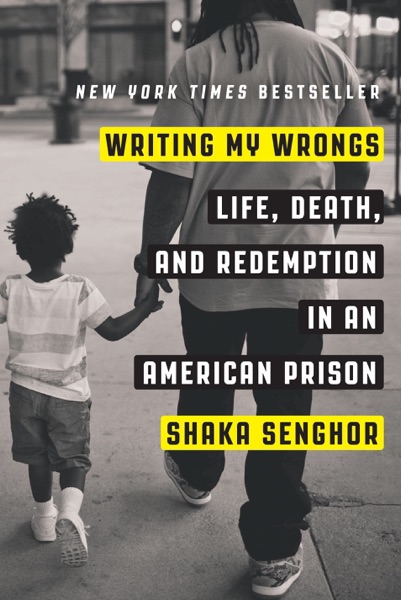
Writing My Wrongs is Shaka Senghor's account of his journey from a childhood marked by abuse and neglect in Detroit, through a murder conviction and nineteen years in Michigan prisons — seven of them in solitary confinement — to his emergence as a writer, activist, and advocate for criminal justice reform.
Shaka Senghor · 2016 · 4h 45m
Full summary and key takeaways →The 12 questions
- 1.
Senghor describes the abuse and neglect of his childhood in detail, but he also insists he remains responsible for his actions. How do you think about the relationship between circumstance and accountability?
- 2.
The book treats reading and writing as the mechanisms of Senghor's transformation. Is there a form of intellectual practice in your own life that has changed how you understand yourself?
- 3.
Senghor spent seven years in solitary confinement. What does his experience suggest about the goals — and effects — of solitary confinement as a practice?
- 4.
He describes a small number of people in the prison system — guards, counselors — who treated him as a person rather than a problem. What does that suggest about the power of individual behavior inside institutional structures?
- 5.
The memoir is explicitly not a claim of innocence. How did that choice affect your experience of reading it? Does it change how you receive Senghor's arguments about the prison system?
- 6.
Senghor writes that the self who committed murder was not fundamentally different from the self who later advocated for others — both were shaped by the same formative experiences. Do you find that framing convincing?
- 7.
What assumptions do you carry about who can and cannot change? Did this book challenge any of them?
- 8.
The prison Senghor describes failed systematically at rehabilitation. What would a system designed to actually produce transformation look like, based on what you learn from his experience?
- 9.
Senghor's advocacy work focuses heavily on connecting with young people before they make the choices he made. Is prevention more important than rehabilitation in your view, or is that a false choice?
- 10.
The book ends with Senghor free and doing meaningful work, but the emotional arc does not land in triumphalism. What is the emotional register of the ending, and is it appropriate?
- 11.
How do you think Writing My Wrongs should be read alongside statistics and policy arguments about incarceration? What does memoir provide that data cannot?
- 12.
Senghor was shaped by Malcolm X's autobiography. What books have shaped how you understand yourself, and in what direction?
How to run the discussion
- Pick six to eight, not all of them. An hour of real discussion covers fewer questions than anyone expects, and racing the list is what makes a book club feel like homework.
- Open with what people noticed, not what they concluded. Asking for a verdict first hardens opinions before anyone has heard each other.
- Let the disagreement run. The questions below that split a room are the ones worth the time; the ones everyone answers the same way can be skipped.
- Ask the quiet person a specific question. A direct, narrow question is far easier to answer than an open invitation to contribute.
Themes worth steering toward
If the conversation stalls, these are the threads that usually restart it.
Common questions
What are good book club questions for Writing My Wrongs?
Here are 12 book club questions for Writing My Wrongs by Shaka Senghor, ordered to open easily and end somewhere worth arguing about. The strongest openers ask what each reader noticed rather than what they concluded, and the discussion usually turns on incarceration, redemption, identity.
How long should a book club discussion of Writing My Wrongs last?
Most groups run 60 to 90 minutes of actual discussion. That is roughly six to eight questions, not all of them, so pick the ones that suit your group rather than working down the list in order.
What are the main themes in Writing My Wrongs?
Incarceration, Redemption, Identity, Trauma, Literacy. Those are the threads most likely to divide a room, which makes them the useful places to steer a discussion that has gone quiet.
Picking the next one? See books like Writing My Wrongs or questions for other book club picks.
