Philosophy · Book club
Writings on Art book club questions
Here are 11 book club questions for Writings on Art by Mark Rothko, ordered to open easily and end somewhere worth arguing about. Copy them, print them, or bring them up one at a time.
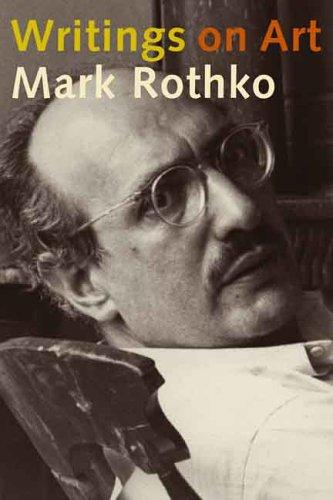
Mark Rothko spent decades writing about painting before most people knew his name.
Mark Rothko · 2006 · 3h 0m
Full summary and key takeaways →The 11 questions
- 1.
Rothko insists that abstract painting can produce tragedy. Do you find that credible? Has any work of visual art ever produced a genuinely tragic experience for you?
- 2.
He was influenced by Nietzsche's distinction between the Apollonian and the Dionysian. How does that framework map onto what you understand about his paintings?
- 3.
Rothko's refusal to let his paintings function as decoration was a principled stand. When does artistic intent actually override how people experience art?
- 4.
His prose is dense and at times difficult. Does reading what a painter meant to do change how you see the paintings themselves? Or does it constrain the experience?
- 5.
He worried that the art market was absorbing and neutralizing his work. Is that a problem that can be solved? Or is it inherent to art entering commercial circulation?
- 6.
What does Rothko mean when he says he wants the viewer to 'experience' a painting rather than 'understand' it? Is that distinction coherent?
- 7.
His letters show a man in real psychic pain about the reception of his work. How much of an artist's suffering should figure into how we evaluate the work?
- 8.
Rothko placed enormous weight on scale — viewing distance and canvas size. Is that kind of control over the viewing experience legitimate? Or is it coercive?
- 9.
He had deep reservations about art criticism. Are those reservations still valid, or has the discourse around abstract painting become more capable of addressing what he was after?
- 10.
The collection spans thirty-five years of his thinking. Where do you see his ideas shifting most significantly, and what drove those changes?
- 11.
Rothko was preoccupied with myth and the archaic. Is that a productive orientation for a modern artist, or does it create a certain nostalgia and elitism?
How to run the discussion
- Pick six to eight, not all of them. An hour of real discussion covers fewer questions than anyone expects, and racing the list is what makes a book club feel like homework.
- Open with what people noticed, not what they concluded. Asking for a verdict first hardens opinions before anyone has heard each other.
- Let the disagreement run. The questions below that split a room are the ones worth the time; the ones everyone answers the same way can be skipped.
- Ask the quiet person a specific question. A direct, narrow question is far easier to answer than an open invitation to contribute.
Themes worth steering toward
If the conversation stalls, these are the threads that usually restart it.
Common questions
What are good book club questions for Writings on Art?
Here are 11 book club questions for Writings on Art by Mark Rothko, ordered to open easily and end somewhere worth arguing about. The strongest openers ask what each reader noticed rather than what they concluded, and the discussion usually turns on abstract expressionism, art and emotion, creative philosophy.
How long should a book club discussion of Writings on Art last?
Most groups run 60 to 90 minutes of actual discussion. That is roughly six to eight questions, not all of them, so pick the ones that suit your group rather than working down the list in order.
What are the main themes in Writings on Art?
Abstract expressionism, Art and emotion, Creative philosophy, Artistic process, Tragedy and myth. Those are the threads most likely to divide a room, which makes them the useful places to steer a discussion that has gone quiet.
Picking the next one? See books like Writings on Art or questions for other book club picks.
